

Maintain momentum to avoid returning to square one in the RBT retail banking transformation model
At BIDV Nam Binh Duong Branch, retail banking transformation (RBT) is not defined as a short-term campaign with immediate explosive results. Instead, the unit defines it as a long journey to fundamentally change the mindset and pace of work, where perseverance in maintaining momentum becomes a vital factor in not returning to square one.
Past experiences at many business units show that retail activities often carry a strong time-sensitive nature. Employees are often accustomed to a "go with the flow" pace, serving customers when they naturally arise or putting all their efforts into meeting targets during end-of-period competitions. While this approach still yields favorable business results, it relies too heavily on individual effort and lacks sustainability.
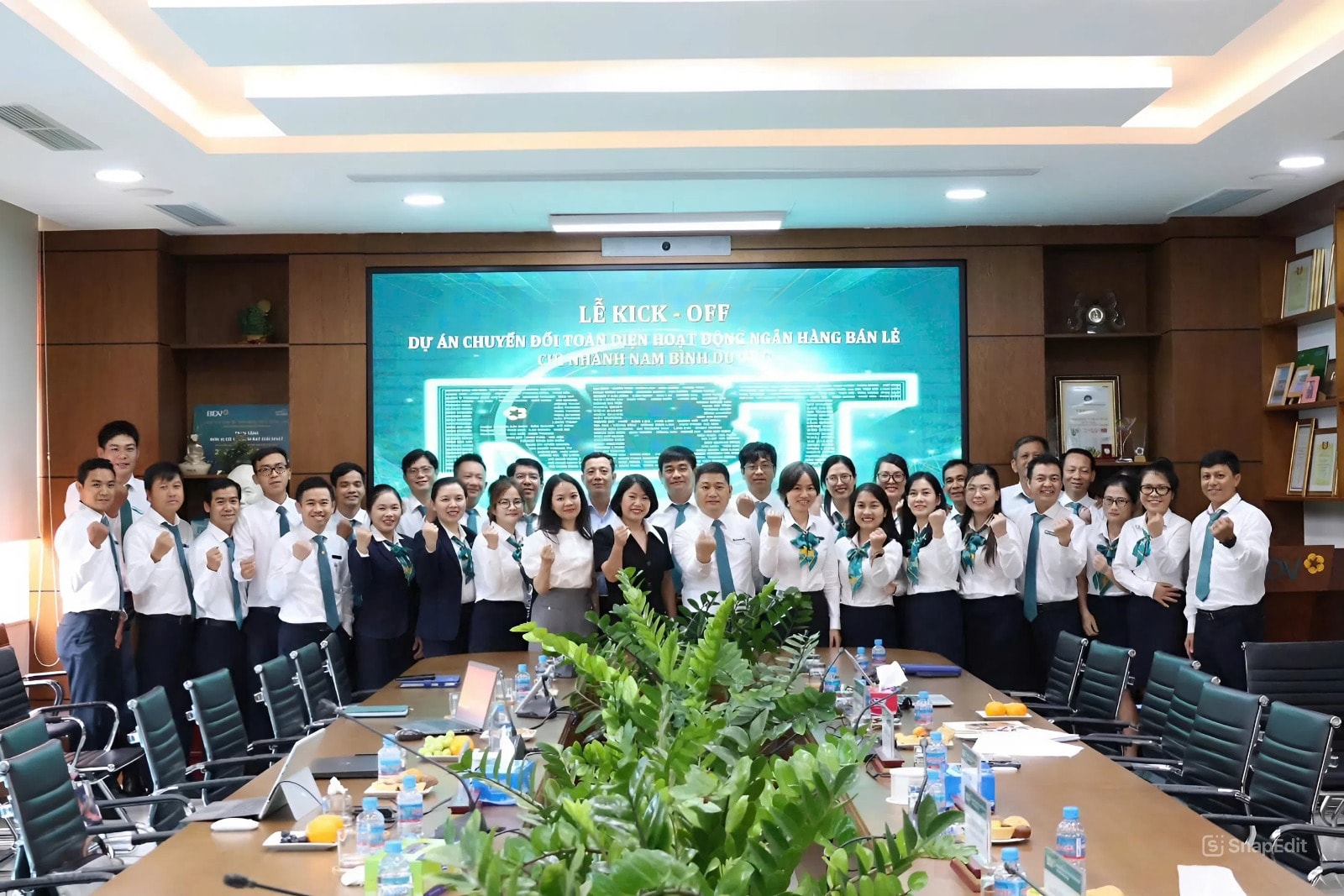
When officially implementing RBT, BIDV Nam Binh Duong chose a more challenging path: shifting from a mass service model to CVP (Customer Value Proposition) service. This means that customers are no longer viewed as a homogeneous group, but are clearly segmented according to their value and potential in order to provide "right segment, right value" care.
This change requires retail operations to transform into a continuous flow rather than intermittent "rushes." Staff are no longer passively waiting for customers to come to them, but must proactively manage portfolios and interact regularly to prevent customers from "drifting away." The CRM system is then not just a data entry tool, but becomes a roadmap that helps employees closely monitor every point of contact with customers.
In both management theory and physics, momentum is understood as a movement trend that is maintained and accelerates once it gains speed. The branch management likened this transition process to the image of a train leaving the station. The start-up phase is always difficult and exhausting, with the engine roaring loudly but only moving forward little by little. This is the most sensitive time, because without confidence and perseverance, the team can easily become discouraged and stop before seeing the results.
The actual implementation at the branch starting September 15, 2025, has proven that these challenges are real. Questions like "Why change when the old way still works?" or concerns about not having enough time to handle the increased workload have surfaced. This is a completely natural psychological reaction when momentum has not yet been established, and the energy expended has not yet yielded visible results.
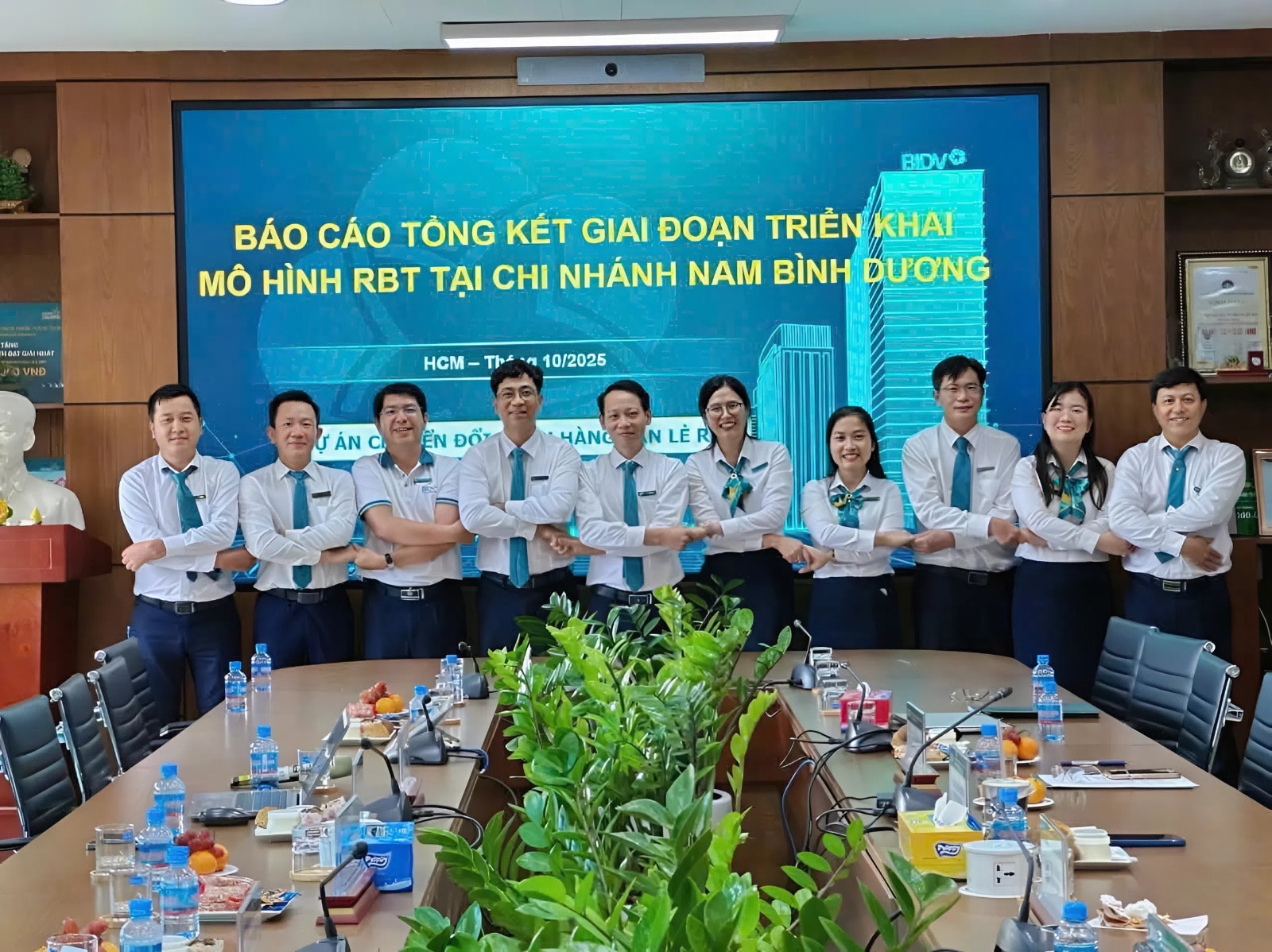
To overcome this inertia, the branch established specific interaction standards, such as requiring at least one interaction per month with Premier customers and one interaction every three months with loyal customers. Meetings, financial needs discussions, and suitable product introductions gradually became new habits, replacing the previous passive sales mindset.
To maintain momentum, the role of department heads and the pace of management were prioritized. At BIDV Nam Binh Duong, daily quick meetings were likened to important "anchor points" for maintaining momentum.
Avoiding lengthy reports, huddles are limited to less than 15 minutes and are flexible in format, either in person or online, to suit the schedules of staff members. The core objective of these meetings is to quickly review the previous day's activities, promote tasks for the day, and most importantly, spread positive energy to the entire team. At the same time, weekly reviews between department heads and the Board of Directors help ensure that the entire system is operating in sync, promptly adjusting any issues that arise.
This consistency and discipline has helped the team avoid a situation where "everyone is on their own" or unconsciously reverting to old habits. Momentum is thus built based on three core characteristics: the more you do it, the more familiar you become, reducing resistance from the brain; small initial results build greater confidence; and the momentum of the collective pulls each individual forward.
After a period of steadfast commitment to the goal, despite times when results fell short of expectations compared to the general standard, BIDV Nam Binh Duong began to see positive signs. Staff became accustomed to the new routine, departmental leadership became more proactive in coordination, and most importantly, customers noticed a clear difference in the quality of service.
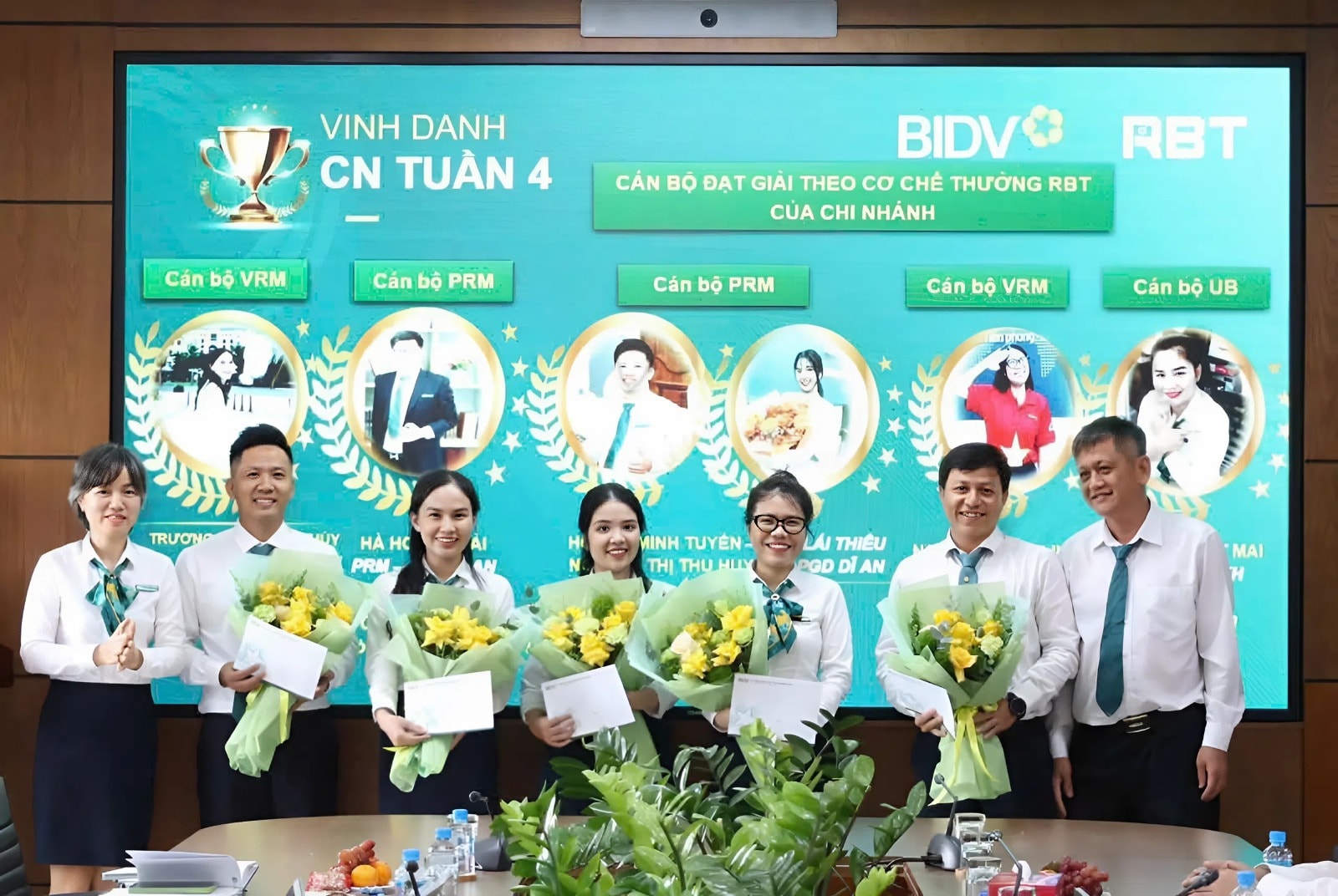
The RBT model at BIDV Nam Binh Duong has proven that in retail banking transformation, momentum is more important than speed and short-term results. Keeping the wheels rolling forward is the only way to avoid falling behind. Once momentum is gained and the pace is maintained, impressive growth figures will inevitably follow as a result of a well-structured and persistent process.