

BIDV: Pioneering the creation of sustainable value
The Joint Stock Commercial Bank for Investment and Development of Vietnam (BIDV) continues to assert its pioneering role as a leading financial institution in Vietnam.

With a long-term vision, clear strategy, and substantive commitments, BIDV not only directs green capital flows and promotes green and circular economic transformation, but also partners with businesses and communities in the journey to create sustainable value for the present and future. The reporter spoke with Mr. Le Ngoc Lam, General Director of BIDV, about this issue.
How do you assess the role of the banking sector in promoting sustainable development and realizing ESG goals in Vietnam?
In the context of increasingly pressing environmental and social issues, sustainable development and ESG practices have become the priority goals and focus of countries and businesses around the world.
In Vietnam, the government has set a target of achieving Net Zero by 2050. The banking industry, which is the "lifeblood" of the economy, plays a particularly important role in promoting sustainable development and realizing the country's ESG goals.
First, directing credit flows toward green and sustainable sectors through promoting green and sustainable finance, contributing to the economy's green transition:
According to the World Bank (WB), Vietnam needs to mobilize USD 368 billion for its Net Zero roadmap. According to the adjusted Power Plan VIII, in the 2026-2030 period, Vietnam's total investment capital demand for clean and renewable energy sources is estimated at approximately USD 110 billion. Through green finance, banks can encourage customers to transition to green/sustainable production models, invest in energy-saving technologies, develop renewable energy, or pursue circular/low-carbon economies, etc.
Second, promoting national financial inclusion:
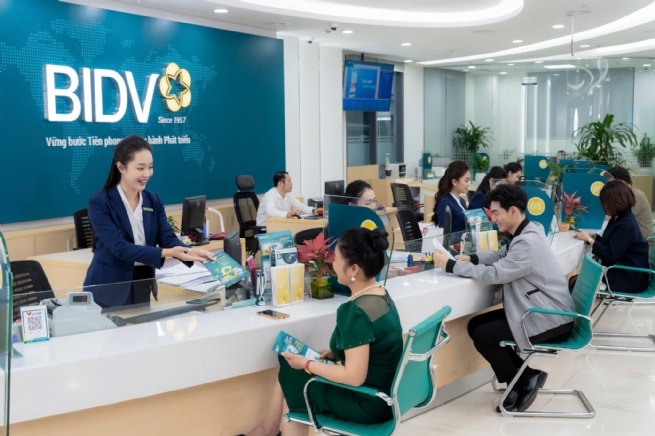
By providing products, services, utilities, and banking systems, banks help all citizens and businesses, especially vulnerable groups, access essential financial resources and services. Expanding access to finance not only contributes to economic growth and reduces inequality, but also strengthens financial stability and creates a foundation for sustainable development.
Third, contributing to the comprehensive and sustainable development of the community through social welfare activities and motivational sponsorship activities:
BIDV embodies the philosophy of "giving to receive." Proactively spreading positive values and making practical contributions to the community not only demonstrates the social responsibility of a large financial institution, but also helps us strengthen trust, enhance cohesion, and create sustainable values for the bank itself.
BIDV is known as one of the pioneering banks in integrating ESG factors into its development strategy. Could you share the formation process, implementation organization, and highlights of BIDV's sustainable development strategy?
Recognizing early on the significance of green, sustainable growth for the economy as a whole, while also identifying the pioneering responsibility of a leading state-owned commercial bank, right from the development of the 2021-2025 Business Strategy with a vision to 2030, BIDV has identified "striving for sustainable development" as a consistent goal in its banking activities, making green credit and green financing a priority in its development strategy.
For the 2026-2030 period, BIDV continues to choose "Green" as one of the key pillars in its Development Strategy. We also identify ESG as a core competency and a new driver of development in the upcoming Strategy period. BIDV strives to become the market-leading bank in green and sustainable development and ESG practices, leading in green credit outstanding, contributing positively to economic and social development, environmental protection, and serving the nation.
BIDV is proud to be a pioneer in the market in identifying sustainable development and ESG practices as an important part of its overall business development strategy. Accordingly, we have established a system of specific goals centered around the three pillars of Environment, Society, and Governance with a comprehensive portfolio of solutions to integrate ESG goals into our business activities.
In the journey to "green" the credit portfolio and develop a green financial ecosystem, what are the biggest obstacles and how has BIDV responded to ensure sustainable growth?
In Vietnam, green transition remains a new field and is still in its early stages. This poses numerous challenges for the business community and financial institutions, including BIDV.
Common difficulties and challenges stem from the external environment:
The legal framework is still being finalized. Vietnam has issued a green classification catalog, but there is still a lack of detailed guidance on technical criteria and procedures for certifying green projects. There are also no specific regulations or guidelines on social risk management or the issuance of green/sustainable bonds. BIDV has proactively proposed recommendations to the competent authorities to complete the legal framework system as soon as possible to overcome difficulties and strongly promote green finance activities in Vietnam.
Support policies for green banking and green finance activities, though existing, are not yet robust. Currently, the State Bank of Vietnam has finalized a draft decree to submit to the government regarding a 2% interest rate support policy for green and circular projects, applying ESG standards. This is an important step demonstrating the commitment to promoting green transition across the entire economy. However, for the policy to be effective, the implementation process needs to be simple, transparent, and accessible; thereby encouraging the business community to boldly invest, innovate technology, and accelerate the green transition process.
In the coming period, we also hope that the Government, the State Bank, and ministries and agencies will soon issue a system of more diverse and stronger incentives to promote Vietnam's overall green growth goals.
Market awareness of green and sustainable development is still limited. We will need more time and resources to educate and support the market in changing its perception of green transformation. At BIDV, we always place great emphasis on communication and outreach, contributing to raising awareness among society, customers, and the business community on this issue.
Additionally, banks face their own specific challenges:
First, human resources. There is a shortage of personnel with knowledge and experience in ESG. Recognizing this situation early on, BIDV has implemented comprehensive ESG training programs to continuously improve the capabilities of its staff. At the same time, the bank is promoting policies to attract and recruit specialists in the field to meet the needs of the green transition.
Second, data. Data systems on green issues such as greenhouse gas emissions, projects, and customers with potential environmental and social risks are still lacking. Faced with this situation, BIDV has proactively assessed, reviewed, collected, cleaned, and enriched its ESG data system to serve internal governance, monitoring, and information disclosure. We also recognize this as a long-term activity that requires investment in both time and resources to implement effectively.
Finally, in my opinion, sustainable development requires a balance between the benefits and costs for each bank. Investing in sustainable development requires significant costs. Meanwhile, the benefits are often a story for the future. At BIDV, we believe this is the right path to take and are determined to pursue it. It is also a long-term investment for future generations, contributing to promoting the country's green and sustainable growth.
Green financial products such as sustainable bonds, sustainable loans, and green credit are increasingly playing a strategic role in BIDV's operations. Could you share your vision and direction for developing these sustainable financial instruments in the medium and long term?
In the medium and long term, BIDV aims to build a comprehensive sustainable financial ecosystem, including:
(i) Continuing to set the goal of leading the Vietnamese market in green credit. In addition to continuing to implement green credit packages, BIDV is promoting the development of new green and sustainable financial products in the Vietnamese market, such as value chain lending, green trade finance, sustainable loans, etc.
(ii) Strongly developing the green and sustainable bond market and advising clients on issuing green and sustainable bonds.
(iii) Research and develop new frameworks and policies for sustainable finance in line with international best practices.
(iv) Strengthen and develop environmental and social risk management systems to ensure capital is disbursed appropriately to projects with positive impacts.
(v) Actively mobilize green capital from domestic and international sources to supplement long-term resources and reasonable costs for green credit.
(vi) Apply data and technology in internal management, reporting, and monitoring of green finance and ESG activities.
As a pioneer in ESG implementation, can BIDV share lessons learned to help small and medium-sized enterprises (SMEs) more effectively access sustainable finance and enhance their ESG practices?
As one of the pioneering banks promoting ESG in Vietnam with the largest corporate customer base, BIDV recognizes that businesses – especially SMEs – are entering a transformative phase. From our practical experience, we have identified four key directions for SMEs to better access sustainable finance and enhance their ESG capabilities.
First, ESG is an inevitable trend. With increasingly stringent requirements from major export markets regarding CBAM mechanisms, green supply chains, disclosure standards, etc., ESG compliance is no longer a voluntary choice. Green transformation has become an inevitable path for businesses to maintain competitiveness and participate more deeply in the international value chain. Businesses that proactively integrate ESG often gain access to preferential capital, improve their competitive capabilities, and increase their appeal to investors.
Second, gradually shift business operations towards greening, starting with small projects such as energy saving, digitalization, environmental and social risk management, or waste management. These are solid steps that help businesses gradually "familiarize" themselves with ESG criteria without creating sudden pressure on financial resources. The important thing is to identify clear ESG goals and take specific steps to gradually move towards the set goals.
Third, keep abreast of policy shifts. Supportive policies from the government and commercial banks are opening up opportunities for businesses to access capital for green, sustainable projects at lower costs. SMEs need to proactively seize these opportunities to gain early access to preferential capital, technical support programs, and digital-green transformation.
Fourth, strengthening internal capabilities is a decisive factor. Businesses need to build a transparent management foundation, improve ESG accounting and reporting capabilities, train dedicated personnel, etc. This is important "soft infrastructure" that helps businesses meet increasingly stringent green policy and standard criteria and requirements, while improving their ability to access sustainable finance.
BIDV is committed to accompanying businesses, especially SMEs, by providing suitable green and sustainable credit products, conducting training and seminars to enhance ESG capabilities, advising on the issuance of green and sustainable bonds, supporting the completion of sustainability reports, and connecting with international support programs. We believe that with the right awareness, thorough preparation, and proactive transformation, SMEs will not only gain access to sustainable finance but also enhance their competitiveness and achieve long-term development in an economy undergoing a strong shift toward green growth.
Thank you very much!