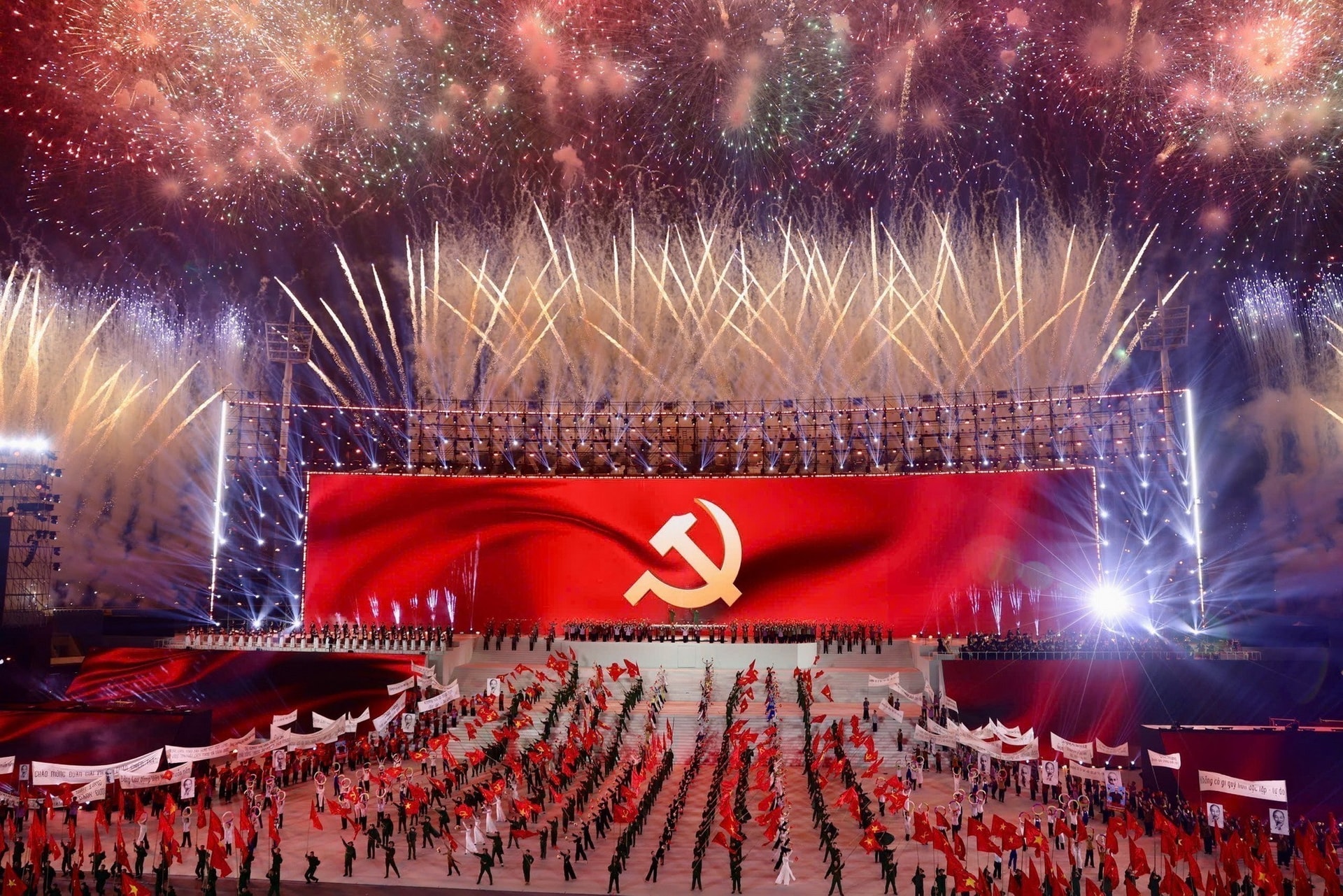

Test your knowledge about the founding of the Communist Party of Vietnam
BIDV warmly celebrates the 96th anniversary of the founding of the Communist Party of Vietnam (February 3, 1930 - February 3, 2026) and invites you to learn more about this historic event in our country.
Learn more now!
1. Where was the first Communist Party branch in Vietnam established in March 1929?
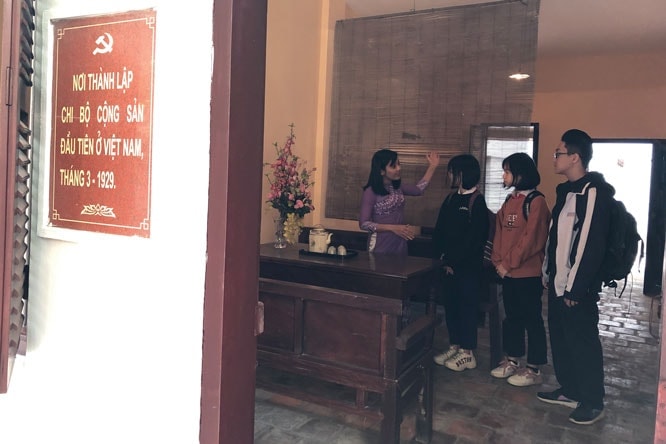
According to historical records, House No. 5D on Ham Long Street was where the first communist cell in the country was established in March 1929. This was a significant event in the history of the Communist Party of Vietnam, the Vietnamese revolution in particular, and the Vietnamese nation and people in general.
One night in March 1929, an important meeting was held here, deciding to establish the first communist cell in Vietnam. The cell consisted of eight people, with Tran Van Cung, Ngo Gia Tu, Nguyen Duc Canh, Do Ngoc Du, Trinh Dinh Cu, Nguyen Phong Sac, and others as its core members. Comrade Tran Van Cung was elected as the cell's secretary. At this meeting, the branch set out a number of tasks, including raising the issue of establishing a communist party at the 2nd North Vietnam Youth Congress to rally delegates' support. The comrades in the branch called on workers and peasants to struggle, decided to publish the Party's newspapers, translated documents about the Russian October Revolution to send to localities, and promoted the development of Party foundations.
Immediately after its establishment, the branch advocated intensifying the revolutionary struggle, especially in factories, to train and develop Party members. The Provisional Central Executive Committee consisted of comrades from the 5D Ham Long branch. The 5D Ham Long branch became the core of the Indochinese Communist Party, continuing to lead the movement in Hanoi and throughout the country.
2. Where was the conference to unify the three Communist organizations in Vietnam held?
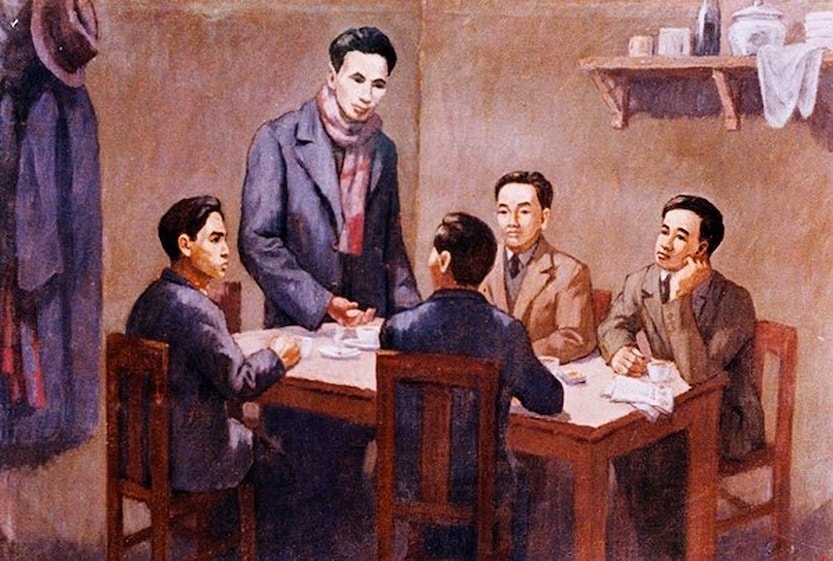
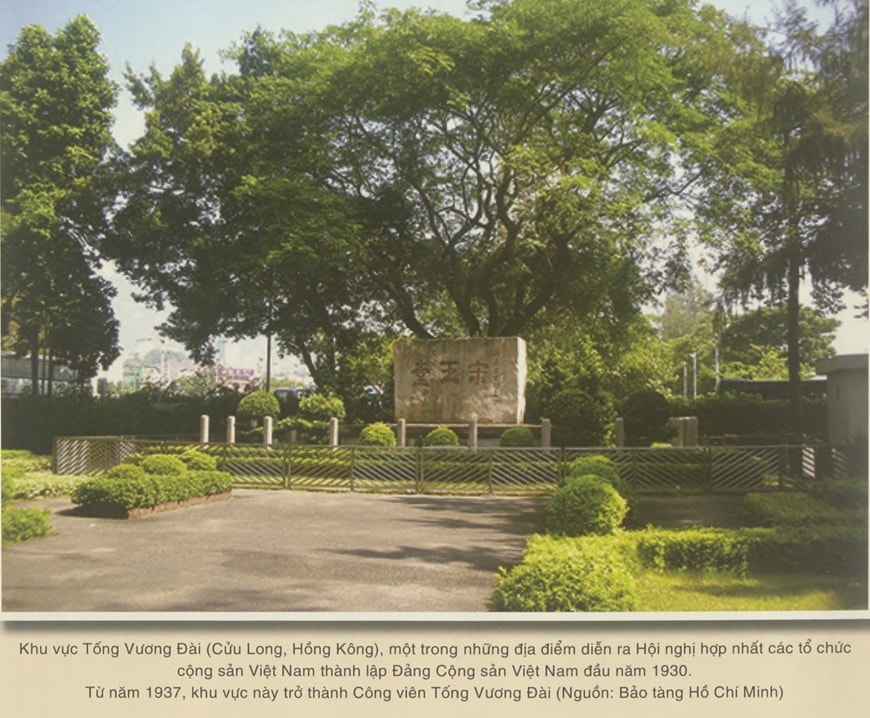
95 years ago, from February 3 to 7, 1930, in Cửu Long (Hong Kong, China), leader Nguyen Ái Quốc presided over the conference to unify the three Communist organizations in Vietnam: the Indochinese Communist Party, the Annam Communist Party, and the Indochinese Communist League. The conference unanimously agreed to establish a unified party, named the Communist Party of Vietnam. February 3, 1930 became the founding date of the Communist Party of Vietnam.
3. Which of the following documents were adopted at the Unification Conference establishing the Communist Party of Vietnam (February 3, 1930)?
The Communist Party of Vietnam was born as the crystallization of Marxism-Leninism with the labor movement and the patriotic movement; it was the result of a thorough political, ideological, and organizational preparation process by a group of revolutionary fighters, led by Comrade Nguyen Ai Quoc.
This event marked a major turning point in the history of the Vietnamese revolution, ending a prolonged crisis over the path to national salvation. The Short-Term Program and Short-Term Strategy drafted by Comrade Nguyen Ai Quoc and adopted by the Party Founding Conference determined that Vietnam must carry out a revolution to liberate the nation and advance toward socialism. National independence and socialism are the only correct revolutionary path to achieve the goals of national liberation, class liberation, social liberation, and human liberation.
4. When did the Indochinese Communist League merge into the Communist Party of Vietnam?
On February 24, 1930, at the request of the Indochinese Communist League, two members of the Provisional Executive Committee and the Secretary of the Southern Executive Committee met in Saigon to recognize and admit this communist organization into the Communist Party of Vietnam. The unification of the three predecessor communist organizations into the Communist Party of Vietnam, the conversion of communist branches into Party branches, and the election of the Provisional Central Executive Committee were quickly completed in practice.
This event also marked the unity and consensus of communist fighters from the very beginning of the young organization. Disagreements among communists were set aside so that all could work toward the common goal of fighting for national independence and happiness for the people.
5. What did the Party's first platform define as the strategic goal of the Vietnamese revolution?
After analyzing the social situation in Vietnam at the end of the 19th century and the beginning of the 20th century under the rule of French colonialists and the feudal Nguyen dynasty, the Political Platform outlined the path of the Vietnamese revolution as "carrying out a bourgeois democratic revolution and a land revolution to advance toward a communist society."
That is, to carry out a national democratic revolution advancing toward socialism and communism. The Platform clearly stated that, politically: Overthrow the rule of French colonialism and the feudal regime, make Vietnam completely independent, establish a workers' and peasants' government, and organize a workers' and peasants' army. Economically: Abolish all national debts; confiscate all large capitalist properties (such as industry, transportation, banks...) of French capitalists and transfer them to the management of the peasant-worker-soldier government; confiscate the land of French capitalists and large landlords to become public property and distribute it to poor peasants, abolish taxes for poor peasants; develop and expand industry and agriculture; implement an 8-hour workday. Social: The people are free to organize, men and women have equal rights, and universal education is implemented according to the principles of workers and peasants.
6. The founding conference of the Party adopted the brief regulations of the Communist Party of Vietnam. So what issues do the brief regulations of the Communist Party of Vietnam stipulate?
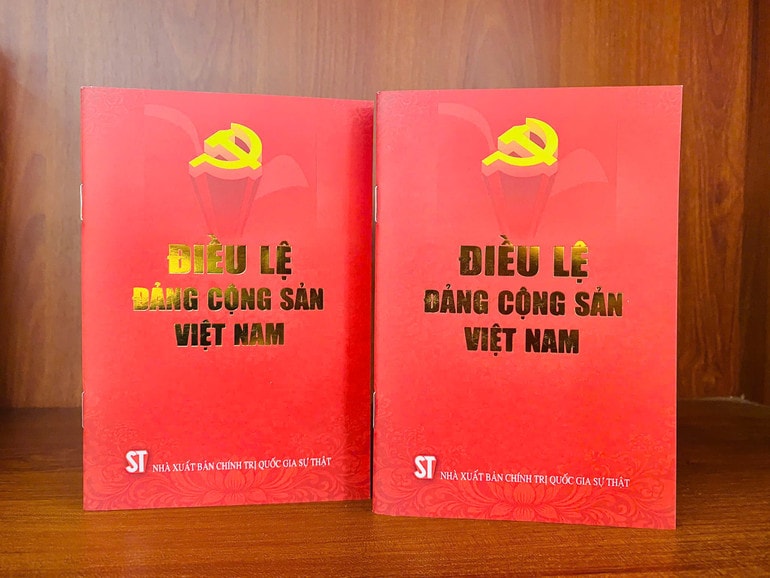
The Charter of the Communist Party of Vietnam is the Party's fundamental legal document, holding a particularly important position in the entire political life of the Party and the political system of our country.
The Charter clearly defines the Party's principles, objectives, and ideological foundation; stipulates the basic principles of the Party's organization, activities, and structure; and clarifies the responsibilities, obligations, and powers of Party members and Party organizations at all levels.
Studying, thoroughly understanding, and strictly implementing the Party Constitution is a mandatory requirement to ensure ideological, organizational, and action unity throughout the Party, thereby contributing to maintaining the Party's leadership role over the state and society.
7. Who was the first General Secretary of the Party?
Comrade Tran Phu (1904 - 1931) - the first General Secretary of the Communist Party of Vietnam, dedicated his entire life to the revolutionary cause of the Party and the nation.
The Political Platform drafted by Tran Phu and adopted by the Central Committee Conference in October 1930 was an important document of the Party, applying the principles of Marxism - Lenin on the national and colonial questions and the basic points presented in the Short Program and Short Strategy drafted by Nguyen Ái Quốc and adopted at the Party's founding conference.
8. How many Party members were there when our Party was founded and unified?
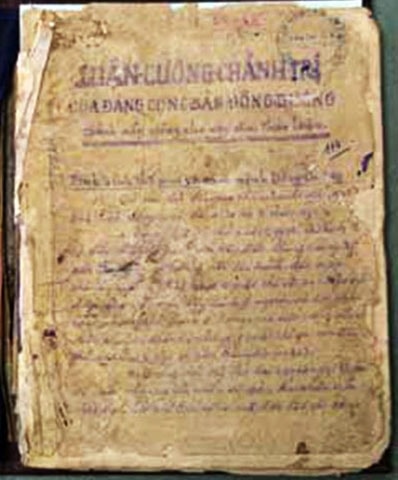
According to Comrade Ha Huy Tap in his work "A Draft History of the Communist Movement in Indochina," he states: "The actual unification process began in February 1930 and lasted for several weeks. The following organizations joined the unified Communist Party of Vietnam: the Indochinese Communist Party (85 members), the Annam Communist Party (61 members), the New Vietnam Communist League (119 members), and the Indochinese branch of the Chinese Communist Party (300 members).
Thus, after unification, the Party had 565 members, divided into 40 branches. It should be added that at the time of unification, there were also 40 Indochinese communists in Siam and 14 in Hong Kong. Comrade Ha Huy Tap's report also stated that the provisional Central Executive Committee consisted of seven full members and seven alternate members, all of whom were representatives of the Indochinese Communist Party and the Annam Communist Party. (Hong The Cong (Ha Huy Tap), Draft History of the Communist Movement in Indochina, printed in Complete Party Documents, Volume 4, National Politics Publishing House, Hanoi, 1999, p.409). Source: People's Army Newspaper
9. The Eighth Plenary Session of the Central Committee of the Party concluded on May 19, 1941. This date also marked the birth of?
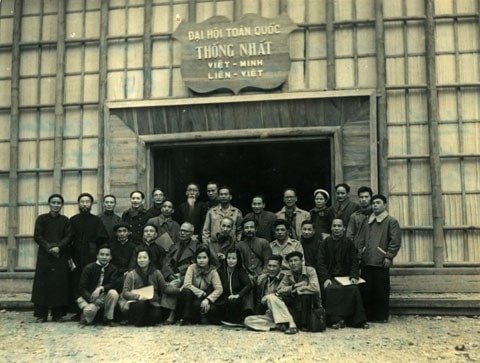
On January 28, 1941, leader Nguyen Ai Quoc returned to Vietnam and convened the 8th Conference of the Central Executive Committee of the Indochinese Communist Party. The conference was held in Pac Bo (Cao Bang) from May 10 to 19, 1941. The conference decided to establish a United National Front against France and Japan, named the Vietnam Independence League (abbreviated as Viet Minh).
The Viet Minh Front was officially established on May 19, 1941, replacing the Indochinese Anti-Imperialist National United Front. Implementing the Resolution of the 8th Central Committee Meeting, on October 25, 1941, the Viet Minh Front announced its Declaration, Program, and Statutes. The Viet Minh's Declaration raised the banner of national liberation, advocating: "the union of all patriotic compatriots regardless of wealth, age, gender, religion, or political orientation, in order to work together for liberation and survival."
Advocating for national salvation, the Viet Minh Front also affirmed, "The Viet Minh advocates uniting all strata of the people, all revolutionary organizations, and all oppressed ethnic groups in Indochina to overthrow imperialism and achieve complete independence for Vietnam and all of Indochina."
Source: Vietnam Fatherland Front Electronic Information Portal
10. How many Congresses has our Party held to date?
It has been 96 years since the Communist Party of Vietnam was founded, and the Party has held 14 National Congresses. Each National Congress is associated with different political tasks, but they are all important milestones in the development of the Party and the country. The revolutionary practice has confirmed that the Party's correct leadership is the primary factor determining all the victories of the Vietnamese revolution.
The 14th National Congress of the Communist Party of Vietnam was successfully held from January 19 to 23, 2026, in Hanoi, against the backdrop of Vietnam undergoing major changes in its organizational structure, economy, and politics.