

Easing the Financial Burden of Tax Compliance for Small Businesses
The proposal to raise the revenue threshold for applying the simplified tax calculation method from 3 billion to VND 10 billion per year is drawing significant attention from many business households. For businesses with revenue in the range of a few billion VND, their goal is not only to reduce the amount of tax they owe but also to cut costs, simplify bookkeeping, and streamline procedures when fulfilling their tax obligations.
Business Households Seek to Reduce Accounting and Documentation Burdens
The Ministry of Finance is seeking public feedback on a draft National Assembly resolution regarding reductions in personal income tax and corporate income tax for business households, individual entrepreneurs, and businesses. One notable provision is the proposal to raise the revenue threshold—from VND 3 billion to VND 10 billion per year—allowing business households and self-employed individuals to opt for a simplified tax calculation method based on a tax rate applied to revenue.
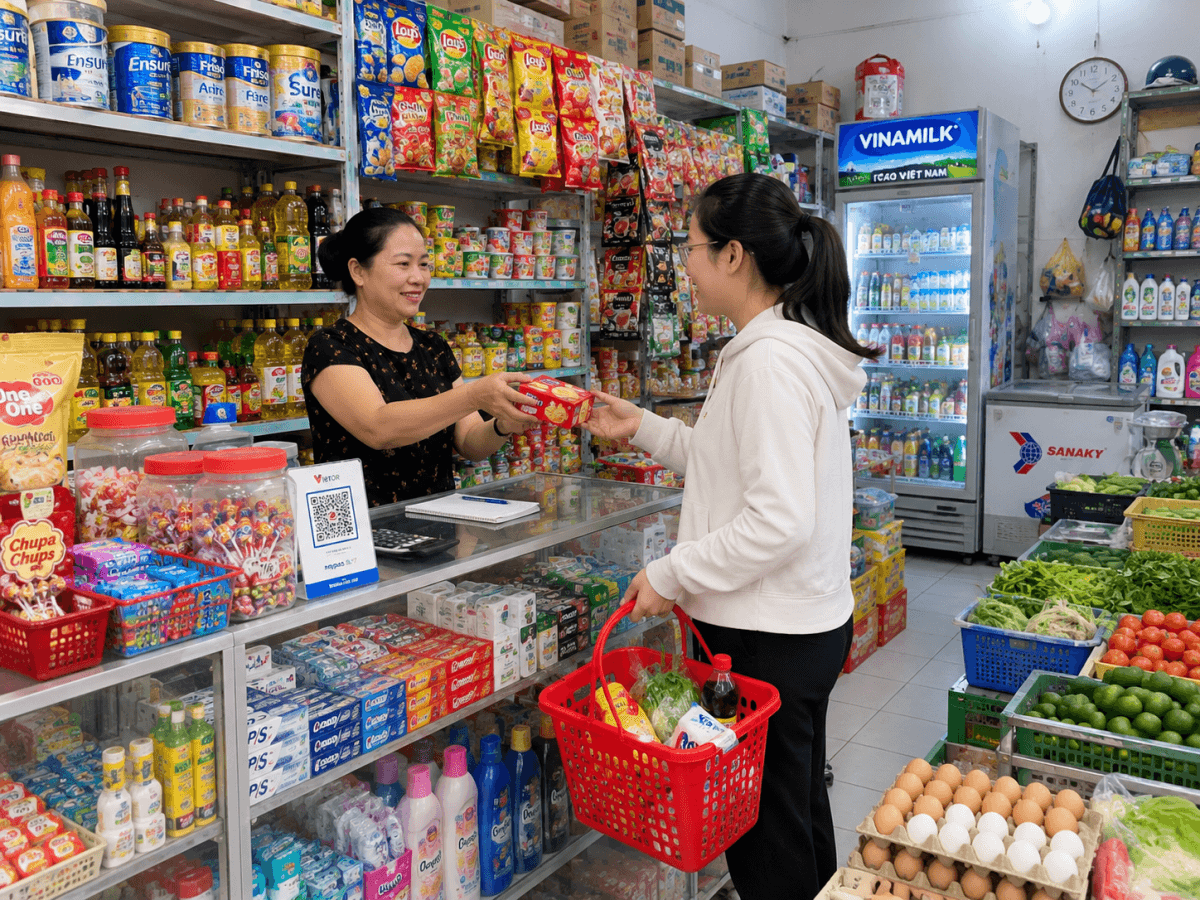
This proposal has garnered significant interest from many business households, particularly those with annual revenue of several billion dong. This group operates on a relatively large scale but may not necessarily have sufficient resources to maintain a professional accounting department.
Ms. Nguyen Thi Hue, owner of a grocery store in Phuc Loi Ward (Hanoi) with annual revenue of approximately 3–VND 5 billion, said her main concern is how to fulfill her tax obligations more conveniently and at a lower cost.
“With revenue of about 3–VND 5 billion, if taxes were calculated as a percentage of revenue, it would be easier for me to comply—I wouldn’t have to worry as much about paperwork and supporting documents for tax reporting,” Ms. Hue shared.
According to business owners, the current pressure stems not only from the amount of tax owed. Tracking invoices, supporting documents, ledgers, filing tax returns, and organizing accounting records also incur significant costs. For a store directly managed by the owner, hiring an accountant or using regular accounting services can become a substantial expense. In particular, high revenue does not necessarily equate to high profits, as this depends on the nature of the industry, cost of goods sold, operating expenses, and profit margins. Therefore, many business households are more concerned with the total cost of complying with tax policies rather than focusing solely on the tax rate.
Mr. Le Van Tuan, Director of Keytas Tax Accounting Co., Ltd., believes that the proposal to raise the threshold for the simplified tax calculation method from VND 3 billion to VND 10 billion is a necessary adjustment. The current grouping system creates a relatively large gap in compliance requirements for households that only slightly exceed the VND 3 billion threshold.
Households with revenue between 1 and VND 3 billion fall into Group 2, while Group 3 starts at VND 3 billion and goes up to VND 50 billion. Thus, a household with revenue between 3 and VND 5 billion may have to meet significantly higher compliance requirements than a household with revenue below VND 3 billion.
“Compliance costs for a household with revenue of 3–VND 5 billion or 5–VND 7 billion can become a significant burden relative to the profits generated. Meanwhile, for households with revenue of 40–VND 50 billion, although compliance costs are higher, the scale of profits is usually large enough to offset them,” Mr. Tuan analyzed.
The VND 10 billion threshold creates more room for business households to grow
According to experts, if approved by the National Assembly, business households with annual revenue below VND 10 billion will not be required to maintain accounting systems and keep detailed records of input documents to the same complex extent as required under the profit-based tax calculation method. This will help reduce compliance and operating costs for a large segment of business households.
Notably, the VND 10 billion threshold could create a buffer for business households to expand their operations. A household with revenue of VND 3 billion can increase its revenue to VND 5 billion, VND 7 billion, or VND 9 billion without immediately facing a significant jump in compliance requirements. This may help alleviate concerns about expanding business operations, particularly for households facing the choice of continuing to operate as a household business or converting to a corporate entity.
However, based on business realities, some households believe that raising the threshold to VND 10 billion still needs to be carefully considered in light of the specific characteristics of each industry.
Mr. Hoang Tuan Hai, owner of a construction materials business in Hanoi, noted that a key characteristic of this industry is the high value of goods, so while revenue may rise rapidly, profit margins do not necessarily increase proportionally.
“There are items with very high values, so revenue may appear high, but actual profits are not always high. If businesses in the group above VND 10 billion continue to be required to calculate taxes based on profit and meet stricter compliance requirements, the costs associated with accounting, documentation, and invoices will remain a burden,” Mr. Hai said.
This is also an issue that needs to be considered in the policy-making process. Raising the threshold to VND 10 billion may help reduce the burden on a large number of business households, but at the same time, it is essential to ensure that regulatory authorities have sufficient tools to accurately determine actual revenue.
Simplifying tax calculation methods does not mean relaxing tax enforcement. As the requirement to prove expenses is reduced, accurately determining revenue becomes even more critical.
In the context of digital transformation, electronic invoices, payment data, data from e-commerce platforms, and other business data sources can serve as a basis for tax authorities to verify revenue.
According to experts, if designed coherently, raising the revenue threshold for the simplified tax calculation method to VND 10 billion will not only help reduce immediate compliance costs but also create a more favorable environment for business households to expand.
More importantly, the policy should aim to strike a reasonable balance between revenue scale and the ability to bear compliance costs, avoiding a situation where households that have just exceeded the threshold are burdened with additional procedures while their profits are not yet substantial.
When compliance costs are reduced, business households have additional resources to sustain operations, invest, and expand production and business activities. This is considered one of the key factors for the sustainable development of the household economic sector and its gradual transition to a business model with greater scale and higher productivity.