

Proposal to increase financial aid for college and vocational education students in line with the base salary
The Ministry of Education and Training is seeking public comment on a draft decree regulating financial aid and residential policies for students at higher education institutions and vocational training institutions.
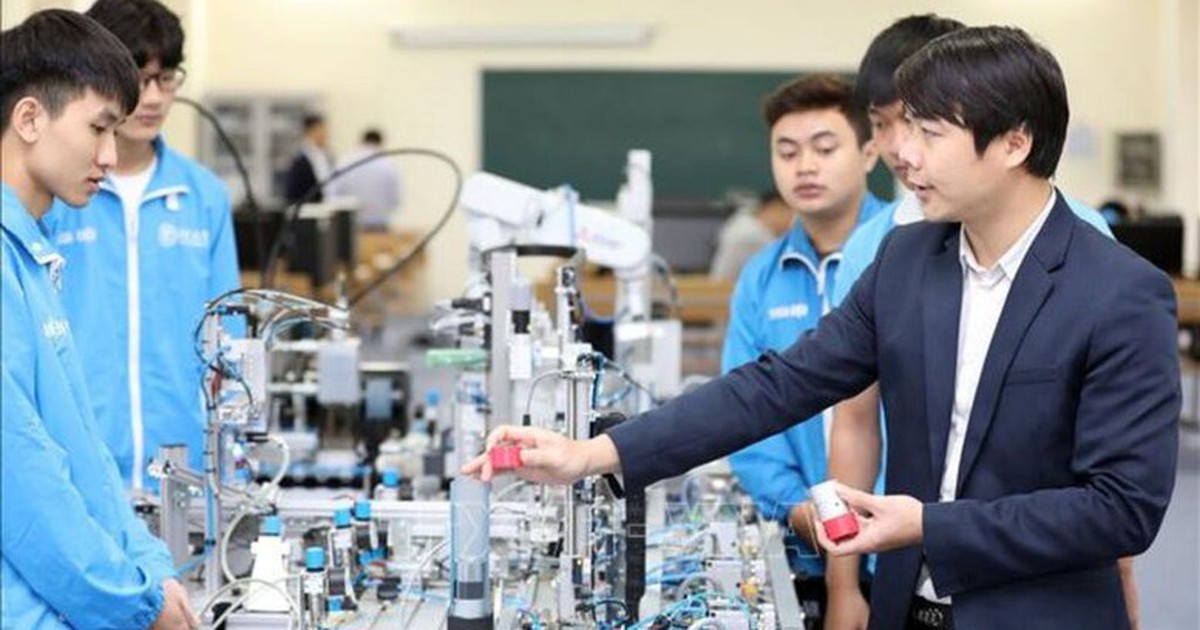
The draft was developed to implement the Education Law and the Vocational Education Law. In addition to harmonizing previously scattered regulations, the draft Decree also adopts a student-centered approach, expands financial aid for students at private institutions, increases aid levels to ensure a minimum level of support, simplify procedures; clearly delineate responsibilities; and strengthen the application of digital transformation, science, and technology.
Increasing subsidy levels in line with the base salary
The draft expands the financial aid policy to eligible students enrolled in private higher education and vocational education institutions. This new approach determines eligibility for the policy based on the student’s status and circumstances rather than the type of educational institution, thereby ensuring equal benefits for students at both public and private institutions, in line with the policy of socializing education.
To ensure the policy’s effectiveness, the draft also adjusts the subsidy amount to be linked to the base salary rather than a fixed amount as previously stipulated, allowing the value of the support to be adjusted in line with economic fluctuations and the cost of living.
At the same time, the draft stipulates different benefit levels for students belonging to a single eligibility group and for those who belong to multiple eligibility groups simultaneously. This provision more accurately reflects the level of hardship in each individual case and ensures that students have the means to cover a portion of their educational and living expenses, thereby reducing the risk of interrupting their studies due to financial difficulties.
Payments are made using cashless methods
The draft Decree is designed to significantly streamline administrative procedures, reduce paperwork, shorten processes, and diversify methods for accepting applications. Students may submit applications in person, via postal services, or electronically; furthermore, they are not required to resubmit information already contained in national databases, specialized databases, or the information systems of competent state agencies. The procedures for receiving, reviewing, approving, and disbursing funds are clearly and uniformly defined, facilitating the process for both students and the implementing agencies.
In addition to procedural reforms, the draft clearly outlines a policy management approach based on data and the application of science and technology. Information on students, policy beneficiaries, and academic status is sourced from relevant databases; applications are processed electronically, and disbursements are made via cashless methods. This approach not only reduces bureaucracy, minimizes duplication and errors, but also enhances openness and transparency, while improving the ability to track, monitor, and evaluate the effectiveness of policy implementation.
Numerous provisions aim to prevent duplication and budget losses
The draft clearly delineates responsibilities among the Ministry of Education and Training, local authorities, and educational institutions in implementing the policy. Accordingly, the Ministry of Education and Training focuses on providing guidance, monitoring, inspecting, and evaluating implementation nationwide. Provincial People’s Committees are responsible for organizing implementation and ensuring resources in accordance with their delegated authority. Educational institutions directly implement the policy for students under their jurisdiction. For students attending private educational institutions, the commune-level People’s Committee where the student has permanent residence is responsible for reviewing, approving, and disbursing funds based on confirmation from the educational institution. This decentralization approach aligns with the two-tier local government model, reduces intermediate levels, shortens processing times, and clarifies the responsibilities of each agency.
At the same time, the draft also refines the implementation principles to ensure that the policy is implemented for the correct beneficiaries, at the correct level, and within the correct timeframe. The provisions regarding the principles for eligibility for the policy apply to students who belong to multiple beneficiary groups or who are simultaneously eligible for multiple policies with the same objective; cases involving the suspension, termination, retroactive payment, and recovery of funds are specifically defined, helping to minimize duplication and budget losses while enhancing the efficiency of managing and utilizing state resources.
The drafting of this Decree reflects the direction of improving social welfare policies in education toward a coordinated, modern, and learner-centered approach. Once enacted, the Decree will establish a unified legal framework to ensure that policies supporting students are implemented transparently, promptly, and effectively, thereby helping to ensure equitable access to education and improve the quality of the workforce.
Readers are invited to view the full text of the draft and submit comments here./.