

Ho Chi Minh City: A 30-day-and-night campaign to implement the Urban Development Law
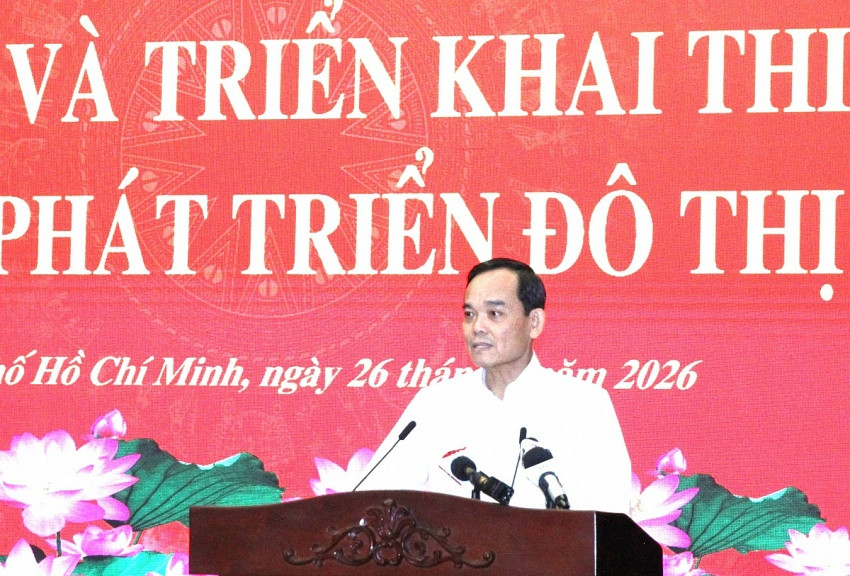
On August 26, at the Conference on Understanding and Implementing the Urban Development Law, the Chairman of the Ho Chi Minh City People’s Committee launched a 30-day campaign to complete the drafting of documents for the law’s implementation, with the determination to ensure that the entire system of guiding documents takes effect alongside the Urban Development Law on October 1, 2026.
The Urban Development Law was passed by the National Assembly on August 24 and will take effect on October 1. The law consists of 5 chapters, 66 articles, and 7 groups of specific policies related to organizational structure, planning, economic development, science and technology, resource mobilization, and regional cooperation. The mechanisms and policies outlined in the law are designed to promote the development of Ho Chi Minh City.
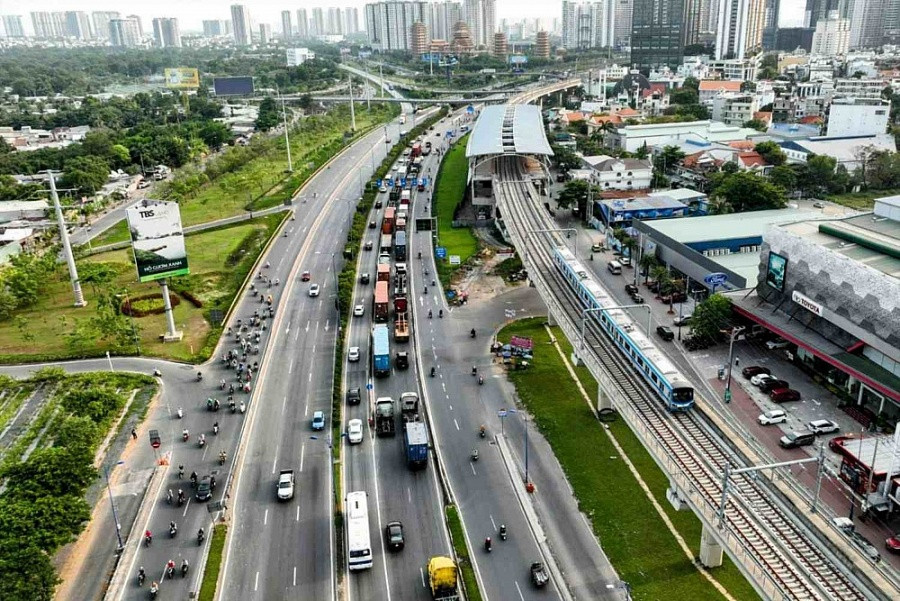
Accordingly, the city has been granted expanded authority over organization, personnel, planning, urban development guided by public transit-oriented development (TOD), free trade zones, finance, land management, and science and technology. Certain new mechanisms and policies may be piloted for up to five years after approval by the competent authorities. The city is authorized to establish and adjust free trade zones linked to international seaports; issue municipal bonds and project bonds; and develop a controlled testing framework for artificial intelligence, big data, and new technologies.
In the field of urban planning, the City People’s Council is authorized to decide on certain matters related to underground space, low-rise and high-rise development, and Transit-Oriented Development (TOD). The city also has the authority to apply certain special mechanisms regarding investment, land-use quotas, and land acquisition.
The Urban Development Law also designates Ho Chi Minh City as the coordinating hub for the special urban region and the Southeast region, providing a legal basis for regional connectivity projects, environmental protection, and climate change adaptation.
Nguyen Van Duoc, Chairman of the Ho Chi Minh City People’s Committee, emphasized that the National Assembly has granted the city an “institutional key” through unique and superior mechanisms and policies; The Standing Committee of the Ho Chi Minh City Party Committee has provided close and comprehensive guidance, creating an important political and legal foundation for the city to make a breakthrough; the remaining task is to take immediate action.
Regarding the 30-day intensive campaign to implement the Urban Development Law, Chairman Nguyen Van Duoc of the Ho Chi Minh City People’s Committee stressed that although the timeframe is short, it is significant and can bring about major changes and a quantum leap in the city’s development if preparations are thorough and actions are decisive. Therefore, every day must see tasks resolved and concrete results achieved—work that is both genuine and truly effective. The volume of documents to be prepared is substantial, comprising 168 legal documents; among them are 117 resolutions of the City People’s Council, 48 decisions of the City People’s Committee, and 3 decisions of the Chairman of the City People’s Committee. At its upcoming session, the Ho Chi Minh City People’s Council will consider and adopt 70 of these resolutions.
Mr. Nguyen Van Duoc emphasized that the implementation of laws must be proactive, decisive, coordinated, substantive, and effective. At the same time, he stressed the need to thoroughly implement the principle of “clear personnel, clear tasks, clear timelines, clear responsibilities, clear authority, and clear results”; linking decentralization and devolution of authority with the oversight of power, as well as the prevention and fight against corruption, waste, and negative practices; and encouraging the protection of proactive, creative officials who dare to think, act, and take responsibility for the common good. Alongside this is the requirement to shift the mindset decisively from pre-approval management to fostering development and post-implementation oversight; and to fully leverage new development spaces, such as maritime space, underground space, high-altitude space, free trade zones, logistics hubs, and controlled experimentation mechanisms. The drafting and promulgation of legal documents must ensure a solid political, legal, and practical foundation, high feasibility, and, most importantly, prevent any legal gaps once the law takes effect.
Speaking at the conference, Tran Luu Quang, Secretary of the Ho Chi Minh City Party Committee, emphasized that the greatest value of the Urban Development Law lies not only in its specific mechanisms but also in changing the mindset regarding urban development. Cities are no longer merely objects of management but must become agents of growth. If we continue to think in the old, rigid ways, this law will be meaningless.
According to Mr. Tran Luu Quang, the new law brings three important benefits to the city: substantive decentralization and devolution of authority based on the principle of “local authorities decide, local authorities implement, and local authorities take responsibility,” with approximately 240 provisions falling under the jurisdiction of the People’s Council, the People’s Committee, and the Chairman of the Ho Chi Minh City People’s Committee. Ho Chi Minh City. The law prioritizes the application of its provisions in cases of conflict with other legal documents. Next is the creation of a space for piloting policies and new, stable, long-term economic models to transform resources into drivers of development. Finally, it accelerates implementation; the city no longer waits for decrees or guiding circulars from the central government before taking action; the phrase “waiting for guidance from the central government” is now a thing of the past.
Under the new decentralization mechanism, Mr. Tran Luu Quang has called on the administrative apparatus to change its approach. Previously, when addressing specific issues, officials would typically identify a solution first and then seek the mechanisms to implement it. Now, with the authority granted by law, the city must proactively design solutions within the bounds of the law. “The 168 wards, communes, and special zones must take the initiative in developing action plans, resolving bottlenecks, and fostering development, as they are the level closest to the people and businesses,” Mr. Quang said.