

When opening an online savings account, do customers receive a passbook?
Reader Hong Son (Dien Bien) asks: I just made an online savings deposit through the bank’s app, but I didn’t receive a paper savings passbook like I would if I had deposited the money at the teller window. My question is: Does the bank issue a passbook for online savings deposits? If there is no paper passbook, what can customers use as proof of the deposit, and can they request a written confirmation from the bank when needed?
Banking Times would like to thank you for your question. Here is our advice:
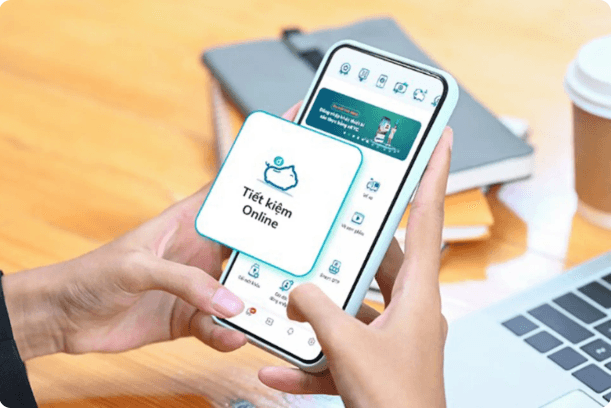
Unlike in-person savings deposits at a teller window, online savings deposits are typically processed entirely through digital banking channels; therefore, customers are not issued a paper savings passbook. Instead, information regarding the deposit is recorded, stored, and managed by the bank on its electronic system.
After completing the transaction, customers can log in to the app or Internet Banking to check the deposit details. Depending on the bank and product, customers can view information such as the deposit amount, term, interest rate, deposit date, maturity date, interest payment method, and the status of the deposit.
Essentially, a paper savings passbook is not the sole factor confirming ownership of a deposit. For online deposits, the transaction is established through the bank’s electronic process, and the information is recorded in the system. Therefore, the fact that customers do not physically hold a paper passbook does not mean the deposit has not been established or is invalid.
One point customers should note is that there may be a difference between a “savings passbook” and a “deposit confirmation document.” Paper savings passbooks are typically used for deposits opened at the counter. Meanwhile, for online deposits, customers can use transaction details, confirmation notices, or other forms of electronic confirmation provided by the bank to track their deposits.
In cases where the deposit is needed to prove financial standing—such as for study abroad applications, visa applications, loan applications, or other legitimate purposes—customers do not necessarily need a paper savings book. However, document requirements may vary depending on the specific situation. Customers should contact the bank where the savings account was opened for guidance on obtaining a balance confirmation, deposit confirmation, or other documentation appropriate for their intended use.
In addition, customers should note that not all online savings products have the same management procedures or methods for providing documentation. Each bank may have its own procedures for opening, closing, renewing, and making early withdrawals, as well as for providing documentation for online savings accounts. Therefore, before making a deposit, customers should carefully read the product’s terms and conditions and understand how the bank verifies transactions.
To protect their interests, after making an online savings deposit, customers should double-check all deposit details on the app, particularly the amount, term, interest rate, maturity date, and method of receiving interest. They should also keep any notifications or electronic transaction confirmations provided by the bank.
Thus, making an online savings deposit without a paper passbook is not an unusual occurrence. This is a characteristic of electronic transactions, in which deposit information is managed on the bank’s system. If customers need documentation to verify their deposit, they should proactively request that the bank provide the appropriate type of documentation for their specific purpose.