

Data "bridges" the gap between policy and practice in the customs sector
The Customs sector continues to move into a new phase of development with the goal of building a digital and smart customs system. In this context, data has become a crucial “link” in enhancing compliance and managing risk, rather than increasing pre-clearance requirements and procedures.
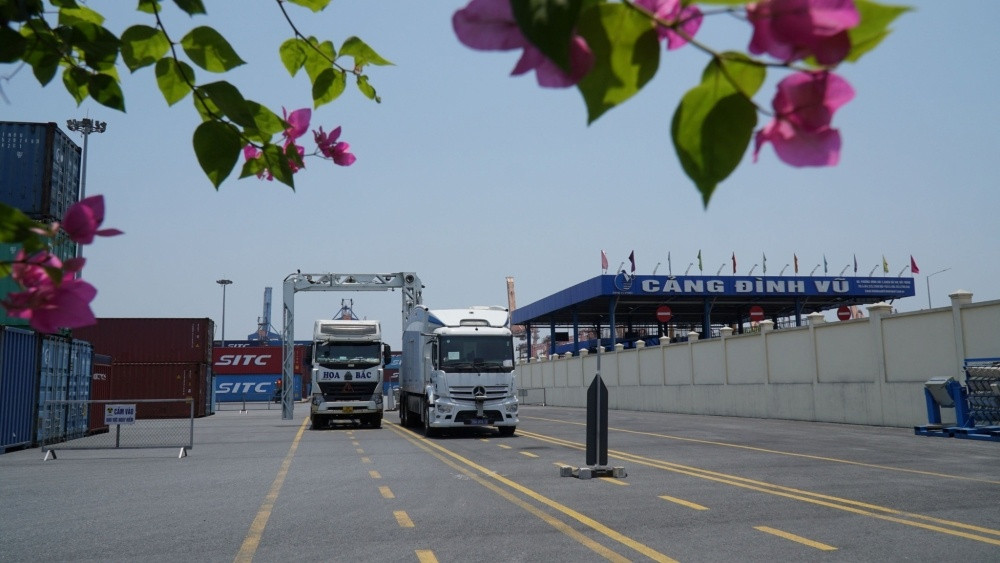
Clarifying Mechanisms for Coordination and Data Sharing
According to Mr. Dau Anh Tuan, Deputy Secretary General and Head of the Legal Affairs Department at the Vietnam Chamber of Commerce and Industry (VCCI), the business community highly values the reform achievements the Customs sector has made over the past decade. From a manual paper-based declaration model, nearly the entire process has now been digitized. Clearance time for the “green lane” is now measured in seconds. Notably, the rate of physical cargo inspections has dropped from nearly 10% to about 2.65% over the past year, even as the number of customs declarations has increased manyfold. These figures clearly reflect the effectiveness of the customs modernization process and lay the foundation for the Customs sector to move into a new phase of development aimed at building a digital and smart customs system.
Digital transformation in the customs sector brings many benefits in terms of optimizing clearance time and costs, but import-export businesses still face challenges. A representative from an export company pointed out that data between customs authorities, relevant ministries and agencies (specialized inspection bodies), logistics providers, seaports, and shipping lines has not yet been fully integrated in real time. Businesses still have to repeatedly enter data across multiple information portals or submit both electronic declarations and paper documents for verification. Meanwhile, the customs sector is under significant pressure as it must simultaneously operate continuous business systems, implement new digital transformation projects, and handle increasingly complex connectivity requirements with ministries, agencies, banks, businesses, and shipping lines.
Recently, with 471 out of 474 deputies voting in favor, the National Assembly passed the Law Amending and Supplementing Certain Articles of the Customs Law, effective March 1, 2027, to improve the legal framework, and to establish a legal foundation for the modernization of customs operations, meeting the requirements of digital economic development, e-commerce, and international integration. One of the notable provisions is the addition of the principle that documents and data already shared through the National Single Window mechanism need not be resubmitted. This represents a step toward shifting from document-based management to data-driven management, while simultaneously reducing paperwork, time, and compliance costs for businesses. Regarding the National Single Window, the Law clarifies the mechanisms for coordination and data sharing and adds the principle that businesses are not required to resubmit paper copies of data that has already been shared.
In addition, the Law establishes a legal framework for managing the import and export of goods through e-commerce platforms. The Law also continues to strengthen risk management, compliance management, and post-clearance audits. Regarding customs clearance agents, the regulations have been revised so that the Minister of Finance focuses on stipulating management and operational requirements rather than business conditions; management has shifted significantly toward a post-inspection mechanism based on professional standards. These changes have a direct impact on the business environment, as regulatory requirements are now based on data, compliance levels, and risk assessments rather than an increase in pre-clearance conditions and procedures.
The provisions codified in this legislation not only facilitate business operations but also set higher standards for customs authorities in data management, risk analysis, cargo monitoring, and post-clearance inspections. This is an important foundation for building a digital, smart, modern, and transparent customs model, an expert affirmed.
Attorney Phan Hoai Nam, General Director of W&A Consulting Co., Ltd., noted that the primary benefit lies in the time and manpower saved in carrying out procedures. Once data has been provided and authorized for use, businesses and agents will no longer have to repeatedly prepare, enter, and submit the same information. For businesses engaged in regular import-export activities, reducing these steps will yield significant efficiency gains. Another benefit is the reduction of costs incurred due to prolonged processing times. When data is fully provided and shared in accordance with regulations, and Customs authorities can utilize existing information, the processing can be expedited, thereby enabling businesses to be more proactive in transportation, receiving goods, warehousing, yard storage, and production and business planning.
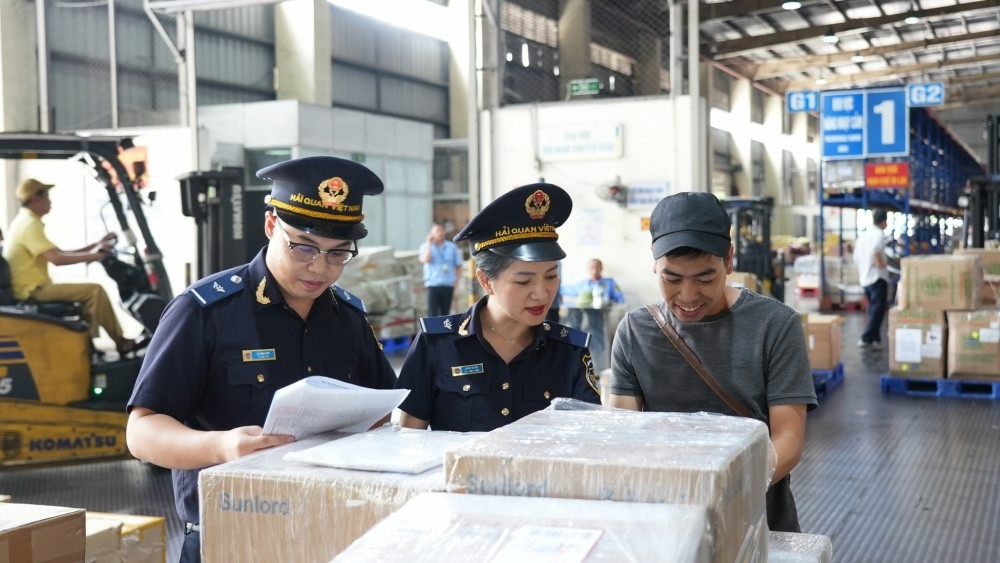
For customs brokers, as administrative tasks are reduced through the use of data, resources can be more fully focused on professional duties such as document review, consultation, and assisting businesses in resolving cases requiring clarification. Along with the post-clearance audit mechanism, agents will have to compete based on service quality and actual professional competence, attorney Phan Hoai Nam affirmed.
Incorporating Grassroots Perspectives into the Law-Making Process
To ensure that the provisions of the Law, once implemented, do not merely comply with the letter of the law but also ensure practical feasibility, Mr. Kim Long Bien, Head of the Legal Affairs Committee, of the General Department of Customs, explained that the Customs Authority has proactively prepared well in advance, with the goal of ensuring that subordinate regulations are feasible, grounded in practical realities, and ready to take effect simultaneously with the Law on March 1, 2027. The objective of drafting these subordinate regulations is to closely follow the new provisions while addressing issues arising in actual management practices, ensuring consistency in implementation across customs units, and facilitating business operations.
Based on this, the General Department of Customs organized an intensive working session to draft a Decree detailing and specifying measures for implementing the Customs Law regarding customs procedures, inspections, supervision, and control. Involving both specialized units at the General Department level and regional Customs branches has enriched the drafting process with perspectives drawn from actual implementation experiences. Provisions directly related to processes, procedures, inspections, supervision, and risk management are aligned with actual conditions at border crossings and business operations. Alongside the drafting process, on-site surveys at border checkpoints are also prioritized to incorporate feedback from the field into the process of refining the law.
Combining work at the Sub-Department’s headquarters with direct field surveys at border crossings helps the working group gain a more comprehensive understanding of the gap between legal provisions and practical implementation. This also serves as a vital source of information and data to provide a stronger practical foundation for refining the guidelines for implementing the Law, particularly regarding provisions that directly impact business operations and coordination among agencies at border crossings, Mr. Kim Long Bien affirmed.
Furthermore, according to Ms. Tran Hong Nguyen, Deputy Chair of the National Assembly’s Committee on Law and Justice, incorporating feedback from businesses helps more fully reflect the impact of legal provisions on production and business operations. Combined with information and data from the Customs Authority and relevant agencies, this serves as an important practical basis for identifying regulations that are effective, as well as areas that require further adjustment and refinement, so that the guidelines implementing the Customs Law can be effectively implemented.