

Streamline fire safety procedures and strengthen accountability to ensure safety is not compromised
The reduction of approximately 75 percent of administrative procedures in the field of fire prevention and firefighting (FPF), the shift from pre-inspection to post-inspection, and the increased accountability of businesses are paving the way for a new direction in reform. However, the overarching requirement is to reduce compliance costs without lowering safety standards.
Reducing Procedures, Increasing Responsibility
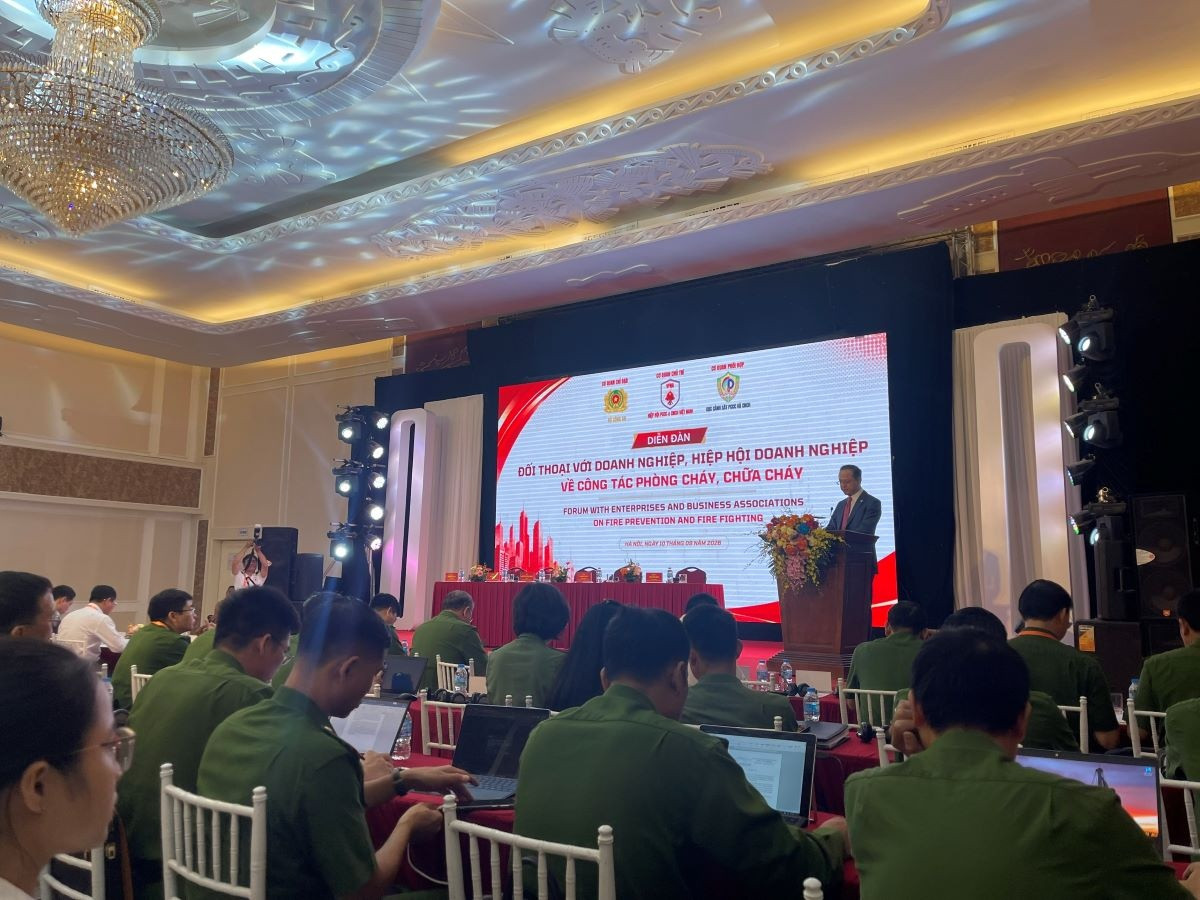
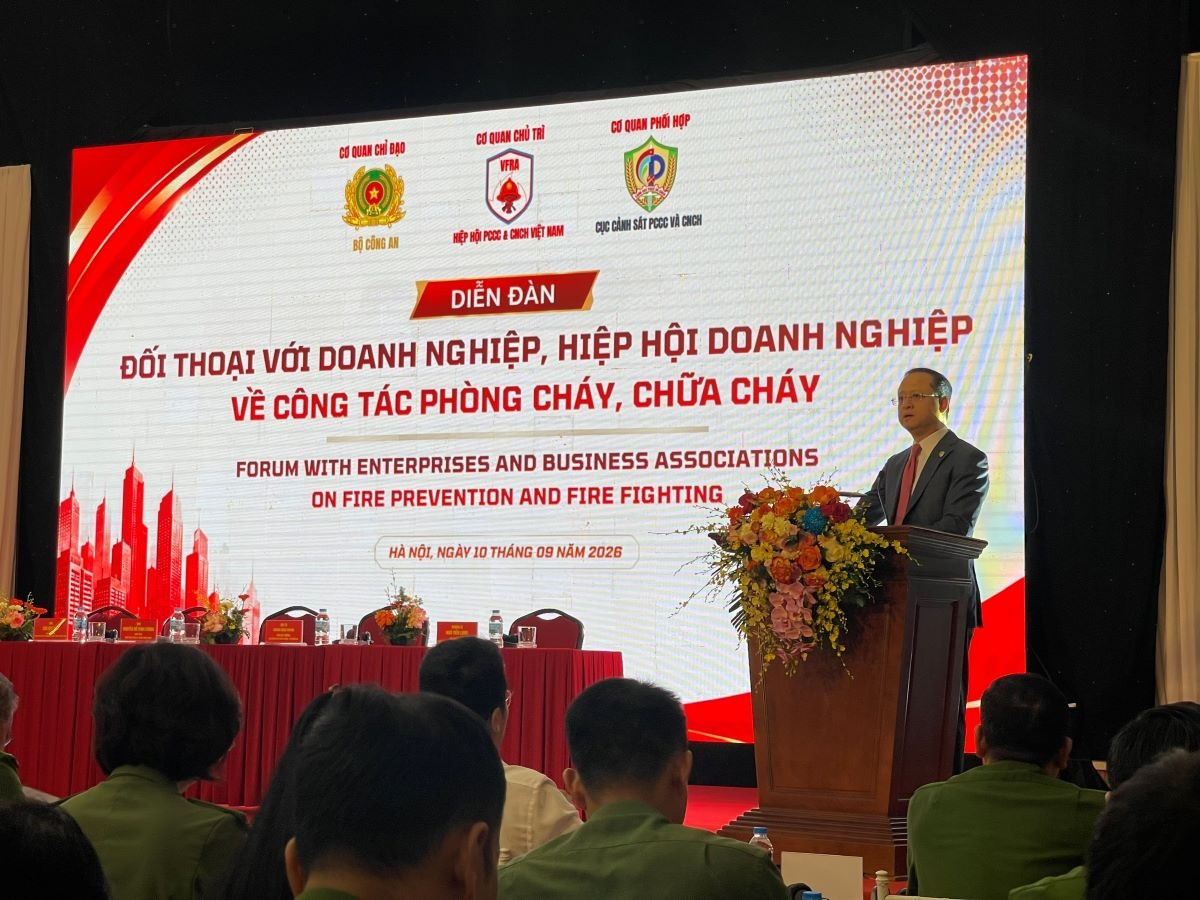
Speaking at the Business Dialogue Forum organized by the Association of Enterprises on Fire Prevention and Firefighting on September 10, 2026, Mr. Nguyen Do Tung Cuong, Chairman of the Vietnam Fire Prevention, Firefighting, and Rescue Association, noted that the new regulations are driving a shift in fire safety management philosophy—from procedural control to emphasizing responsibility, technical standards, and actual safety levels.
Notably, the Law on Fire Prevention and Control and Search and Rescue has reduced administrative procedures in the fire safety sector by approximately 75 percent, aiming to streamline processes, lower compliance costs, and facilitate matters for citizens and businesses. The law also repeals the provision classifying fire protection services as a “conditional business sector,” thereby increasing the autonomy and self-responsibility of organizations and businesses under the inspection and supervision of state management agencies.
At the same time, the government encourages organizations and individuals to participate in fire prevention, firefighting, and rescue operations. According to Mr. Cuong, this is a groundbreaking change that lays the foundation for society to become more deeply involved in ensuring safety.
The year 2026 is a pivotal year in the process of comprehensively implementing the new regulations. After the 2025 Law on Fire Prevention and Control and Search and Rescue takes effect on July 1, 2025, the Government, the Ministry of Public Security, the Ministry of Construction, and relevant agencies will continue to issue and amend numerous decrees, circulars, and technical standards.
Practical implementation has shown that businesses, project owners, design consulting firms, construction contractors, supervision consultants, and manufacturers, importers, and distributors of fire safety equipment and materials continue to face difficulties. These challenges stem not only from administrative procedures but also from the overlap between fire protection, rescue, and emergency response laws and construction laws.
Some new technical standards and codes need to be implemented, while those already issued must continue to be updated and amended. Issues related to the circulation and quality management of fire protection vehicles, equipment, and materials also directly impact production, business operations, and project timelines.
On May 18, 2026, the Ministry of Public Security issued Circular 62 on the decentralization, reduction, and simplification of administrative procedures within the Ministry’s jurisdiction, including the fields of fire prevention and control, rescue, and emergency response. According to Mr. Cuong, delegating authority to review fire safety designs for construction investment projects will reduce the workload on regulatory agencies and minimize impacts on project timelines. The goal is to reduce the number of involved agencies, shorten processing times, lower costs, and ease the compliance burden.
No Compromise on Safety for the Sake of Reform
According to Mr. Nguyen Do Tung Cuong, the Ministry of Construction has also issued circulars and guidance documents to update and amend the national standards system on fire safety. Notably, on September 8, 2026, the Government issued Decree No. 347, amending and supplementing certain regulations, including Decree No. 175, which details certain provisions and enforcement measures of the Construction Law, and Decree No. 106, which stipulates administrative penalties for violations in the field of fire prevention, firefighting, and rescue operations.
According to the Association’s assessment, Decree No. 347 helps resolve issues regarding the delineation of responsibilities and coordination between the Fire Prevention and Control Police and specialized construction agencies; procedures for fire safety acceptance inspections of construction projects; and the management of the quality of fire prevention and control equipment, devices, and materials on the market.
Decree 347, effective September 15, 2026, includes several provisions regarding the circulation and quality management of fire protection vehicles, equipment, and materials, which will be implemented according to an appropriate timeline. The issuance of these forward-looking regulations gives businesses time to prepare for investment, production, operations, and construction projects.
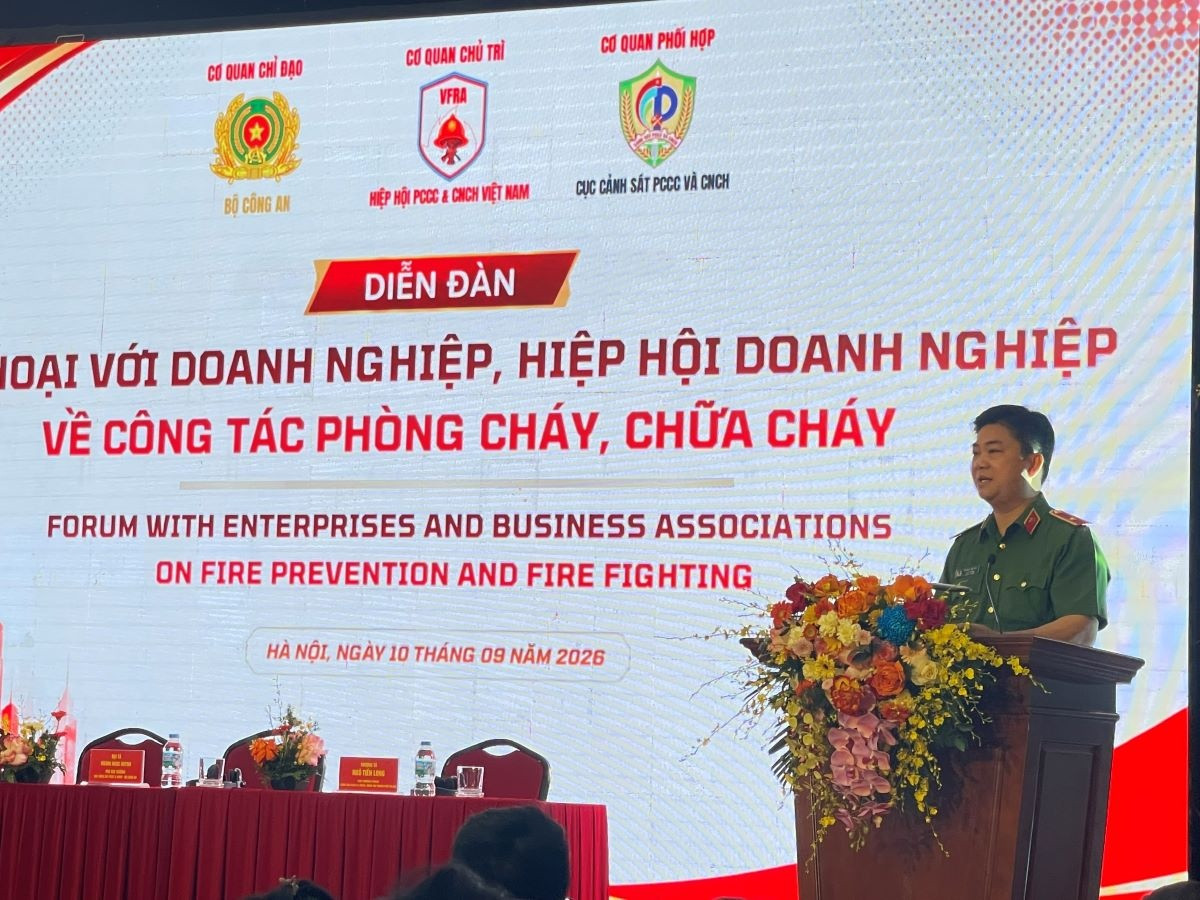
Speaking at the forum, Brigadier General Duong Duc Hai, Director of the Fire Prevention, Firefighting, and Rescue Police Department (C07, Ministry of Public Security), emphasized that administrative reform must go hand in hand with enhancing the accountability of businesses and relevant stakeholders. More than 170 organizations registered to attend, demonstrating significant interest from the business community.
According to Brigadier General Duong Duc Hai, fire safety is not only a legal obligation but also a prerequisite for sustaining production and protecting people, property, and corporate reputation. Therefore, investing in fire safety is also an investment in sustainable development.
Government Resolution No. 18 on decentralization, devolution of authority, reduction, and simplification of administrative procedures and business conditions, effective July 1, 2026, provides a further foundation for promoting reform.
The Ministry of Public Security has reduced 27 out of 36 administrative procedures in the field of fire safety and rescue operations. In the first six months of 2026, it continued to reduce three procedures related to inspection and resumption of operations. Decision No. 4118, dated June 29, 2026, issued by the Minister of Public Security, standardizes the documentation, authority, time limits, and procedures for resolving the new administrative procedures.
A key point is the shift in management approach: from primarily procedure-based control to risk-based and accountability-based management. Project owners, facility owners, consulting firms, contractors, and operators must proactively comply with regulations and assume responsibility throughout the entire operational process; regulatory agencies will conduct targeted post-inspection oversight.
Based on feedback from businesses, C07 is focusing on five key areas: management of firefighting vehicles, equipment, and fire-resistant materials; fire safety regulations in construction investment projects, including renovation, repair, and repurposing of structures; clarification of responsibilities in the transition to post-inspection; the application of codes and standards, including foreign standards and solutions with equivalent safety levels; and the development direction for fire protection businesses, the application of science and technology, digital transformation, and responses to new risks posed by lithium-ion batteries, energy storage systems, and electric vehicles.
Three issues of significant concern to businesses are the licensing of fire-resistant materials and fire protection equipment; the post-inspection mechanism following the abolition of acceptance inspection procedures; and the recognition of test results and certifications in accordance with international standards.
Brigadier General Duong Duc Hai emphasized that streamlining procedures does not mean relaxing safety requirements. Reducing pre-inspection does not mean reducing management responsibility. On the contrary, as post-inspection increases, businesses must enhance their self-monitoring capabilities and risk management.
C07 affirmed that supporting businesses does not mean lowering safety standards or condoning violations; strict management does not mean imposing additional paperwork beyond regulations. Following the forum, C07 collaborated with the Association to compile recommendations, published clarifications on the electronic information portal, and maintained channels for receiving feedback in 34 provinces and cities.
For foreign-invested enterprises (FIEs) and international organizations, C07 reaffirms that fire safety policies are applied uniformly, openly, transparently, and equitably. The system of regulations and standards will continue to be refined to align with international best practices, gradually recognizing the test results and certifications from reputable international organizations according to a roadmap suited to Vietnam’s conditions.
In the long term, fire safety reform should be measured by its ability to effectively address bottlenecks rather than by the number of procedures eliminated. A sound legal framework must clarify responsibilities, standardize technical requirements, enhance the effectiveness of post-inspection oversight, and create conditions for businesses to proactively meet standards.
If implemented correctly, businesses can proactively invest, while regulatory agencies can focus their resources on genuine risks. The core of this transformation is to reduce procedures to increase accountability and reduce pre-inspections to improve the quality of post-inspections—but safety must never be compromised.