

Proposal to Add a Risk-Sharing Mechanism for Credit Institutions
The current Law on Support for Small and Medium-Sized Enterprises primarily sets out the principles of support but has not yet established a substantive risk-sharing mechanism between the government and financial institutions. As a result, small and medium-sized enterprises must still fully meet the loan eligibility requirements under credit laws, even though many of these enterprises have limited financial capacity and collateral.
The amended Law on Support for Small and Medium-Sized Enterprises is expected to be submitted to the National Assembly in October 2026. According to the Ministry of Finance, this is a step toward perfecting the legal framework for supporting small and medium-sized enterprises in a coordinated, effective, transparent, and feasible manner, ensuring consistency in implementation, thereby promoting the rapid and sustainable development of the SME sector—increasing its size while enhancing the quality and efficiency of its operations—and bringing about a marked improvement in competitiveness and contributions to the economy.
Recently, a working delegation from the National Assembly’s Committee on Economy and Finance held a meeting with the Da Nang City People’s Committee to conduct on-site surveys and reviews in support of the draft Law on Support for Small and Medium-Sized Enterprises (Amended). In their report during the meeting, leaders of the Da Nang City People’s Committee noted that, over the past eight years of implementation, the Law on Support for Small and Medium-Sized Enterprises has provided an important legal foundation to support the business community. However, in light of the demands for private-sector economic development, digital transformation, green transition, and international integration, many current regulations have revealed shortcomings and need to be further refined.
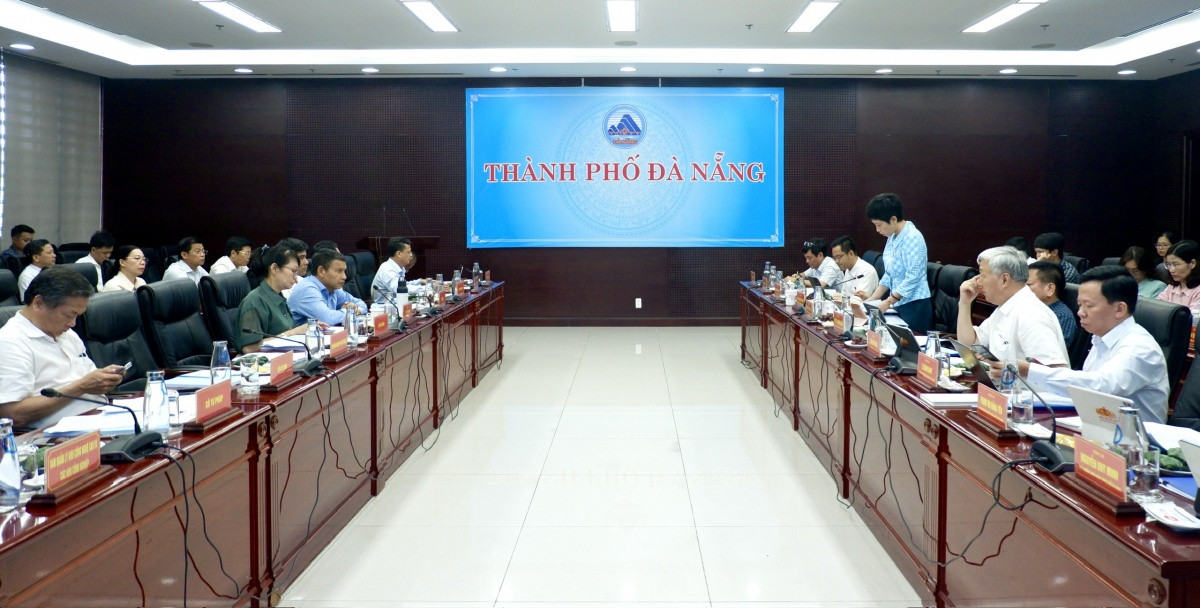
Based on local experience, Da Nang City leaders proposed adding a voucher mechanism to support small and medium-sized enterprises, with clear regulations on the form, procedures for issuance, payment, and management to ensure consistency and feasibility.
Regarding credit policy, the city proposed adding a risk-sharing mechanism with financial institutions to encourage them to expand credit to small and medium-sized enterprises.
This is because the current Law on Support for Small and Medium-Sized Enterprises primarily sets out principles for support but has not yet established a substantive risk-sharing mechanism between the government and financial institutions. Consequently, SMEs must still fully meet the loan eligibility requirements under credit laws, even though many enterprises have limited financial capacity and collateral.
In a proposal to amend Clause 6 of Article 10 of the draft Law on Support for Small and Medium-Sized Enterprises (Amendment), the Da Nang City People’s Committee proposes that the drafting authority add a mechanism to subsidize land rent for enterprises that lease land directly from the government, rather than limiting the provision to subleased land as currently proposed in the draft. Expanding the scope of support aims to thoroughly alleviate the pressure of land-use costs, which currently serve as a major barrier directly affecting the ability of small and medium-sized enterprises to recover and expand the scale of their production and business operations.
To ensure the new policy is effectively implemented, the Da Nang City People’s Committee recommends that the Government direct relevant ministries and agencies to continue reviewing and comprehensively amending related laws, such as the Land Law, Investment Law, Bidding Law, Budget Law, Credit Institutions Law, and Tax Law... to avoid a situation where the legal system is overlapping and subject to frequent changes, which creates difficulties for both businesses and the staff providing legal support.
At the same time, the Da Nang City People’s Committee recommends that the Ministry of Finance promptly issue guidelines on the financial mechanisms for programs supporting small and medium-sized enterprises; establish a national database and a set of criteria for evaluating policy effectiveness; and simplify access procedures. The Ministry of Science and Technology should promptly issue a set of indicators and a guidance framework for assessing the maturity level of data governance, thereby providing a foundation for localities to implement these measures in a unified manner.
Specifically, in a report submitted to the Standing Committee of the National Assembly’s Economic and Financial Committee, the Da Nang City People’s Committee proposed adding to the Law on Support for Small and Medium-Sized Enterprises specific preferential mechanisms for this sector when operating at the Vietnam International Financial Center in Da Nang. The proposals focus on preferential credit packages, streamlined procedures, and expanded access to foreign exchange to enhance the competitiveness of Vietnamese enterprises. This mechanism will help maximize the advantages of the Vietnam International Financial Center in Da Nang, creating a springboard for startups to achieve breakthrough growth, particularly in the fintech and high-tech sectors.