

Operating Mechanisms and Financial Management of Vietnam Debt Trading Limited Liability Company
The government has just issued Decree No. 358/2026/NĐ-CP dated September 15, 2026, stipulating the operational and financial management mechanisms of the Vietnam Debt Trading Single-Member Limited Liability Company (DATC).
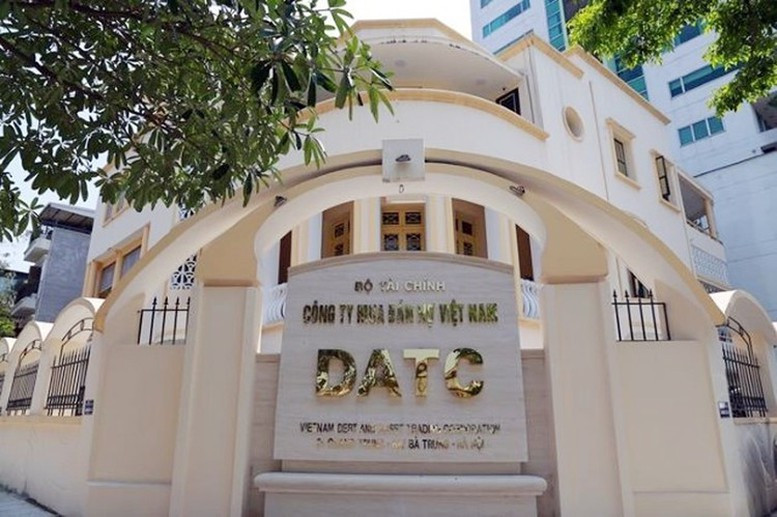
Functions and Responsibilities of DATC
DATC serves as a government tool to support the restructuring of state-owned enterprises and other economic sectors through the acquisition, purchase, and resolution of debts and assets as directed by the Government and the Prime Minister.
At the same time, it acquires and manages debts and assets in accordance with market mechanisms, ensuring the preservation and growth of state capital at DATC.
DATC’s 7 Business Sectors and Operations
Decree No. 358/2026/NĐ-CP stipulates that DATC’s business sectors and activities include:
1- Receiving and resolving debts and assets:
a) Receiving debts and assets in accordance with laws on the restructuring of state capital in enterprises and credit institutions, including public service units undergoing privatization, for resolution as prescribed in this Decree;
b) Receiving and handling, as directed by the Government or the Prime Minister, including: receivables and assets (including idle assets and assets related to debt resolution pursuant to decisions of the Government, the Prime Minister) for continued investment and exploitation or for the resolution and recovery of capital for the State in accordance with the provisions of this Decree.
2- Purchase and resolve debts and acquired assets, including:
a) Purchasing and resolving debts and acquired assets (including projects requiring debt resolution support to continue investment and operation) as directed by the Government and the Prime Minister;
b) The purchase and resolution of debts and acquired assets of state-owned enterprises and other economic sectors.
3- Restructuring enterprises through the purchase, sale, and resolution of debts and assets.
4- Manage, invest in, exploit, and operate assets; engaging in real estate business in connection with debt resolution and the management of assets received in the following cases: Assets serving as collateral for debts purchased or received by DATC; assets received in lieu of debt; and assets purchased or received as directed by the Government or the Prime Minister in accordance with the law.
5- Purchasing, managing, and assuming debt obligations, as well as handling debts and assets originating from the Government/the State (debts and assets arising from ODA loans, foreign concessional loans obtained by the Government, and debts and assets arising from loans guaranteed by the Government) in accordance with decisions by competent authorities; managing and utilizing public assets in accordance with the law.
6- Provide consulting services on debt and asset resolution, as well as the purchase, sale, merger, and restructuring of enterprises.
7- Provide services related to: valuation, debt management, and asset management, ensuring full compliance with all operational requirements under the law.
DATC’s Authorized Capital
DATC determines the need for additional authorized capital in accordance with regulations on the management and investment of state capital in enterprises and the following provisions:
1- Investment amounts from DATC projects (including investment projects formed through debt-for-asset swaps, real estate projects that have been purchased or acquired as designated by competent authorities, or investment projects for which investment policies were approved or decided during the period from the date of the most recent authorized capital approval to the year of authorized capital adjustment), the approved project investment plan corresponding to the investment amount from the state budget, the Development Investment Fund, and other lawful sources as specified in the enterprise’s investment projects for which the competent authority has approved the investment policy or issued an investment decision, and the approved project investment plan.
2- The need to increase authorized capital to support business operations is linked to DATC’s revenue scale, specifically:
The need to increase authorized capital to support business operations is linked to the planned revenue for the year; the formula for adjusting authorized capital is: (Average planned revenue / Average annual working capital turnover) – Owners’ equity
Where:
Average planned revenue: determined based on the average planned revenue for the five years preceding the year in which the authorized capital adjustment is determined.
Average annual working capital turnover is determined by dividing the total working capital turnover for the five years immediately preceding the year in which the authorized capital adjustment is determined by 5.
The working capital turnover for the year is calculated by dividing the total actual revenue for the year by the average working capital for the corresponding year.
The average annual working capital is determined by the sum of the beginning-of-year working capital and the end-of-year working capital, divided by 2.
Owner’s equity is determined by the year-end balance (account code 411 – “Owner’s Equity”) on the Statement of Financial Position in the financial statements for the year immediately preceding the year in which the authorized capital adjustment is determined.
Revenue, Other Income, and Expenses
Decree No. 358/2026/ND-CP stipulates the following principles for recognizing revenue and expenses: DATC recognizes revenue and expenses from debt and asset purchase and disposal activities as the total revenue and expenses incurred during the process of purchasing, disposing of, and managing debt and assets, in accordance with the provisions for each form of debt and asset disposal set forth in this Decree.
DATC establishes and uses provisions in accordance with the regulations applicable to enterprises in which the State holds 100% of the charter capital. For debts arising from the purchase, sale, and resolution of debts, as well as corporate restructuring, DATC establishes provisions based on the following principles:
a- The period of delinquency and the amount past due shall be determined based on the date of transfer of creditor rights to DATC or the debtor’s most recent repayment commitment, in accordance with the debt purchase resolution plan;
b- DATC determines the annual provisioning amount based on the likelihood of debt recovery in the year of provisioning but must ensure that 100% of the remaining purchase price of the debt is fully provisioned within a period not exceeding five years from the date of delinquency, as specified in subparagraph a above.
DATC may account for and allocate revenue and expenses when selling delinquent debts and collecting debts in multiple installments.
Decree No. 358/2026/ND-CP takes effect on October 30, 2026, and repeals Decree No. 129/2020/ND-CP dated October 27, 2020, of the Government on the functions, duties, and operating mechanisms of DATC.
As of October 30, 2026, plans for the purchase and resolution of debts and assets that were approved prior to October 30, 2026, DATC may choose to continue implementing them in accordance with the approved plan or to amend and supplement the plan for implementation in accordance with the provisions of Decree No. 358/2026/ND-CP.
Expenses incurred prior to October 30, 2026, in carrying out tasks assigned by the Government or the Prime Minister shall be recorded as expenses of DATC.