

Notable Policy Directives and Administrative Decisions by the Government and the Prime Minister for the Week of September 12–18
Strengthening safety and quality assurance for school-day meals in educational institutions; standards for certification of compliance with compulsory education requirements... are among the key policy directives and administrative measures issued by the Government and the Prime Minister during the week of September 12–18, 2026.
Establishment of the Asset Management Company for Vietnamese Credit Institutions

Deputy Prime Minister Nguyen Van Thang, on behalf of the Government, signed and issued Decree No. 359/2026/ND-CP on September 17, 2026, regarding the establishment, organization, operations, and financial mechanisms of the Asset Management Company of Vietnamese Credit Institutions (Asset Management Company).
The Decree stipulates that the State Bank of Vietnam shall establish the Asset Management Company to resolve non-performing loans and promote reasonable credit growth for the economy.
The Asset Management Company is a specialized enterprise organized as a single-member limited liability company, with the State owning 100% of its charter capital and subject to State management, inspection, and supervision by the State Bank of Vietnam.
Borrowers with non-performing loans sold to the Asset Management Company who have viable production, business, feasible investment projects may continue to be reviewed and granted credit by credit institutions and foreign bank branches in accordance with agreements and legal provisions governing the credit activities of credit institutions and foreign bank branches, as well as other relevant legal regulations.
Strengthening the Safety and Quality of Meals for Boarding and Day Students in Educational Institutions
Deputy Prime Minister Le Tien Chau has signed Prime Ministerial Directive No. 64/CĐ-TTg regarding the strengthening of safety and quality assurance for boarding and day-care meals in educational institutions.
The directive requires the Chairpersons of the People’s Committees of provinces and cities to intensify inspections and supervision of food supply, meal portions, and catering services; strictly control the origin and quality of food and ingredients, as well as conditions for processing, storage, transportation, delivery, food sample retention, and other food safety requirements as stipulated; Strictly penalize organizations and individuals who violate these regulations; decisively suspend or replace suppliers that fail to meet requirements…
Ensure that students do not have to miss school or drop out due to difficult transportation and commuting conditions
On September 12, 2026, the Tiền Phong newspaper published an article reporting that in Mường Hoa Commune, Phú Thọ Province, students had to cross a reservoir by boat to get to school.
Regarding this matter, in Document No. 9322/VPCP-KGVX, Deputy Prime Minister Le Tien Chau instructed the Chairman of the Phu Tho Provincial People’s Committee to verify the information reported in the article and urgently direct the development of specific measures to ensure the absolute safety of students at Mường Hoa Elementary and Lower Secondary School on their way to school. At the same time, the Chairpersons of the People’s Committees of provinces and cities should focus on directing commune-level People’s Committees and relevant agencies to urgently review and immediately implement measures to ensure the absolute safety of students at schools where they must cross rivers, streams, or lake beds to get to school by ferry, boat, rafts, canoes, and other means of transportation; and ensure that students do not have to miss school or drop out due to difficult transportation or travel conditions…
Children eligible for universal preschool education for 5- to 6-year-olds are exempt from, receive reductions in, or are provided support for tuition fees
Deputy Prime Minister Lê Tiến Châu, on behalf of the Government, signed and issued Decree No. 353/2026/NĐ-CP regulating universal preschool education for children aged 5 to 6, compulsory education, and literacy programs.
The Decree clearly states that the State prioritizes investment and ensures the necessary conditions to implement universal preschool education for children aged 5 to 6.
Children eligible for universal early childhood education—specifically those aged 5 to 6—are entitled to tuition waivers, reductions, and financial assistance; support for educational expenses, and other support policies in accordance with laws on education, children, persons with disabilities, ethnic minority policies, social assistance, and other relevant laws.
Teachers, educational institution administrators, and individuals assigned or mobilized to implement universal preschool education for children aged 5 to 6 are entitled to benefits and policies commensurate with their positions, duties, and work locations, as prescribed by laws on teachers, officials, civil servants, staff, and labor, as well as relevant laws...
Approval of the Reorganization of Academies and Schools of the People’s Public Security
Deputy Prime Minister Le Tien Chau signed Decision No. 1805/QD-TTg dated September 18, 2026, of the Prime Minister, approving the reorganization of the People’s Public Security Academies and Schools as follows:
1- Maintain the existing structure of the People’s Security Academy, the People’s Police Academy, the People’s Public Security Political Academy, the Academy of Security Technology and Engineering, the International Academy, and the Academy of Fire Prevention, Firefighting, and Search and Rescue.
2- Merge the People’s Security University and its subordinate organizations into the People’s Security Academy to establish a branch of the People’s Security Academy in Ho Chi Minh City (based on the People’s Security University). Branch name: People’s Security Academy – Ho Chi Minh City Branch.
Merge the People’s Security College I and its affiliated organizations into the People’s Security Academy.
3- Merge the People’s Police University and its affiliated organizations into the People’s Police Academy to establish a branch of the People’s Police Academy in Ho Chi Minh City (based on the People’s Police University). Branch name: People’s Police Academy – Ho Chi Minh City Branch.
Merge the People’s Police College I, the People’s Police College II, and their affiliated organizations into the People’s Police Academy.
Expand certain activities and models involving children
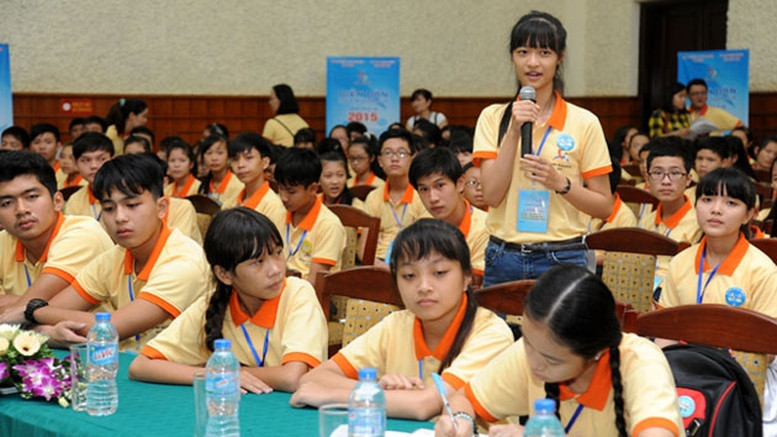
Deputy Prime Minister Pham Thi Thanh Tra signed Decision No. 1792/QD-TTg on September 16, 2026, promulgating the Program to Promote Children’s Participation for the 2026–2030 period. One of the notable aspects of the Program is the expansion of certain activities and models involving children, including: mock sessions of the Children’s National Assembly; mock sessions of the Children’s People’s Council; Children’s Forums; Children’s Councils; and Children’s Rights Clubs...
New Regulations on the Functions, Duties, Powers, and Organizational Structures of Three Ministries
Last week, Deputy Prime Minister Pham Gia Tuc, on behalf of the Government, signed and issued Decree No. 351/2026/ND-CP; Decree No. 354/2026/ND-CP, and Decree No. 355/2026/ND-CP, which stipulate the functions, tasks, powers, and organizational structures of the Ministry of Industry and Trade, the Ministry of Construction, and the Ministry of Agriculture and Environment.
Under the new regulations, the Ministry of Industry and Trade is a government agency responsible for state management of industry and trade, including the following sectors and fields: electricity, coal, geology, minerals, oil and gas, new energy, renewable energy, and the efficient and economical use of energy, chemicals, industrial explosives, mechanical engineering, metallurgy, consumer goods, food processing, supporting industries, environmental industries, and high-tech industries (excluding information technology and digital industries); industrial promotion, industrial zones, industrial clusters, and small-scale handicraft industries; domestic trade; import-export and cross-border trade; logistics services; overseas market development; market regulation; trade promotion; e-commerce; commercial services; international economic integration; competition and consumer protection; trade defense; public services in sectors and fields under the Ministry’s administrative jurisdiction.
The Ministry of Industry and Trade has 21 subordinate units.
The Ministry of Construction is a government agency responsible for state management of: urban and rural planning and architecture; construction activities; urban development; technical infrastructure; housing; the real estate market; construction materials; road, rail, inland waterway, maritime, and civil aviation transportation nationwide; and the state administration of public services in the sectors under the Ministry’s state management as prescribed by law.
The Ministry of Construction has 22 subordinate units.
The Ministry of Agriculture and Environment is a government agency responsible for state management in the following sectors: agriculture; forestry; salt production; fisheries; irrigation; dike management and natural disaster prevention and response; rural development; land; water resources; the environment; meteorology and hydrology; climate change; surveying and mapping; integrated management of marine and island resources and environmental protection; remote sensing; and state administration of public services in the sectors under the ministry’s jurisdiction.
The Ministry of Agriculture and Environment has 28 subordinate units.
Implementing free health checkups for the public to ensure they are substantive and effective
In Official Letter No. 1129/TTg-KGVX, Deputy Prime Minister Pham Thi Thanh Tra instructed ministries, sectors, and localities to vigorously and substantively implement the program of periodic health checkups and free screening examinations, targeting the correct groups according to priority categories and schedules, while avoiding formality, duplication, and waste. Localities bear full responsibility for the results, must proactively allocate resources, and organize health examinations in conjunction with continuous, comprehensive, and life-cycle-based management of citizens’ health, prioritizing vulnerable groups and disadvantaged areas. The Ministry of Health shall urgently issue technical guidelines and standardize and integrate data on medical examinations and treatment, the Electronic Health Record, VneID, and related systems.