

Notable Directives and Decisions by the Government and the Prime Minister for the Week of September 18–25
The Prime Minister provided guidance on several “pressing” issues in education and training; directed proactive measures to respond to heavy rains and floods and ensure the safety of citizens’ lives and property; and called for intensifying intellectual property efforts to support socioeconomic development; ... these are the highlights of the Government’s and the Prime Minister’s directives and administrative actions for the week of September 18–25, 2026.
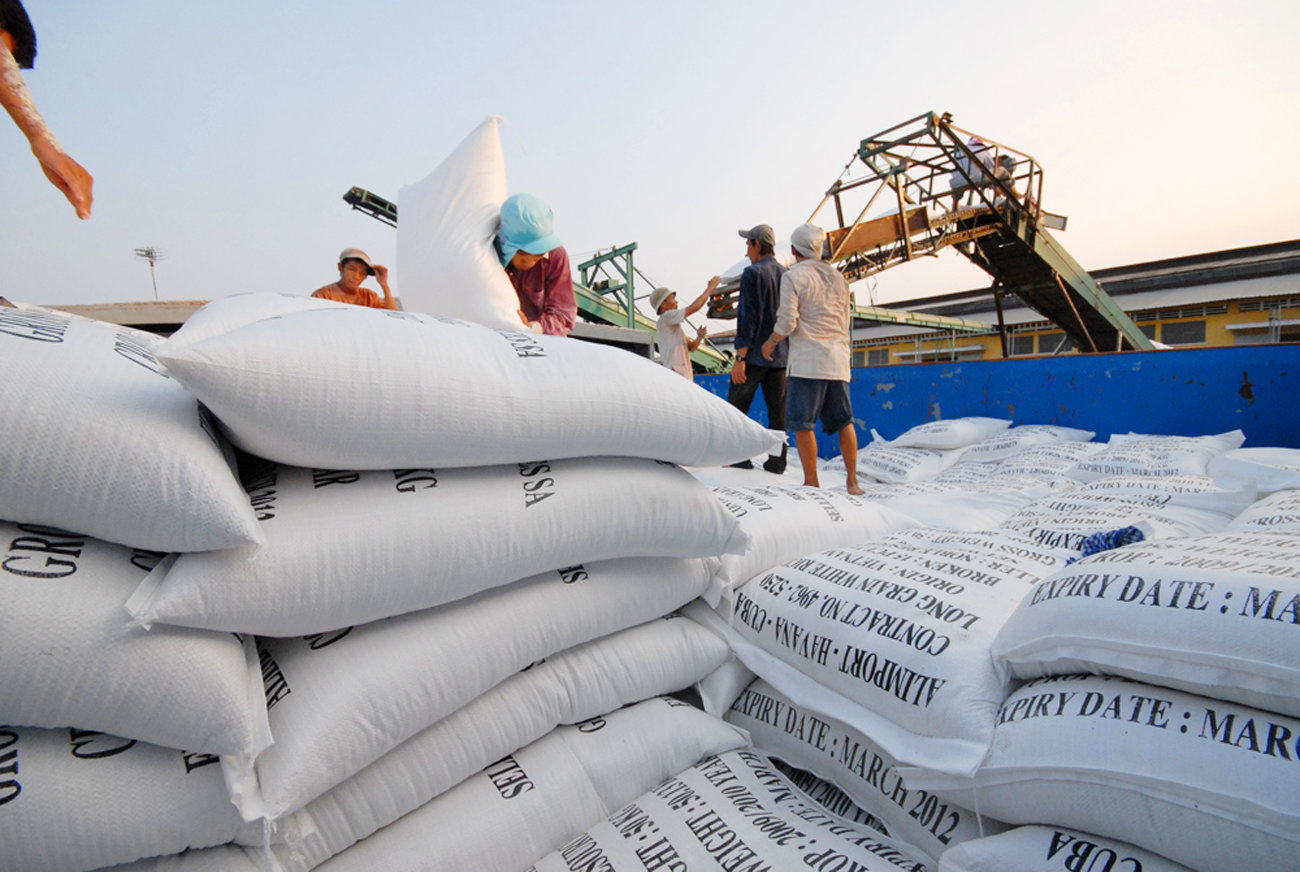
Conditions for Rice Export Business
On behalf of the Government, Standing Deputy Prime Minister Pham Gia Tuc signed and issued Government Decree No. 365/2026/ND-CP on the import and export of rice. This decree takes effect on October 1, 2026.
The Decree stipulates that business entities established and registered in accordance with the law may engage in rice export operations provided they have at least one dedicated warehouse for storing paddy and rice and one rice milling facility that complies with legal regulations on food safety, standards, and technical specifications.
The dedicated storage facilities for paddy and rice and the rice milling facilities specified above may be owned by the business entity or leased from another organization or individual, provided there is a written lease agreement in accordance with the law and the lease term aligns with the validity period of the Certificate.
A business entity holding a Certificate may not lease the specialized warehouses for storing paddy and rice or the rice milling facilities—which have been specified by the Ministry of Industry and Trade in the Certificate issued to that business entity—to another business entity for the purpose of applying for a Certificate.
The Ministry of Industry and Trade issues Certificates to traders in both paper and electronic formats (where applicable) that meet the prescribed conditions for rice export operations.
Increase the loan limit for individuals who have completed their prison sentences to VND 200 million
Deputy Prime Minister Nguyen Van Thang signed Decision No. 44/2026/QĐ-TTg amending and supplementing certain provisions of Decision No. 22/2023/QĐ-TTg dated August 17, 2023, of the Prime Minister regarding credit for individuals who have completed their prison sentences.
Notably, Decision No. 44/2026/QĐ-TTg amends and supplements Clauses 1 and 2 of Article 6 regarding loan amounts:
1. For loans for vocational training: The maximum loan amount is VND 10 million per month per person who has completed a prison sentence (the previous provision in Decision No. 22/2023/QĐ-TTg was a maximum of VND 4 million).
2. For loans for production, business operations, and job creation
a) Individuals who have completed their prison sentences: The maximum loan amount is VND 200 million per individual who has completed their prison sentence (the previous regulation under Decision No. 22/2023/QĐ-TTg set the maximum at VND 100 million);
b) Production and business establishments: The maximum loan amount is VND 10 billion per project and no more than VND 200 million per employee at the production and business establishment (under the previous regulations in Decision No. 22/2023/QĐ-TTg, the corresponding amounts were a maximum of VND 2 billion and no more than VND 100 million);
c) For individuals who have completed their prison sentences, production and business facilities may borrow funds one or more times for production, business operations, and job creation, provided that the total amount borrowed does not exceed the maximum borrowing limit specified in points a and b of this section."
Amendments to Several Regulations on Penalties for Violations in the Field of Statistics

Deputy Prime Minister Nguyen Van Thang, on behalf of the Government, signed and issued Decree No. 362/2026/ND-CP amending and supplementing certain articles of Decree No. 95/2016/ND-CP dated July 1, 2016, of the Government, which regulates administrative penalties for violations in the field of statistics, as amended and supplemented by Decree No. 100/2021/ND-CP dated November 15, 2021, of the Government (Decree No. 95/2016/ND-CP).
In particular, Decree No. 362/2026/ND-CP amends and supplements numerous provisions regarding the handling of violations in the electronic environment; remedial measures; the authority to impose penalties by the Chairperson of the People’s Committee; the authority to impose penalties by inspectors, heads of agencies performing state management duties in specific sectors and fields, and certain other positions...
The Government is stepping up intellectual property efforts to support socio-economic development
On behalf of the Government, Deputy Prime Minister Ho Quoc Dung signed Resolution No. 282/NQ-CP on September 22, 2026, promulgating the Government’s Action Plan to implement Conclusion No. 51-KL/TW dated June 17, 2026, of the Politburo on intensifying intellectual property efforts to serve economic and social development in the new context.
The resolution outlines the priority tasks for implementing the Action Plan, including: raising awareness and understanding of the strategic role of intellectual property and fostering a culture of respect for creativity; improving the institutional framework and establishing a modern, integrated intellectual property legal system; promoting the coordinated development of the intellectual property ecosystem, with a focus on developing the intellectual property rights market and enhancing enterprises’ intellectual property capabilities; strengthening and improving the effectiveness of intellectual property rights protection, particularly in the digital environment; enhancing the effectiveness and efficiency of state management of intellectual property; ensuring national security regarding technology, data, and trade secrets; promote deep and selective international integration in the field of intellectual property.
The Prime Minister Issues Directives on Several “Hot” Issues in Education and Training
In Notice No. 494/TB-VPCP dated September 22, 2026, the Prime Minister directed the Ministry of Education and Training, along with relevant ministries, sectors, and localities, to address several key issues in the field of education and training, such as: Resolving the shortage of textbooks once and for all; strictly monitoring the quality of school meals;...
On September 24, the Ministry of Education and Training submitted a report to the Prime Minister on the status of textbook supply for the 2026–2027 school year. Accordingly, as of September 24, 2026, the total number of additional textbooks distributed ensured the supply of the remaining 776,259 copies.
Regarding the supply of textbooks for the 2026–2027 school year, the Prime Minister has instructed the Minister of Education and Training to focus on directing these efforts and to take direct responsibility before the Government, to the Prime Minister regarding the implementation of urgent measures to definitively resolve the textbook shortage for the 2026–2027 school year in the shortest possible time, to be completed by September 25, 2026; with particular attention to conducting a review and verification at each educational institution and school to ensure a sufficient supply of textbooks for every student...
Regarding ensuring the quality and safety of school meals, the Prime Minister has directed the Ministry of Education and Training to take the lead, in coordination with relevant agencies and local authorities, in immediately implementing necessary measures to ensure the quality and food safety of school meals; clearly define the responsibilities of the Ministry of Education and Training, relevant agencies—particularly local authorities at all levels and educational institutions—to ensure transparency, accountability, and strict quality control of school meals; strictly prevent any incidents of food safety violations, portion skimming, corruption, waste, or misconduct.
Conditions for Establishing Foreign Higher Education Institutions in Vietnam
Deputy Prime Minister Lê Tiến Châu, on behalf of the Government, signed and issued Decree No. 361/2026/NĐ-CP stipulating conditions for investment and operations in vocational education, higher education, and educational quality assurance.
The Decree stipulates the conditions for establishing and authorizing the establishment of higher education institutions (including cases of new establishments or those established on the basis of existing, legally operating educational institutions):
a- Alignment with strategies, plans, and socio-economic development requirements approved by the competent authorities.
b- Have at least one location serving as the main headquarters for which the State has allocated or leased land, or for which a competent authority has certified or confirmed the right to use the land and the ownership of property attached to the land in accordance with the law, with a minimum area of 5 hectares; - Possess facilities that meet the regulations on standards and area usage quotas for public facilities in the field of education and training; Ensure a safe educational environment for students, teachers, administrative staff, and employees, in accordance with legal regulations on construction, safety, hygiene, environmental protection, and land management.
Private higher education institutions funded by foreign investors that meet the operational requirements are permitted to lease stable, continuous facilities with a lease term of at least 5 years per cycle to support higher education activities.
c- Possess the financial capacity to directly support the operations of the higher education institution.
Conditions for Establishing or Authorizing the Establishment of a Preschool
Government Decree No. 360/2026/NĐ-CP stipulates the conditions for establishing or obtaining authorization to establish a preschool, including:
Alignment with the local strategy, master plan, and socio-economic development requirements of the locality where the school is headquartered.
Having a proposed site for the school’s construction that is consistent with the local master plan or has been approved by the competent authority for the use of residential land, land designated for government office buildings, or public works that are not educational or training facilities, or land for non-agricultural production and business activities to be used for educational and training purposes, and simultaneously meets the standards regarding location, scale, and area for preschools as prescribed by the Ministry of Education and Training. For inner-city areas of special-class cities, the gross floor area is calculated as equivalent to the land area but must not be less than the minimum average land area per child as prescribed by the Ministry of Education and Training.
Regulations on Training and Internships to Become a Public Attorney
Government Decree No. 364/2026/NĐ-CP clearly stipulates the training and internship requirements for those wishing to become public attorneys.
According to the regulations, individuals holding a bachelor’s or master’s degree in law may enroll in a legal professional training program at a designated legal training institution to become public attorneys. The duration of the legal professional training program is 12 months.
Regarding the legal internship required to become a public attorney, the Decree stipulates the following:
Individuals wishing to undergo legal practice internships to become public attorneys must have a certificate of completion of legal practice training, a document recognizing legal practice training obtained abroad, or fall under a category exempt from legal practice training while meeting the prescribed criteria: They are officials, civil servants, public employees, officers of the People’s Army, officers of the People’s Police, or employees of state-owned enterprises; they possess firm political convictions, high professional ethics, and integrity.
Individuals who have previously served as intermediate-level enforcement officers, senior investigators; senior specialists, senior legal affairs officers, senior inspectors, senior researchers, or senior lecturers in the field of law; or individuals who have previously served as Class II legal assistants shall have a probationary period of 4 months.
For individuals who have held the ranks of specialist, legal affairs officer, inspector, researcher, or lecturer in the field of law, or who have served as a first-level People’s Court judge for 10 years or more, or who have previously served as a third-class legal assistant, the probationary period is 6 months.
For individuals who have held the rank of specialist, legal affairs officer, inspector, researcher, or lecturer in the legal field, or who have served as a judge at a first-level People’s Court for less than 10 years, the probationary period is 12 months.
Eligibility Criteria for Honored Businesspeople
Deputy Prime Minister Pham Thi Thanh Tra signed Decision No. 45/2026/QD-TTg of the Prime Minister, which stipulates the implementation of certain provisions of the Law on Emulation and Commendations.
Under the new regulations, businesspeople participating in the selection process for honors, titles, and awards must possess good moral character and comply with the Party’s guidelines and policies, the laws of the State, and the internal rules and regulations of their agencies, organizations, and places of residence; hold a management position in a business or other economic organization that has maintained stable and continuous development for at least five years when applying for titles or awards from ministries, sectors, or central-level mass organizations, and for at least three years when participating in the selection process for honors, titles, or awards at the provincial or municipal level.
One of the notable sets of criteria is the requirement for innovation and technology application. Entrepreneurs must demonstrate initiatives for improvement, management measures, or the effective application of science, technology, digital transformation, and green transformation in production and business operations. The application of artificial intelligence technologies in production and business operations contributes to enhancing productivity, product quality, and the competitive capacity of enterprises and other economic organizations...
Proactively respond to floods to ensure the safety of people’s lives and property
Deputy Prime Minister Ho Quoc Dung signed Prime Ministerial Directive No. 66/CĐ-TTg dated September 21, 2026, regarding proactive response to and recovery from the effects of heavy rains and floods.
The directive requires the Ministry of Agriculture and Environment to closely monitor the development of natural disasters and floods, provide timely forecasts and information to relevant authorities and the public, and proactively direct and implement response measures.
At the same time, it calls for coordination with the Ministry of Industry and Trade and local authorities to ensure the scientific and safe operation of irrigation and hydroelectric reservoirs, helping to reduce flooding downstream, while proactively storing water at the end of the flood season to support production and daily life for the people—especially given that our country may be affected by a strong El Niño in the coming period...