
The BIDV Youth Union and the Supreme People’s Procuracy donated more than VND 1.3 billion for social welfare in Quang Tri
On September 30, the BIDV Youth Union, in collaboration with the Youth Union of the Supreme People’s Procuracy (SPP), organized an event to inaugurate and hand over completed projects and distribute social welfare gifts in Bố Trạch Commune, Quảng Trị Province.
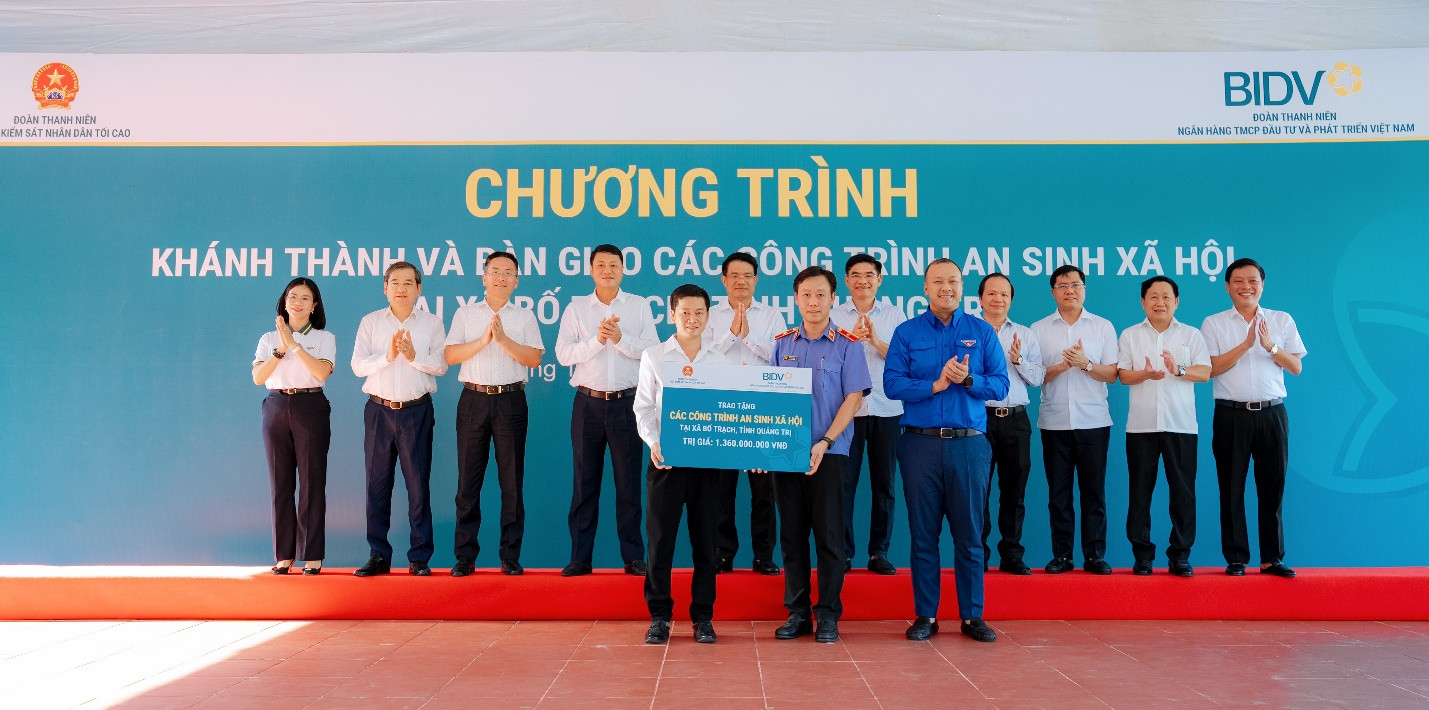
The ceremony to inaugurate the projects and present social welfare gifts was attended by Comrade Nguyen Huy Tien—Member of the Party Central Committee, Party Committee Secretary, and Director of the Supreme People’s Procuracy, who also served as head of the Supreme People’s Procuracy’s working delegation. The BIDV working delegation, led by Comrade Le Ngoc Lam—Party Committee Secretary and Chairman of the BIDV Board of Directors—included members of the Youth Union from both organizations, representatives of the leadership of BIDV branches in the area; outstanding members of the BIDV and Supreme People’s Procuracy Youth Unions; leaders from several local departments and agencies; teachers, parents, and students.
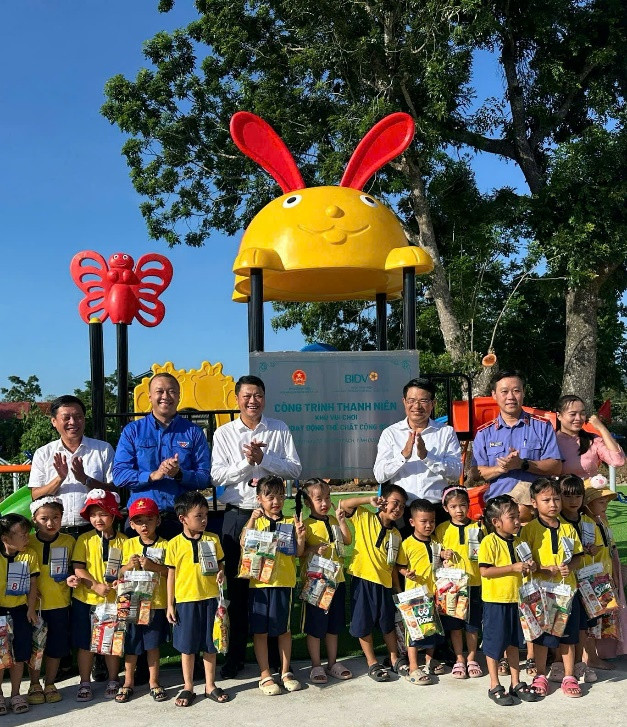
The social welfare program had a total value of over VND 1.3 billion
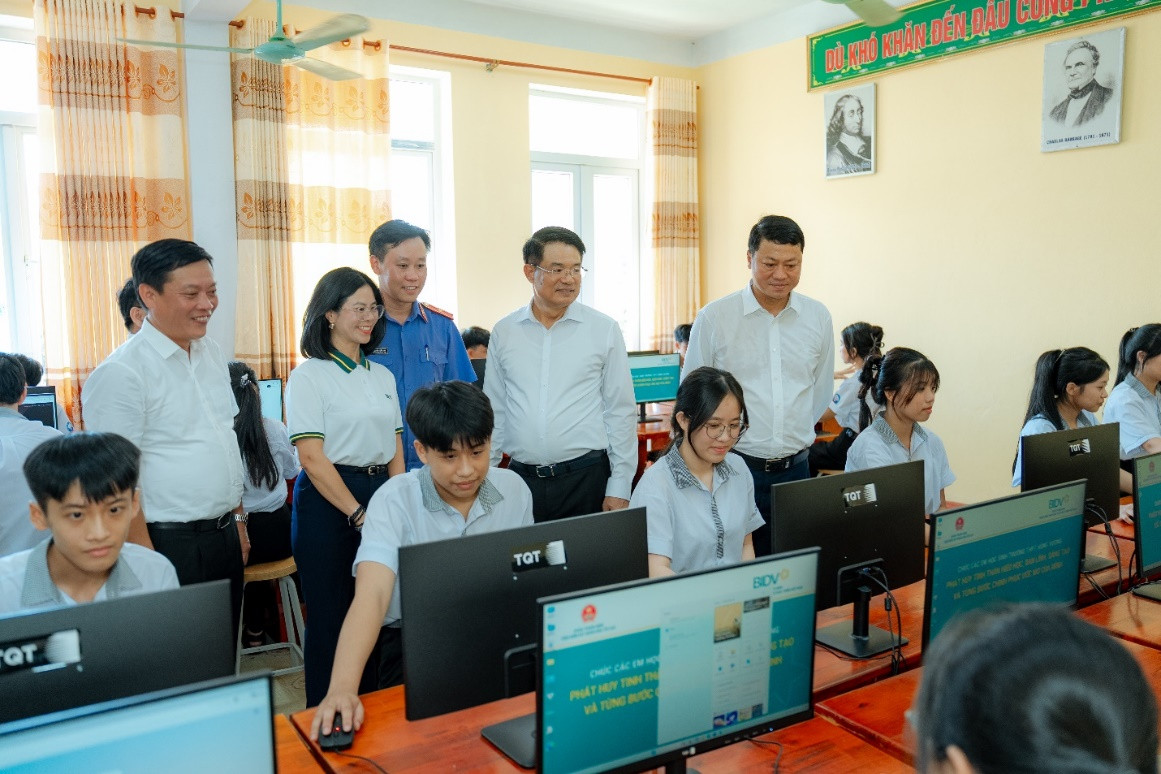
As part of the series of activities for this social welfare program in Quang Tri Province, the Youth Delegation from the two organizations donated and sponsored computer labs (a total of 70 computers) to Hung Vuong High School, Cu Nam High School, and Le Loi No. 2 High School; supported the construction of one charity house; awarded 50 scholarships to students; and donated a community playground and fitness area in Quang Tri Province. The total budget for the program was VND 1.36 billion. Additionally, as part of this social welfare itinerary, the delegation from the two organizations also took time to pay their respects at the Ba Dốc Martyrs’ Cemetery in Nam Trạch Commune.

Recognizing this as a key priority among their community activities, and with the support and guidance of the Party committee and agency leadership, the Youth Union of the two organizations selected social welfare programs based on the principles of practicality, alignment with needs, immediate feasibility, and the ability to create a clear social impact on local residents and communities—particularly in areas across the country that still face significant challenges.