

Notable Directives and Decisions by the Government and the Prime Minister for the Week of September 26–October 2, 2026
The government has assigned targets for the development of social housing and rental housing to local authorities; plans for holidays such as Culture Day, the Lunar New Year, and National Day... are among the notable policy directives and administrative decisions issued by the Government and the Prime Minister during the week of September 26–October 2, 2026.
The government has assigned targets for the development of social housing and rental housing to localities
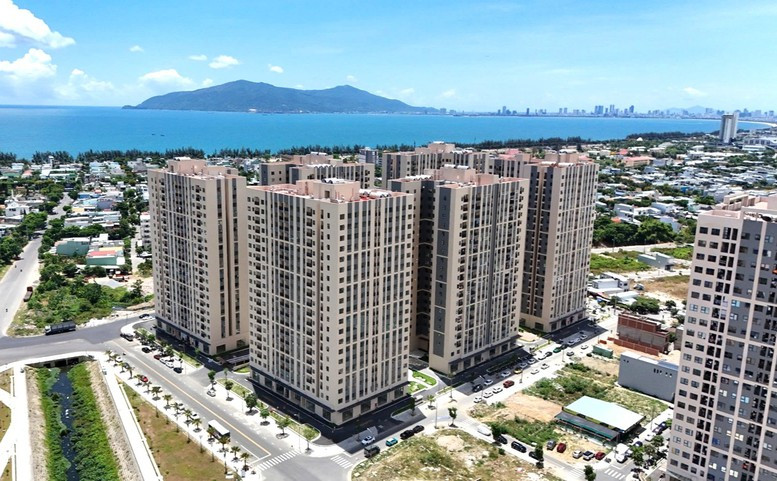
On behalf of the Government, Deputy Prime Minister Pham Gia Tuc signed and issued Resolution No. 303/NQ-CP on September 30, 2026, regarding the assignment of targets for the development of social housing and rental housing to localities for the 2026–2030 period.
The Government’s resolution sets a target that by 2030, efforts will be made to meet or exceed the investment and construction target of at least 1 million social housing and rental housing units for low-income individuals and industrial zone workers.
According to the Resolution, the Government has allocated a total target of 899,857 units for the development of social housing and rental housing for the 2026–2030 period to localities; of which, the target for the development of social housing for sale or lease-to-own is 708,834 units; and the target for the development of rental housing is 191,023 units.
For each locality, the Government has assigned social housing and rental housing development targets for the 2026–2030 period as follows: Hanoi City—84,000 units; Ho Chi Minh City—181,257 units; Hai Phong City—32,850 units; Hue City—10,600 units; Da Nang City—26,279 units; Can Tho City—13,250 units; and Dong Nai City—60,054 units..
The government requires localities to base their efforts on the assigned targets for social housing and rental housing development, ensuring they meet or exceed these targets to contribute to achieving the nation’s overall goals.
Criteria for converting public service units into enterprises
On behalf of the Government, Deputy Prime Minister Nguyen Van Thang signed and issued Decree No. 373/2026/ND-CP on September 30, 2026, regarding the conversion of public service units into enterprises.
This Decree regulates the conversion of public service units into enterprises, including: converting public service units into joint-stock companies and converting public service units into single-member limited liability companies in which the State holds 100% of the charter capital.
Regulations on the Functions, Tasks, Powers, and Organizational Structure of the Ministry of Finance
Deputy Prime Minister Nguyen Van Thang, on behalf of the Government, signed and issued Decree No. 376/2026/ND-CP on October 1, 2026, stipulating the functions, tasks, powers, and organizational structure of the Ministry of Finance.
The Decree stipulates that the Ministry of Finance is a government agency responsible for exercising state management functions regarding: economic and social development strategies and plans; planning; development investment, business investment in Vietnam, and business investment from Vietnam abroad, as well as investment promotion; the state budget; state treasury funds; public debt; foreign aid to Vietnam and Vietnam’s aid to other countries; taxes, fees, charges, and other state budget revenues; national reserves; finances related to state financial funds outside the budget; public assets; customs; accounting; auditing; pricing; securities; insurance; bidding; enterprises, the collective economy, the cooperative economy, and business households; economic zones; financial services and other services falling within the Ministry’s scope of state administration; statistics; implementation of social insurance and health insurance policies; and representation of the state as the owner in enterprises in accordance with the law.
In terms of organizational structure, the Ministry of Finance has 34 subordinate units.
Regulations on Standards and Quotas for the Use of Automobiles
On behalf of the Government, Deputy Prime Minister Nguyen Van Thang signed and issued Decree No. 379/2026/ND-CP on October 2, 2026, regulating standards and quotas for the use of automobiles.
Decree No. 379/2026/ND-CP on standards and quotas for the use of automobiles covers: automobiles used for official duties of specific positions; automobiles for general official duties; special-purpose automobiles; and automobiles used for state protocol purposes.
This Decree takes effect on November 16, 2026.
Regulations on Product and Goods Traceability

Deputy Prime Minister Ho Quoc Dung, on behalf of the Government, signed Decree No. 372/2026/ND-CP on September 29, 2026, regulating the identification, authentication, and traceability of products and goods. Notably, the decree includes provisions on the traceability of products and goods.
The Decree stipulates the traceability of products and goods as follows:
Product and goods traceability activities are conducted in a digital environment through a UID code on the National Platform for Identification, Authentication, and Traceability of Products and Goods. The content and operational requirements for traceability not specified in this Decree shall be implemented in accordance with Decree No. 37/2026/NĐ-CP and relevant sector-specific legal regulations.
Product and goods traceability must be recorded by generating the digital certificates specified in Clause 4 of Article 8 of this Decree using the UID code to ensure integrity, verifiability, and independent traceability. Recording through the issuance of digital certificates shall be performed for key events in the processes of production, import, export, distribution, and consumption (including the issuance of invoices, recording the time when customs authorities decide to clear goods in accordance with tax laws, customs, and other forms of management as prescribed by law)...
Approval of the Project to Develop the National System for Standards, Metrology, and Quality
Deputy Prime Minister Ho Quoc Dung signed Decision No. 1876/QD-TTg dated September 30, 2026, of the Prime Minister approving the Project on the Development of the National Technical System for Standards, Metrology, and Quality (the Project).
The overall objective of the Project is that by 2030, the system of national-level technical organizations for standards, metrology, and quality will be consolidated, upgraded, and developed based on existing organizations, possessing core technical capabilities that are integrated, interconnected, and modern, and will gradually gain international recognition in the fields of standardization, metrology, accreditation, conformity assessment, productivity, and quality.
The system will meet state management requirements; support the development of strategic technologies, strategic technology products, and important national projects; assist businesses in improving productivity, quality, and competitiveness; promote exports; and ensure national defense, security, and international integration.
Launching the Construction of the National Transportation Data Center
On behalf of the Government, Standing Deputy Prime Minister Pham Gia Tuc signed Resolution No. 298/NQ-CP, promulgating the Implementation Plan for Resolution No. 05-NQ/ĐU dated June 12, 2026, of the Government Party Committee on the application of mechanisms and policies to implement the Project “Establishment of a Data Center for Traffic Management, Monitoring, Violation Handling, and Traffic Control for the 2026–2030 Period, with a Vision Toward 2050.”
The plan outlines seven key tasks to be carried out, including: 1- Disseminating the resolution and developing implementation plans; 2- Improving the institutional framework, mechanisms, policies, standards, and technical specifications; 3- Establishing a unified architectural, data, and technology foundation; 4- Organizing the implementation of investment mechanisms; 5- Mobilizing, allocating, and coordinating resources; 6- Implementing component projects; 7- Strengthening organizational structures and training personnel.
Strategy for the Development of Basic Information for the 2026–2030 Period and Orientations Through 2045
Deputy Prime Minister Pham Thi Thanh Tra signed Decision No. 1868/QD-TTg on September 29, 2026, approving the Strategy for the Development of the Basic Information Sector for the 2026–2030 Period and Orientations through 2045 (the Strategy).
The objective of the Strategy is to develop the basic information system into a key strategic digital infrastructure for the nation, ensuring the coordinated development of "Institutions – Networks – Infrastructure – Data - Content - Human Resources - Mechanisms and Evaluation Tools."
The basic information system serves as a two-way communication channel between the government and the public, ensuring citizens’ right to access essential information quickly, promptly, accurately, and comprehensively.
3 criteria for identifying public vocational education institutions in specialized fields
Government Resolution No. 42/2026/NQ-CP dated September 26, 2026, stipulates that a public vocational education institution is classified as operating in a specialized field when it fully meets the following criteria:
1. More than 50% of its full-time student enrollment is in specialized training programs as defined in Article 3 of this Resolution, calculated as an average over the most recent three years or from the date of establishment or most recent reorganization for institutions that have been in operation for less than three years.
2. The institution is recognized by the competent authority as playing a pivotal role in the training, retraining, and development of specialized human resources for the specialized sector, industry, or trade; or is assigned the function and task of training and retraining specialized human resources in the specialized sector, industry, or profession to directly serve the requirements of the State, the sector, or the field; this includes vocational education institutions under the jurisdiction of agencies or organizations responsible for managing and developing specialized human resources in specific fields, sectors, or professions.
3. Human resources trained in specialized fields, sectors, and occupations are subject to the guidance and requirements of the sector or field management agencies regarding professional standards, workforce structure, job positions, or requirements for performing specialized tasks.
Foreign organizations recruiting Vietnamese workers must post job openings on the National Job Exchange
Deputy Prime Minister Pham Thi Thanh Tra, on behalf of the Government, signed Decree No. 371/2026/ND-CP, which provides detailed regulations on the recruitment and management of Vietnamese workers employed by foreign organizations and individuals in Vietnam.
The Decree clearly stipulates the recruitment of Vietnamese workers to work for foreign organizations and individuals in Vietnam.
Accordingly, when there is a need to recruit Vietnamese workers, foreign organizations and individuals must submit a written notification—either in person, via postal service, or online—to the official email address of the managing agency or organization specified in Article 5 of this Decree, clearly stating the job position and the number of positions to be filled.
At the same time, foreign organizations and individuals must publicly post information regarding the recruitment of Vietnamese workers on the National Job Exchange (website: https://www.vieclam.gov.vn) or on other legitimate job portals or the organization’s official website.
Deputy Prime Minister Decides on Holiday Schedule for Cultural Day, Lunar New Year, and National Day
In Document No. 10065/VPCP-KGVX dated October 2, 2026, Deputy Prime Minister Pham Thi Thanh Tra agreed with the Ministry of Home Affairs’ proposal regarding the holiday schedules: a 7-day break for the Lunar New Year, a 4-day break for National Day in 2027, and a 1-day break for Vietnam Culture Day in 2026.
According to the approved plan, officials, civil servants, and public employees will have a one-day holiday for Vietnam Culture Day on November 24, 2026.
The 2027 Lunar New Year holiday will run from Thursday, February 4, 2027 (corresponding to the 28th day of the 12th lunar month of the Year of the Horse) through Wednesday, February 10, 2027 (corresponding to the 5th day of the first lunar month of the Year of the Goat).
The 2027 National Day holiday will consist of four consecutive days from Thursday, September 2, 2027, through Sunday, September 5, 2027 (including the two statutory National Day holidays and two regular weekly days off).
Organizing Vietnamese Culture Day in conjunction with the National Day of Great Unity
Deputy Prime Minister Pham Thi Thanh Tra signed and issued Directive No. 35/CT-TTg dated September 30, 2026, from the Prime Minister regarding the organization of Vietnam Culture Day in conjunction with the National Solidarity Day in 2026.
The directive specifies that the National Day of Great Unity (November 18) should be linked with Vietnamese Culture Day (November 24) to form a continuous series of activities for the Week of National Unity and Culture, running from November 18 to November 24, 2026.
The core guiding principle is to put the people at the center—as active participants, creators, and beneficiaries—and to resolutely address issues such as bureaucratization, ostentation, formalism, waste, and the commercialization of cultural heritage.
The directive requires each province, city, commune, and ward to select at least one representative activity, product, story, or cultural space to promote, in conjunction with stimulating tourism demand and developing the cultural industry.
Encourage and request cultural institutions and facilities to waive or reduce admission fees and charges at historical sites, museums, and scenic spots throughout the week of activities.
The Ministry of Culture, Sports, and Tourism must complete and launch the Vietnam Cultural Digital Map Platform by November 15, 2026; all ministries, sectors, and localities are required to designate a point of contact to update data and events on this platform…
New Regulations on Administrative Penalties in the Field of Journalism
Deputy Prime Minister Pham Thi Thanh Tra, on behalf of the Government, signed and issued Decree No. 367/2026/ND-CP regulating administrative penalties in the field of journalism.
This Decree stipulates administrative violations; completed and ongoing administrative violations; forms of penalties, penalty levels, and measures to remedy consequences; subjects subject to penalties; the authority to issue violation reports and the authority to impose administrative penalties; the enforcement of penalties and remedial measures in the field of journalism.
The statute of limitations for administrative penalties in the field of journalism is two years.
The maximum fine for each administrative violation in the field of journalism is VND 500,000,000 for organizations and VND 250,000,000 for individuals.
Specifically, the Decree stipulates fines of up to VND 100 million for acts of unlawfully obstructing press activities; fines of up to VND 20 million for publishing or broadcasting false information causing minor harm; and fines of up to VND 40 million for disclosing an individual’s private information without that individual’s consent...
Issuance of the Index System for Evaluating Efforts to Prevent and Combat Corruption, Waste, and Negative Practices
Deputy Prime Minister Lê Tiến Châu signed Decision No. 47/2026/QĐ-TTg on September 30, 2026, promulgating the Index for Evaluating Efforts to Prevent and Combat Corruption, Waste, and Malpractice (the Index).
The Index for Evaluating Efforts to Prevent and Combat Corruption, Waste, and Misconduct consists of: the Scoring Criteria Group; the Penalty Points Criteria Group; and the Bonus Points Criteria Group.
The scoring criteria group consists of:
Group A: Developing and improving policies and laws to prevent and combat corruption, waste, and malpractice;
Group B: Implementation of measures to prevent corruption, waste, and malpractice;
Group C: Detection of corruption, waste, and misconduct;
Group D: Addressing corruption, waste, and misconduct and recovering assets related to corruption, waste, and misconduct.
The group of criteria for point deductions includes:
Failure to submit or late submission of reports on efforts to prevent and combat corruption, waste, and malpractice; failure to submit self-assessment reports on efforts to prevent and combat corruption, waste, and misconduct; providing inaccurate information, reports, records, or supporting documents; reporting no instances of corruption, waste, or misconduct, yet other competent authorities subsequently detect such violations;
Heads and deputy heads of ministerial-level agencies, agencies directly under ministries; provincial-level agencies, agencies directly under provinces, and commune-level agencies who are disciplined for corruption, waste, or misconduct detected by agencies other than ministerial-level or provincial-level authorities.
The group of criteria for bonus points includes:
- Recovering assets related to corruption, waste, and misconduct in excess of assigned targets;
- Proactively recommending that competent authorities take action against acts of corruption, waste, and misconduct;
- Proactively proposing measures to prevent the concealment of assets related to corruption, waste, and misconduct;
- Detecting corruption, waste, and misconduct through investigations conducted by agencies tasked with carrying out certain investigative activities under the Ministry of Finance and the Ministry of Agriculture and Environment.
Approval to Expand the Vung Ang Economic Zone, Ha Tinh
Deputy Prime Minister Pham Gia Tuc has just signed Decision No. 1918/QD-TTg dated October 2, 2026, issued by the Prime Minister, approving the expansion of the Vung Ang Economic Zone in Ha Tinh Province.
According to the Decision, the expanded Vung Ang Economic Zone in Ha Tinh Province will cover an area of approximately 72,998 hectares, of which 57,998 hectares are land (including the entire area of the following communes/wards: Song Tri, Hai Ninh, Vung Ang, Hoanh Son, Ky Hoa, Ky Khang, Ky Anh, Ky Xuan, and a portion of Ky Van Commune) and 15,000 hectares of maritime area.
The decision states: The Vũng Áng Economic Zone is a key, multi-sector, and multi-industry economic zone focused on basic industries linked to the construction and efficient operation of the Vũng Áng and Sơn Dương port complexes, as well as regional, national, and international rail and road networks.
At the same time, it serves as a key economic hub and a vital transportation, trade, and international exchange center for the North Central Region, as well as a major gateway from Central and Upper Laos, Northeastern Thailand into Central Vietnam and Vietnam; it serves as a growth pole, closely and comprehensively linked to the overall development of Ha Tinh Province and the North Central Region...