

Revise and supplement special mechanisms and policies to resolve bottlenecks in stalled projects
Permanent Deputy Prime Minister Pham Gia Tuc has instructed ministries, sectors, and localities to adjust and supplement special mechanisms and policies to resolve difficulties and obstacles facing stalled projects.
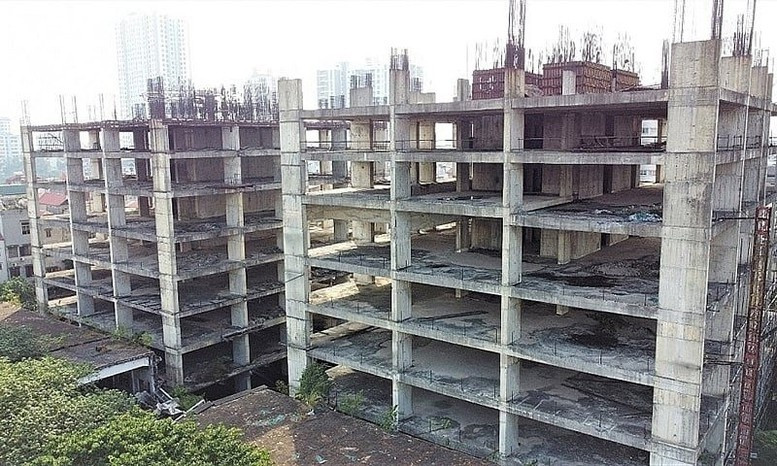
The Government Office issued Notice No. 521/TB-VPCP on October 8, 2026, containing the conclusions of Permanent Deputy Prime Minister Pham Gia Tuc, Chair of the Steering Committee, at a meeting of the Steering Committee on Resolving Difficulties and Obstacles in Stalled Projects (Steering Committee 751).
In the aforementioned Notice, the Deputy Prime Minister affirmed that resolving difficulties and obstacles for stalled and prolonged projects is a major policy of the Party Central Committee and the Politburo. The Politburo’s issuance of Conclusion No. 77-KL/TW on May 2, 2024, and Conclusion No. 24-KL/TW on April 13, 2026, has yielded numerous benefits, such as: preventing the loss and waste of social resources; injecting substantial financial and land resources into the economy, thereby contributing to promoting economic and social growth and development at the local level and nationwide.
The Deputy Prime Minister commended and highly appreciated the Standing Agency—the Ministry of Finance—as well as relevant ministries, sectors, and members of Steering Committee 751 for their initiative, dedication, enthusiasm, sense of responsibility, and close coordination with the Steering Committee in achieving the aforementioned results.
The Deputy Prime Minister generally agreed with the report’s content regarding the achievements, certain existing issues and limitations, and the proposals and recommendations from the Ministry of Finance, as well as the opinions of other ministries and agencies.
As of September 27, 2026, there were 4,846 projects nationwide facing difficulties and obstacles
Specifically, regarding the achievements: After nearly two years of establishment and operation, with a resolute and urgent spirit, Steering Committee 751 has accomplished much, achieving very notable results, specifically: working with 15 localities to assess the actual situation and providing guidance to resolve issues in many large and important projects. It has synthesized information, made proposals, and advised competent authorities to issue guidelines, mechanisms, and policies to resolve difficulties and bottlenecks for projects, such as: (i) submitting to the Politburo two policy directives on resolving difficulties and bottlenecks for projects; submitting to the National Assembly for the issuance of three Resolutions on mechanisms and policies to resolve difficulties and obstacles for stalled and prolonged projects; (ii) The Government, within its authority, issued five resolutions and four decrees to promptly provide guidance on implementing mechanisms and policies to resolve obstacles for projects; (iii) The Prime Minister issued 11 directives to oversee, urge progress, and resolve issues related to projects.
According to aggregated and categorized data from System 751 (as of September 27, 2026), there are 4,846 projects nationwide facing difficulties and obstacles, with a total land area of 208,882 hectares and a total investment of VND 3.499 quadrillion VND.
Commend the localities (Hue City, Da Nang City, Thanh Hoa Province) and the Ministries of Finance, Construction, and Health for their resolute and proactive execution of tasks, without passing the buck or shirking responsibilities, and for achieving positive results in resolving difficulties and obstacles for stalled and prolonged projects.
Some remaining limitations
Regarding the progress and quality of data review and updates by localities, agencies, and units, there are still shortcomings, specifically: some localities have not updated the financial obligations to the state budget for projects (Dien Bien, Ha Tinh, Lam Dong, Lang Son, Phu Tho, Son La, Thanh Hoa, Can Tho, Da Nang, Dong Nai, Hanoi, Hue), and some localities have not fully updated information on projects facing difficulties, obstacles, or those that are stalled or prolonged (Nghe An, Quang Ninh, Ca Mau, Dak Lak, Son La, Dong Nai, ...) on the 751 System in accordance with the prescribed deadlines and requirements; project information entered into the data system lacks consistency and detail, and does not clarify the specific causes or the authority responsible for resolution.
Coordination efforts regarding the solicitation of feedback and the resolution of issues involving ministries, sectoral and industry regulatory agencies, and local authorities—which serve as project investors and project managers—regarding long-standing, unresolved issues have not been rigorous, effective, or timely.
Some localities, agencies, and units have not been proactive, innovative, or decisive enough in their leadership, direction, and implementation; they have exhibited a wait-and-see attitude and a tendency to shift responsibility to higher authorities (the National Assembly, the Government, and the Prime Minister) when addressing issues within their own jurisdiction; some ministries have not proactively researched, responded in a timely manner, or provided guidance and proposed mechanisms and policies to resolve difficulties and obstacles for projects when localities make proposals or when the Standing Office compiles and classifies such requests.
Stalled or prolonged projects are often related to changes in the legal system across different periods and across various sectors—such as land, investment, planning, finance, and PPP—leading to significant challenges in identifying the legal basis for resolution and posing high legal risks.
Key Tasks and Solutions for the Coming Period
Regarding the reorganization of Steering Committee 751 and its Operating Regulations, the Deputy Prime Minister instructed the Ministry of Finance to coordinate with relevant ministries, agencies, and units to urgently review and reorganize Steering Committee 751 and its Operating Regulations in accordance with regulations; ministries, agencies, and units with members participating in the 751 Steering Committee to coordinate closely and promptly with the Ministry of Finance to submit the proposal to the Prime Minister for consideration and decision by October 10, 2026.
The Ministry of Finance shall study the guidance provided by Comrade General Secretary and President To Lam in Official Letter No. 5315-CV/VPTW dated September 27, 2026, regarding the development of an inter-agency coordination process among executive, judicial, and local authorities to ensure consistent implementation of the principles for resolving difficulties and obstacles, as well as the opinions and recommendations of the Government Inspectorate in Official Letter No. 3504/TTr-TTCP dated September 28, 2026; and report to the Prime Minister by October 15, 2026.
Regarding the Operating Regulations, the Deputy Prime Minister generally agreed with the contents of the Ministry of Finance’s report on the Steering Committee’s operating regulations, based on the principle of assigning specific responsibilities to the ministries and sectors that are members of the Steering Committee. The Ministry of Finance shall urgently review and incorporate feedback from participating units to finalize the Operating Regulations, thereby enhancing the roles of the Standing Office, members, and working groups in providing advisory and support services to Steering Committee 751 under the new circumstances to meet requirements.
The Ministry of Finance shall review and refine the content, forms, and data fields to standardize the 751 Data System in a manner that ensures scientific rigor, consistency, and completeness of information; and to simplify the reporting process and facilitate data access and utilization.
By October 15, 2026, the updating and supplementation of information on pending projects must be completed
People’s Committees of provinces and cities, as well as ministries and agencies designated as project owners or managers—particularly those localities that have not yet updated or supplemented information on projects under their jurisdiction—must urgently and diligently carry out these tasks, proactively coordinate with sectoral and industry management ministries and agencies to provide complete and accurate project information, including: the status of implementation and specific difficulties and obstacles preventing the project from proceeding; identification of the specific sector and legal basis; clearly propose solutions, mechanisms, policies, and the competent authority responsible for resolving the project’s difficulties and obstacles once and for all; and complete the update of information on projects under their jurisdiction on the 751 System by October 15, 2026.
At the same time, be responsible for assessing the economic, social, national defense, security, and the capacity and conditions for mitigating the consequences of stalled or pending projects, and apply the special mechanisms and policies issued by competent authorities to resolve the project’s difficulties and obstacles. Be accountable to the Government for failing to compile and provide complete project information that affects the overall progress of resolving issues for projects under the 751 Steering Committee.
Clearly classify the status of each group of projects
The Ministry of Finance shall take the lead, in coordination with relevant ministries, sectors, and localities, in clearly classifying the status of each project group and finalizing specific plans for each group to monitor, follow up on, and report to the Steering Committee at its next meeting. Specifically:
For the 3,557 projects that have been resolved and no longer face any obstacles, the Ministry of Finance must classify the current status of these projects as follows: (i) Projects that have been put into operation and are being utilized; (ii) Projects that have resolved all legal procedural issues; for those currently undergoing investment, an assessment must be made of the investor’s capacity to complete the project on schedule. Based on this, closely monitor progress to ensure that projects actually become operational, make a tangible contribution to socioeconomic development, create jobs, and generate added value, etc.
Urge and require localities, based on the results of resolving each stalled or prolonged project, to assess and specifically quantify the benefits and the resources that will be freed up, put into operation, and utilized once the project is resolved, focusing on clarifying: (i) revenue, financial obligations incurred, and contributions to the state budget; (ii) investment capital that has been and will continue to be mobilized, implemented, disbursed, and injected into the economy; (iii) the land area released upon the resolution of the project; (iv) resources, assets, and other economic and social values (if any) that are restored or created.
For the 1,131 projects currently being addressed by ministries, sectors, and localities within their respective jurisdictions, the Ministry of Finance must classify them by ministry, sector, and locality, agree on deadlines for completion, and consolidate them into the Implementation Plan.
For the 158 projects still under processing: Urge and require ministries and sectoral/industry management agencies to promptly provide specific opinions on solutions to resolve the difficulties and obstacles that have been compiled by the Ministry of Finance; specifically identifying obstacles in current policies and legal regulations; proposing solutions, specifying the competent authority responsible for resolution, and outlining the expected timeline for the resolution process. Based on this, compile and report to the Permanent Deputy Prime Minister, Chair of the Steering Committee, specifically: 34 projects under the jurisdiction of the National Assembly, to be reported by October 30, 2026; 124 projects under the jurisdiction of the Government, the Prime Minister, and the ministries must be reported by October 20, 2026;
Regarding projects identified through statistical analysis and duplication checks (166 projects): Agree with the Ministry of Finance’s recommendation to remove them from System 751.
Ensure that no projects facing difficulties or obstacles remain unaddressed or unresolved
The Deputy Prime Minister instructs the Ministers of all ministries and heads of ministerial-level agencies to act in accordance with their assigned functions and responsibilities, and respectfully requests the Provincial Party Secretaries, Municipal Party Committee Secretaries to strictly implement the guidance of Comrade General Secretary and President To Lam as set forth in Official Letter No. 5315-CV/VPTW dated September 27, 2026, specifically as follows:
- Continue to review, strengthen inspections, supervision, and evaluation to amend, supplement, and harmonize legal provisions on land, investment, bidding, housing, real estate business, construction, planning, minerals, and public asset management, etc., with the aim of definitively resolving legal obstacles related to stalled projects, ensuring discipline and order, preventing the legitimization of violations, while protecting proactive, creative officials who dare to think and act in the public interest; Establish mechanisms and policies appropriate for special-category cities—large-scale urban areas with numerous complex stalled projects—and adjust and supplement special mechanisms and policies to resolve difficulties and obstacles for these projects;
- Sectoral and field-specific management ministries should study and develop inter-agency coordination procedures among executive, judicial, and local authorities to ensure a unified approach to resolving difficulties and obstacles, in tandem with the process of reviewing, addressing accountability, and mitigating consequences; Develop a set of criteria or sector-specific guidelines to evaluate the economic, social, defense, and security impacts, as well as the capacity and conditions for remedying the consequences of stalled or pending projects; provide specific guidance on the mechanism for handling transitional projects following the implementation of the two-tier local government model; and provide guidance and thoroughly address the recommendations of localities and relevant units within its jurisdiction.
- Urgently and thoroughly review all projects to ensure that no projects facing difficulties, obstacles, backlogs, or delays are overlooked without being compiled, reviewed, addressed, and resolved in accordance with the Politburo’s directives. In particular, focus on a comprehensive review of the violations identified in these projects as outlined in audit and inspection conclusions and court rulings, ensuring no violations are overlooked or omitted—especially in land-use projects involving violations related to the bidding process for selecting investors, land auctions, land valuation, and the determination of land prices for land allocation and leasing, etc., to ensure there is no loss or waste; proactively conduct inspections and audits within their authority, and review audit conclusions and court rulings to promptly identify violations and shortcomings (if any); effectively assess the implementation capacity and commitment of investors to ensure that, once obstacles and bottlenecks are resolved, projects become operational, achieve tangible results, and contribute to socio-economic development.
Ministries, sectors, localities, and members of the Steering Committee must continue to prioritize and urgently resolve difficulties and obstacles for stalled and prolonged projects as a critical task to definitively resolve these issues, unlock resources to support socioeconomic development, and work toward the goal of “double-digit” growth in 2026 and beyond; proactively coordinate with relevant ministries, agencies, and localities to fully access information, implementation status, directions, and solutions; review and provide opinions on the necessity of continuing to issue mechanisms and policies to resolve issues for projects proposed by localities, agencies, for issuance within their authority or for reporting to the competent authority for issuance, without passing the buck or evading responsibility, in accordance with the principles established by the competent authority to ensure that projects are put into operation and utilized as soon as possible, maximizing their effectiveness and unlocking resources. Timely report the status and results of these efforts to the Ministry of Finance—the Standing Office of the Steering Committee./.