

The Ministry of Industry and Trade has extended the anti-dumping duty on polyester yarn for another five years
The Ministry of Industry and Trade has just issued Decision No. 2652/QĐ-BCT on the results of the final review of the application of anti-dumping measures on long-staple polyester fiber products
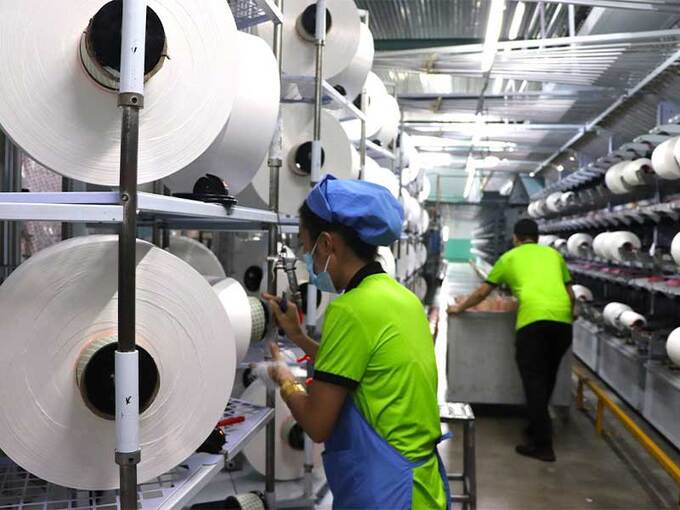
According to the Trade Remedies Authority (Ministry of Industry and Trade), on October 13, 2026, the Minister of Industry and Trade signed and issued Decision No. 2652/QĐ-BCT on the results of the final review of the application of anti-dumping measures on long-staple polyester yarn imported from India, Indonesia, Malaysia, and China.
The decision was issued based on the results of the final review investigation, conducted in accordance with the provisions of the Law on Foreign Trade Management and the rules of the World Trade Organization (WTO). Accordingly, the anti-dumping measures on long-staple polyester fiber products covered by the case have been extended for an additional five years.
Previously, on October 13, 2021, the Ministry of Industry and Trade issued Decision No. 2302/QĐ-BCT on the imposition of definitive anti-dumping duties on certain long-staple polyester fiber products originating from the four countries and territories mentioned above. On October 16, 2025, the Ministry of Industry and Trade further issued Decision No. 3013/QĐ-BCT and the accompanying notice regarding the final review of Case ER01.AD10.
According to the investigating authority’s assessment, following the implementation period, the anti-dumping measures have had positive effects on the domestic fiber manufacturing industry, helping to create a level playing field and mitigate the impact of dumping.
During the period the measures were in effect, the volume of imports of products subject to the investigation from the countries concerned decreased significantly compared to the beginning of the review period. This was one of the factors that helped domestic enterprises maintain their production and business operations.
The measures have also supported enterprises in continuing to invest, expand capacity, and develop new production facilities. Total domestic finished product output has increased, helping to enhance the industry’s ability to supply yarn to the domestic market.
Maintaining yarn production has helped sustain and expand the industry’s workforce, thereby contributing to job creation and income generation for workers in local communities. Anti-dumping measures also help sustain the domestic textile and apparel value chain, from the demand for raw materials and upstream services to the supply of materials for downstream weaving and dyeing processes.
These effects align with the development orientation of sourcing raw and auxiliary materials and increasing the domestic content ratio of the textile and apparel industry.
However, although domestic production indicators have improved to some extent, the investigating authority determined that there is still clear evidence that the industry would continue to suffer significant injury if the anti-dumping measures were terminated.
The review findings show that, during the review period, imported goods from India, Indonesia, Malaysia, and China continued to be sold at dumped prices in Vietnam. This practice is likely to continue or recur if anti-dumping measures are no longer in place.
Import volumes from the countries under investigation continued to rise during the review period, particularly for goods originating in China. If the duties were terminated, import volumes would likely surge at low prices, creating price disparity, price pressure, and price suppression on similar domestically produced products.
Several economic indicators for the domestic manufacturing sector continue to show adverse trends, including production volume, capacity utilization efficiency, market share, inventory levels, profits, labor productivity, investment, and cash flow. These factors indicate that the industry continues to face the risk of significant injury.
In addition, China has significant production and export capacity for polyester fiber. Meanwhile, some third-country markets are maintaining trade remedy measures against the fiber products covered by the review. This increases the risk that goods will be redirected to Vietnam if the anti-dumping measures are terminated.
Based on the above assessments, the investigating authority concludes that the imported goods subject to the review are likely to continue or resume dumping, causing injury to the domestic industry if the measures are terminated. The draft final review conclusion has been sent to the relevant parties for comments in accordance with regulations before the Ministry of Industry and Trade issues an official decision.