

Strengthen price management and control measures in the final months of 2026
Deputy Prime Minister Nguyen Van Thang has just signed Directive No. 70/CĐ-TTg, dated October 15, 2026, from the Prime Minister regarding the strengthening of measures to manage and price regulation in the final months of 2026, thereby helping to control inflation in line with the set targets.
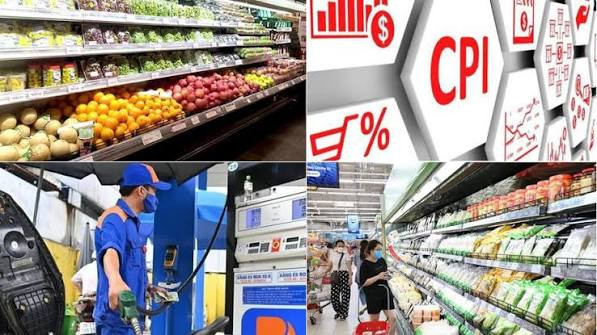
In the first nine months of 2026, the global economy continued to face complex and unpredictable developments, harboring many risks, particularly from geopolitical instability and disruptions in supply chains. The prolonged conflict in the Middle East has impacted energy prices, input costs, and international transportation and logistics operations, thereby putting pressure on domestic prices of goods and services. Although prices for some goods temporarily eased at times, the cumulative impact of previous price hikes and the resurgence in fuel prices continued to influence the overall domestic price level during the first nine months of 2026.
According to statistics for the first nine months of 2026, the national average Consumer Price Index (CPI) rose by 4.52% compared to the same period last year. Notably, 14 provinces and cities recorded a nine-month average CPI increase higher than the national average. This trend indicates that price pressure in some localities remains significant, requiring proactive, timely, and practical price management and control measures that align with actual conditions and are tailored to the market characteristics and consumption patterns of each locality.
In the final months of 2026, consumer demand and shopping for holidays and festivals, as well as production and business activities, are expected to increase as usual; while adverse factors stemming from the global economic and political situation, energy prices, transportation costs, and the risk of supply disruptions may continue to put pressure on price levels. Therefore, to proactively address the challenges in price management and regulation during the final months of 2026—thereby contributing to keeping the 2026 average CPI within the target range of approximately 4.5%, stabilizing the macroeconomy, ensuring the people’s livelihood, and supporting production and business activities— the Prime Minister instructs the Ministers of all Ministries, the Heads of ministerial-level agencies, and the Chairpersons of the People’s Committees of provinces and cities to continue strictly implementing the directives of the Government and the Prime Minister regarding the management, price regulation, and market stabilization—including Directive No. 28/CĐ-TTg dated April 1, 2026, on strengthening price management, regulation, and stabilization; and to focus on directing the vigorous, coordinated, and effective implementation of the following tasks and measures:
1. Proactively monitor, analyze, and forecast market price trends and develop management plans appropriate to the actual situation
a) Ministries, ministerial-level agencies, and localities, in accordance with their assigned functions and tasks, shall closely and regularly monitor global and domestic economic developments, supply-and-demand conditions, and market prices; promptly analyze and assess the impact of factors affecting price levels, particularly those related to gasoline, oil, energy, food, raw materials, construction materials, and essential goods and services that significantly impact people’s livelihoods and businesses’ production and operating costs. Promptly identify factors causing upward price pressure to proactively develop response plans, ensuring that price management and control efforts are not reactive or caught off guard.
b) The Ministry of Finance shall take the lead, in coordination with relevant ministries and sectors, in closely monitoring CPI trends and factors affecting price levels; compiling, analyzing, and forecasting the situation; and promptly advising the Government, the Prime Minister, and the Price Management Steering Committee on appropriate price management and control measures.
c) The State Bank of Vietnam conducts a proactive and flexible monetary policy in coordination with fiscal policy and other macroeconomic policies; manages interest rates and credit in a reasonable manner; closely monitors exchange rates and the foreign exchange market to ensure legitimate foreign currency demand and limit the impact of imported inflation; and investigates and addresses hoarding and market manipulation in the foreign exchange market in accordance with regulations.
2. Ensure a balance between supply and demand and stabilize prices of essential goods and services
a) The Ministry of Industry and Trade shall take the lead, in coordination with relevant ministries, sectors, and localities, in closely monitoring supply-demand trends and price fluctuations of energy products, petroleum, electricity, and essential goods within its jurisdiction; proactively develop plans to ensure supply, regulate the flow of goods, and facilitate distribution among regions and localities; implement market stabilization measures within its authority to prevent shortages, supply disruptions, or unreasonable price increases. It shall strengthen inspections of business operations and goods distribution to promptly detect and address violations of laws on pricing, competition, and consumer protection.
b) The Ministry of Agriculture and Environment, in coordination with relevant ministries, sectors, and localities, shall monitor production, supply, and prices of agricultural, forestry, and aquatic products, as well as foodstuffs; proactively develop plans to ensure supply, promote production, harvesting, circulation, and distribution of goods—particularly those meeting consumer demand during the year-end period and the Lunar New Year. It shall promptly propose solutions to address localized supply shortages caused by natural disasters, epidemics, or other adverse factors.
c) The Ministry of Construction shall take the lead, in coordination with relevant ministries, sectors, and localities, in closely monitoring the production, supply, demand, and price fluctuations of construction materials; and improve the quality and timeliness of the publication of construction material prices in accordance with regulations. Proactively assess the causes of price fluctuations and propose solutions to resolve difficulties related to the supply, transportation, and distribution of construction materials; promptly detect, address, or recommend action within their authority against violations, thereby helping to ensure project schedules and control construction investment costs.
d) The Ministry of Health shall closely monitor price trends for medicines, medical supplies, medical examination and treatment services, and other goods and services within its jurisdiction; cooperate with relevant agencies to ensure supply, strengthen inspections of compliance with pricing regulations, and prevent shortages of medicines and medical supplies or the exploitation of market conditions to unjustifiably raise prices.
đ) The Ministry of Education and Training, in accordance with its assigned functions and tasks, shall coordinate with relevant agencies to monitor supply and demand conditions, as well as the prices of textbooks and essential goods and services within its jurisdiction; proactively develop plans to ensure supply, control factors affecting prices, and help mitigate price pressures on the public.
e) Ministries, sectors, and localities, based on their assigned functions and tasks, shall proactively develop plans to ensure the supply of essential goods and services; effectively implement market stabilization programs, supply-demand matching initiatives, trade promotion, and measures to support the circulation of goods. Particular attention should be paid to ensuring supply during the rainy and typhoon season, natural disasters, emergency situations, and periods of high consumer demand toward the end of the year; prevent prolonged localized shortages of goods, hoarding, price gouging, or unreasonable price increases.
3. Prudently manage prices of goods and services set by the State
Ministries, ministerial-level agencies, and local authorities shall review price adjustment proposals within their jurisdiction and scope of management; thoroughly assess the necessity, extent, and timing of such adjustments, as well as their impact on the CPI, overall price levels, people’s livelihoods, production and business activities, and the 2026 inflation control target. In cases where a price increase is necessary, the timing and extent of the adjustment must be carefully considered based on a comprehensive assessment of cost factors, the public’s ability to pay, the socio-economic situation, and inflation control requirements; and strictly adhere to the authority, procedures, and formalities prescribed by law. Price adjustments should be avoided at the same time or concentrated in the final months of the year whenever possible, allowing for the proactive scheduling of more appropriate timing to ensure a balance between the need to implement market-based pricing mechanisms and the goal of stabilizing price levels.
4. Strengthen local responsibility for price management and regulation
People’s Committees of provinces and cities shall direct relevant departments, sectors, and agencies to implement price management and regulation measures appropriate to local market characteristics, consumption patterns, and socioeconomic conditions; focusing on the following tasks:
a) For the 14 localities (Son La, Tuyen Quang, Thai Nguyen, Gia Lai, Hue, Tay Ninh, Khanh Hoa, Ca Mau, Da Nang, Hanoi, Ho Chi Minh City, Vinh Long, Dong Thap, Dak Lak) where the average CPI for the first nine months of 2026 increased at a higher rate than the national average CPI increase, the People’s Committees of these provinces and cities shall direct the Department of Finance to take the lead, in coordination with statistical agencies and relevant authorities, in urgently reviewing and specifically assessing CPI trends within their jurisdictions; conduct an in-depth analysis of the causes of price increases by each group of goods and services, clarifying the factors influencing supply, consumer demand, input costs, circulation, distribution, price adjustments for goods and services set by the State, and local-specific factors.
Based on the analysis results, clearly identify the groups of goods and services that contribute most significantly to the CPI increase; immediately develop and implement plans and measures for price management and control within their authority, focusing on product groups with high price increases that have a significant impact on the CPI and people’s livelihoods. Specify the responsibilities of each agency and unit; strengthen inspections, supervision, and regular evaluations of implementation results to ensure that the local CPI does not rise during the remaining months of 2026, thereby contributing to the national goal of controlling inflation.
b) For localities where the average CPI for the first nine months of 2026 has increased at a rate lower than the national average CPI increase, the People’s Committees of provinces and cities must not become complacent; they must continue to closely monitor price trends and the supply and demand of goods and services within their jurisdictions, and proactively develop price management plans for the final months of the year, particularly for essential goods and product groups at risk of seasonal price increases. Timely implement appropriate measures to limit upward price pressures, maintain price stability, and contribute to the national goal of controlling the overall CPI.
c) Review and assess the situation regarding production, stockpiles, circulation, distribution, and consumer demand within the local area; proactively develop plans to ensure the supply of essential goods and services to meet production and consumption needs during the final months of the year and the 2027 Lunar New Year holiday. Pay particular attention to petroleum products, grains, foodstuffs, livestock and poultry meat, vegetables and fruits, construction materials, fertilizers, animal feed, medicines, medical supplies, and other essential goods.
d) Proactively implement market stabilization programs in line with actual conditions and the localities’ capacity to balance resources; encourage businesses to participate in stockpiling and supplying essential goods, and to carry out appropriate promotional and discount programs, thereby contributing to market stability and supporting consumers. Strengthen coordination among localities in matching supply and demand, regulating the flow of goods, and ensuring the smooth circulation of goods, especially in areas affected by natural disasters, storms, and during periods of high consumer demand; prevent shortages, supply disruptions, hoarding, and price gouging that lead to unreasonable price increases.
d) Strengthen monitoring and supervision of the circulation and distribution of goods; review intermediary stages, as well as transportation, warehousing, storage, and distribution costs. Encourage businesses to proactively reduce costs, improve production and business efficiency, diversify supply sources and distribution methods, thereby helping to lower the cost of products and services and limit upward price pressure in the market. Promptly coordinate with relevant authorities to address difficulties and obstacles in the circulation and transportation of goods, ensuring that external factors do not become causes of supply shortages or unreasonable price increases.
e) Closely monitor local production, supply, demand, and price fluctuations of construction materials; promptly publish construction material prices in accordance with regulations. Implement decisive measures to stabilize prices for key construction materials (such as sand, stone, gravel, and fill dirt); focus on planning efforts, adjust extraction plans, and strictly manage mineral and construction material quarries to prevent unreasonable price increases and supply shortages, thereby ensuring the supply for key national projects, important local projects, and market demand.
5. Strengthen inspections of compliance with price laws, and promptly detect and address violations
a) Ministries, ministerial-level agencies, and local authorities shall, in accordance with their respective functions, tasks, and authority, strengthen inspections and oversight of compliance with laws on price declaration, price posting, public disclosure of price information, and the sale of goods and provision of services at posted prices: focusing on essential goods and sectors at risk of abnormal price fluctuations, such as transportation, lodging, tourism, construction materials, foodstuffs, pharmaceuticals, and medical supplies. Proactively inspect price-determining factors in accordance with regulations and within their authority when necessary; promptly detect and strictly address violations of price laws, including the exploitation of market fluctuations to unjustifiably raise prices, hoarding, price manipulation, or causing supply disruptions.
b) Monitor and review price trends for goods and services with reduced input costs; encourage businesses to proactively cut costs and adjust selling prices in line with downward fluctuations in price-determining factors; and promptly investigate and address any signs of legal violations.
6. Strengthen information and communication efforts to stabilize market sentiment
Ministries, ministerial-level agencies, and local authorities shall coordinate with the Ministry of Culture, Sports, and Tourism, as well as media and communications agencies, to provide timely, accurate, objective, and transparent information on supply and demand, prices of essential goods, and price management and control measures to help citizens and businesses proactively engage in production, business operations, and consumption, thereby contributing to stabilizing market sentiment and managing inflation expectations. Legally address cases of spreading false information that causes panic and market instability.
7. Implementation
a) Ministers of relevant ministries, heads of ministerial-level agencies, and Chairpersons of People’s Committees of provinces and cities shall be responsible for directing the implementation of this Directive; clearly assign the lead agency, cooperating agencies, and the tasks and responsibilities of their heads; regularly inspect, supervise, and evaluate implementation results to ensure that price management and control measures are implemented in a coordinated, substantive, and effective manner, in line with actual conditions. Proactively address issues within their jurisdiction and promptly report and propose solutions to the competent authorities for matters beyond their jurisdiction.
b) Ministries, ministerial-level agencies, and local authorities must strictly adhere to the market price reporting system and price management and control procedures; compile monthly reports on the situation and implementation results and submit them to the Ministry of Finance for monitoring and consolidation. Promptly report any unusual fluctuations, risks of supply shortages, or significant upward price pressures; propose appropriate solutions.
c) The Ministry of Finance, in its role as the standing agency of the Price Management Steering Committee, shall monitor, supervise, and consolidate reports from ministries, agencies, and local authorities; coordinate with ministries, agencies, and localities to assess trends in commodity and service prices and their impact on the CPI in order to advise the Chair of the Price Management Steering Committee on appropriate price management and control measures.
The Prime Minister instructs Ministers, Heads of ministerial-level agencies, and Chairpersons of People’s Committees of provinces and cities to, in accordance with their assigned functions, tasks, and authority, focus on directing the vigorous, coordinated, and effective implementation of the tasks and measures outlined in this Directive and the directives of the Government, the Prime Minister, as Chair of the Price Management Steering Committee, regarding price management and control efforts starting from the beginning of 2026; proactively and closely monitor market developments, enhance analytical and forecasting capabilities, and promptly respond to factors causing upward price pressure, while absolutely avoiding complacency or negligence in price management and control. Strive to control the CPI in each locality, contributing to achieving the target of an average annual CPI increase of approximately 4.5% in 2026, maintaining macroeconomic stability, ensuring social security and the people’s livelihood, and creating favorable conditions for the development of production and business activities./.