

Notable Directives and Decisions by the Government and the Prime Minister for the Week of October 17–23, 2026
Strengthening measures to prevent and combat cheating on exams, tests, and assessments in education and training; starting October 16, 2026, same-day gold transactions of VND 5 million or more must be settled via non-cash methods... These are the notable policy directives and administrative decisions issued by the Government and the Prime Minister during the week of October 17–23, 2026.
Starting October 16, 2026, same-day gold transactions of VND 5 million or more must be settled via non-cash payment methods

Deputy Prime Minister Nguyen Van Thang signed Decree No. 390/2026/ND-CP amending and supplementing certain articles of Decree No. 24/2012/ND-CP dated April 3, 2012, on the management of gold trading activities, as amended and supplemented by Decree No. 232/2025/ND-CP (hereinafter referred to as Decree No. 24/2012/ND-CP).
Decree No. 390/2026/ND-CP has amended and supplemented certain clauses of Article 4 of Decree No. 24/2012/ND-CP, which stipulates management principles. Notably, the amendment to Clause 10 of Article 4 pertains to cashless payments for the purchase and sale of gold.
Accordingly, when settling transactions for the purchase or sale of gold with a value of VND 5 million or more in a single day, customers must use non-cash payment methods in accordance with the law on non-cash payments.
Violations related to betting and prize-based games are subject to fines of up to VND 200 million
On behalf of the Government, Deputy Prime Minister Nguyen Van Thang signed Decree No. 391/2026/ND-CP on October 20, 2026, regulating administrative penalties for violations in the field of betting and prize-based games.
This Decree stipulates administrative violations; completed and ongoing administrative violations; forms of penalties, penalty amounts, and measures to remedy consequences; subjects subject to penalties; authority to impose administrative penalties and authority to issue administrative violation reports; and the implementation of remedial measures in the betting, casino, and electronic prize-based gaming sectors for foreign nationals (the betting and prize-based gaming sector).
The Decree sets the maximum fine for administrative violations in the betting and prize-based games sector at VND 200,000,000 for organizations and VND 100,000,000 for individuals.
The Decree stipulates supplementary penalties, including: temporary suspension of betting, casino, and prize-based electronic gaming operations; and confiscation of evidence of administrative violations and the means used to commit such violations.
Which business sectors or industries are required to have a plan to ensure public security and order?
On behalf of the Government, Standing Deputy Prime Minister Pham Gia Tuc signed Decree No. 392/2026/ND-CP on October 20, 2026, amending and supplementing decrees related to administrative procedures, and investment and business conditions in the field of public security and order.
In particular, Decree No. 392/2026/ND-CP amends and supplements certain articles of Decree No. 96/2016/ND-CP dated July 1, 2016, which stipulates conditions regarding public security and order for certain industries and conditionally regulated investment and business sectors that were previously amended and supplemented by Decree No. 56/2023/ND-CP and Decree No. 58/2026/ND-CP (hereinafter referred to as Decree No. 96/2016/ND-CP).
Specifically, Decree No. 392/2026/NĐ-CP amends and supplements Clause 1 of Article 8 of Decree No. 96/2016/NĐ-CP, stipulating that businesses operating in the following sectors and trades must have a plan to ensure public security and order, including:
1. Businesses engaged in the sale of support tools (including repair services);
2. Businesses dealing in fireworks, excluding explosive fireworks;
3. The sale of games of chance (including electronic games of chance for foreigners, casinos, and betting);
4. Business operations involving industrial explosives;
5. Businesses dealing in explosive precursors;
6. Business activities involving the use of industrial explosives and explosive precursors;
7. Operating blasting services;
8. Nightclub services;
9. Operation of lodging services (for business establishments that are enterprises);
10. Trading in handguns, shoulder-fired weapons, and ammunition for these types of weapons issued to the People’s Armed Forces and other forces in accordance with the law on the management and use of weapons, explosives, and auxiliary equipment.
Cases in which foreign workers are not required to obtain a work permit
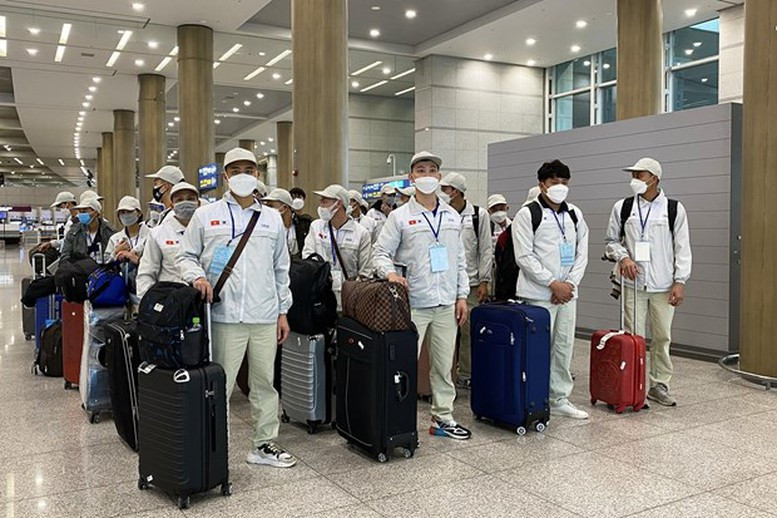
In Decree No. 393/2026/NĐ-CP dated October 20, 2026, the Government specifically stipulates the cases in which foreign workers are not subject to the requirement for a work permit.
Specifically, the following categories of foreign workers are not subject to the requirement for a work permit:
1. Foreign workers falling under any of the cases specified in Clauses 3, 4, 5, 6, 7, and 8 of Article 154 of the Labor Code.
2. Foreign workers who are owners or shareholders with a capital contribution of at least VND 3 billion in a limited liability company.
3. Foreign workers who are the Chairperson of the Board of Directors or a member of the Board of Directors with a capital contribution of at least VND 3 billion in a joint-stock company.
4. Foreign workers entering Vietnam to provide professional and technical consulting services or to perform other tasks related to research, construction, appraisal, monitoring, evaluation, management, and implementation of programs and projects utilizing grant aid, official development assistance, concessional loans as stipulated in project and non-project documents approved by competent authorities, or in international agreements on official development assistance or in international treaties on official development assistance and concessional loans signed between competent authorities of Vietnam and foreign countries.
5. Foreign workers who are journalists engaged in press and media activities and have been certified by the Ministry of Foreign Affairs.
6. Foreign workers dispatched to Vietnam by competent foreign agencies or organizations to teach, serve as managers, or act as executive directors at educational institutions proposed for establishment in Vietnam by foreign diplomatic missions or intergovernmental organizations, or at institutions, organizations established under international treaties to which Vietnam is a signatory or party.
7. Foreign students and trainees currently studying at schools or training institutions in Vietnam or abroad who have an internship agreement or a job offer from an agency, organization, or enterprise in Vietnam; trainees and apprentices on Vietnamese seagoing vessels.
8. Foreign workers who are family members of staff at foreign diplomatic missions in Vietnam and are permitted to work in Vietnam in accordance with the provisions of international treaties to which the Socialist Republic of Vietnam is a party.
9. Foreign workers holding official passports who are employed by state agencies, political organizations, or political-social organizations.
10. Foreign workers responsible for establishing a commercial presence.
11. Foreign workers who are volunteers.
12. Foreign workers entering Vietnam to implement international agreements signed by central or provincial-level agencies or organizations in accordance with the law.
13. Foreign workers who fall under one of the following categories:
a) Entering Vietnam for short-term work. In cases where an employment relationship arises, involving the hiring and use of labor and the payment of wages, an application for a work permit must be submitted in the form of an employment contract as prescribed in Article 19 of this Decree;
b) Intra-company transfers within the scope of the 11 service sectors listed in Vietnam’s Schedule of Service Commitments to the World Trade Organization, as set forth in Appendix II attached to this Decree.
14. Foreign nationals working at educational institutions, including:
a) Engaging in teaching, research, and the transfer of international educational programs, including: teaching in joint educational and training programs approved by the competent authorities of Vietnam; participating in projects, research topics, or cooperative programs in scientific research, technology transfer, innovation, or international cooperation projects in the field of education that have been approved or signed by the competent authorities;
b) Participating in cooperative programs and projects on education and training between foreign educational institutions and educational institutions in Vietnam through cooperation agreements or joint training programs;
c) Hold a master’s degree or higher in STEM fields, science, technology, digital transformation, finance, economics, or business administration and engage in teaching and scientific research at educational institutions;
d) Hold a doctoral degree and engage in teaching and scientific research at vocational and higher education institutions;
e) Hold the title of professor or associate professor and engage in teaching, research, and academic exchange at vocational and higher education institutions.
15. Foreign workers must be certified by ministries, ministerial-level agencies, or provincial People’s Committees.
16. Individuals entering Vietnam to work are issued special visa-exemption cards in accordance with Decree No. 221/2025/NĐ-CP of the Government, which regulates the granting of temporary visa exemptions to foreign nationals in special categories requiring preferential treatment to support socio-economic development.
17. Foreign workers who are experts working in fields listed in the Strategic Technology List and the Strategic Technology Products List as per a Decision of the Prime Minister, and their family members.
18. Foreign workers recruited under the Prime Minister’s Decision on the National Program for the Development of Artificial Intelligence Human Resources.
Strengthening the Prevention and Combating of Exam Fraud, Testing, and Evaluation in Education and Training
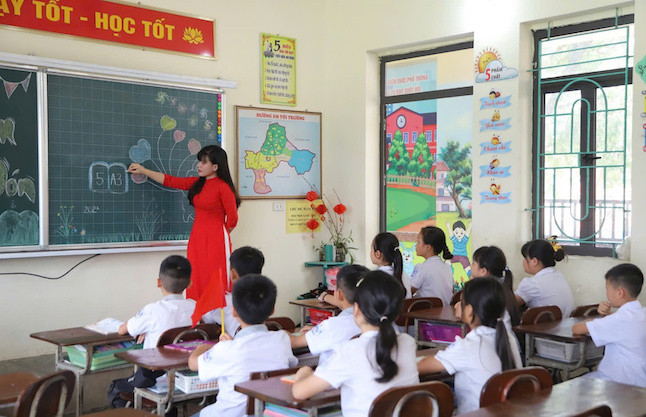
Deputy Prime Minister Le Tien Chau signed Directive No. 37/CT-TTg dated October 20, 2026, issued by the Prime Minister, on strengthening the prevention and combating of exam cheating, testing, and evaluation fraud in education and training.
The directive requires ministers, heads of relevant agencies, chairpersons of provincial and municipal People’s Committees, and heads of educational institutions, training institutions, and relevant units to conduct a comprehensive review and refine regulations, examination rules, guidelines, and procedures for organizing examinations, assessments, and evaluations; to strengthen the application of technology and technical measures to prevent, detect, and address violations; while regarding the commitment to compliance with regulations and laws, as well as the sense of responsibility and integrity of each organization and individual, as the most fundamental and crucial factor.
Resolutely detect, prevent, and promptly and strictly address, in accordance with regulations, acts such as having someone else take an exam, cheating on exams, plagiarism, grade tampering, leaking or disclosing exam questions, and using high-tech means to commit fraud; as well as acts of covering up, aiding, or abusing one’s position or authority to influence academic performance, assessments, evaluations, and exams; strictly punish organizations and individuals who violate regulations in accordance with the law, with no off-limits areas and no exceptions...
Building a Multi-Value, Sustainable Forestry Sector
Deputy Prime Minister Ho Quoc Dung signed Decision No. 2018/QD-TTg dated October 21, 2026, issued by the Prime Minister, approving the adjustment of the Forestry Master Plan for the 2021–2030 period, with a vision toward 2050.
The overall objective of the revised Master Plan is to concretize the Party’s policies and guidelines; ensure alignment with the National Socio-Economic Development Strategy, the National Master Plan, the National Land Use Plan, and other relevant plans; and to define the objectives and development orientations for the forestry sector for the 2026–2030 period and the vision through 2050.
Build a modern, efficient, and multi-value forestry sector that promotes sustainable development; harnessing the potential, role, and benefits of forests; enhancing the quality and capacity of forests to absorb and sequester carbon; contributing to achieving the “double-digit” growth target; protecting the environment; mitigating natural disasters; adapting to climate change, conserving biodiversity, providing forest ecosystem services, contributing to poverty alleviation, improving livelihoods for rural and mountainous communities and ethnic minority groups, maintaining national defense and security, and fulfilling international commitments.
By 2075, Da Nang will be among Asia’s leading cities with a rich cultural identity
Permanent Deputy Prime Minister Pham Gia Tuc signed Decision No. 2016/QD-TTg on October 21, 2026, approving the Master Plan for Da Nang City through 2050, with a vision toward 2075.
The planning objective is to develop Da Nang by 2050 into an ecological, modern, smart, culturally distinctive, safe, livable, attractive, and internationally recognized coastal city; a key national growth hub; a national and regional hub for entrepreneurship, innovation, logistics, the blue economy, trade, finance, free trade, science, technology, digital transformation, the digital economy, data, tourism and heritage, culture and sports, education and training, and high-quality healthcare; developing along the path of green growth, adapting to climate change, and ensuring national defense, security, and maritime and island sovereignty.
By 2075, Da Nang will be an ecological, modern, smart, and globally connected coastal city, ranking among Asia’s leading cities with a strong sense of identity; it will gradually meet the criteria for a special city.