

Amendments and Additions to the Action Plan on Ensuring National Energy Security
Permanent Deputy Prime Minister Pham Gia Tuc signed Resolution No. 361/NQ-CP on November 10, 2026, amending and supplementing certain provisions of Government Resolution No. 328/NQ-CP dated October 13, 2025, promulgating the Action Plan on Ensuring National Energy Security.
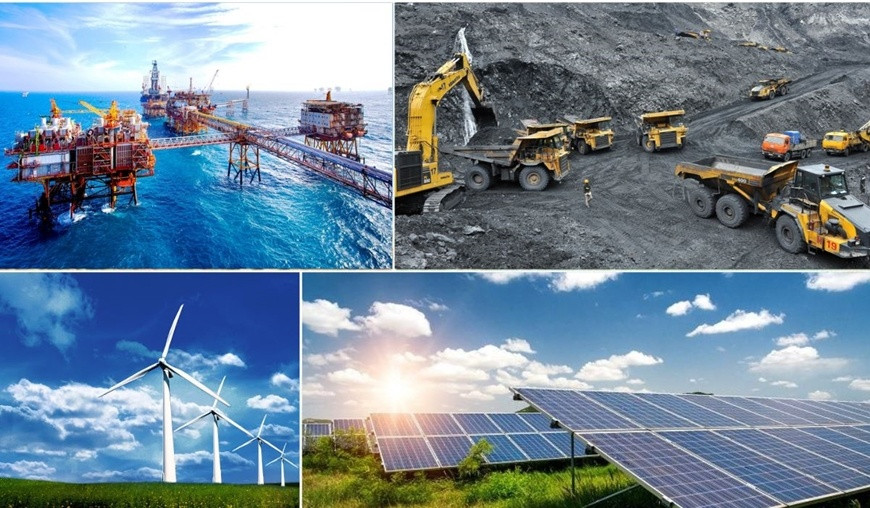
Resolution No. 361/NQ-CP amends and supplements certain tasks in Appendix II attached to the Action Plan under Resolution No. 328/NQ-CP dated October 13, 2025, which implements Resolution No. 70-NQ/TW dated August 20, 2025, of the Politburo on ensuring national energy security by 2030, with a vision toward 2045. Specifically, the Ministry of Industry and Trade and the People’s Committees of provinces and centrally-affiliated cities are required, within their respective jurisdictions, to coordinate with relevant ministries, sectors, agencies, and units to strengthen the inspection and supervision of the implementation of the Party’s policies, policies, and laws regarding the assurance of national energy security—particularly with regard to energy plans—and to ensure the quality and progress of energy development projects.
Regarding the task of improving the institutional framework and policies to create a competitive advantage, a solid foundation, and a strong driving force for energy development, Resolution No. 361/NQ-CP assigns the following:
The Ministry of Industry and Trade to take the lead, in coordination with relevant ministries, sectors, People’s Committees of provinces and centrally-affiliated cities, and related organizations, in drafting a Prime Ministerial Decision stipulating support policies for households installing rooftop solar power systems for self-generation and self-consumption, as well as electricity storage systems, on a phased basis.
In 2026, the Ministry of Industry and Trade will continue to refine and effectively implement laws on geology and minerals.
The State Bank of Vietnam, the Vietnam Development Bank, the Ministry of Industry and Trade, and the Ministry of Finance, in accordance with their assigned functions and tasks, shall issue preferential investment credit policies for enterprises with green and clean energy projects and new technologies; enterprises investing in energy storage systems; and enterprises engaged in the research, development, and domestic production of energy equipment.
The Ministries of Industry and Trade, Agriculture and Rural Development, and Environment, in accordance with their assigned functions and tasks, shall develop a robust policy framework to encourage large electricity consumers to build energy recovery systems for electricity generation; establish reasonable incentive mechanisms and policies to develop rooftop solar systems for self-generation and self-consumption, as well as energy storage systems; develop specific mechanisms and policies to vigorously promote waste treatment systems with energy recovery; and encourage businesses to invest in low-carbon and carbon-neutral technologies. Refine mechanisms and policies to promote energy conservation and efficiency.
The Ministry of Industry and Trade shall take the lead in reviewing and finalizing the proposal for the design of a competitive wholesale electricity market by December 2026; and in reviewing and finalizing the proposal for the design of a competitive retail electricity market by June 2027.
At the same time, take the lead in coordinating with relevant ministries, sectors, People’s Committees of provinces and centrally-affiliated cities, and related organizations to study the implementation of a two-part retail electricity pricing structure, and report to the Prime Minister in 2026.
Amend and supplement certain tasks related to the development of energy supply and infrastructure
Regarding the task of developing energy supply and infrastructure to firmly ensure energy security and meet growth requirements, Resolution No. 361/NQ-CP assigns the following: The Ministry of Finance, the Ministry of Industry and Trade, and the People’s Committees of provinces and centrally administered cities, within their respective jurisdictions, shall establish strict penalties for investors who register to develop energy projects but delay or fail to implement them, thereby affecting national energy security during the 2026–2030 period.
Regarding coal, the Ministry of Industry and Trade will take the lead, in coordination with relevant ministries, sectors, People’s Committees of provinces and cities directly under the central government, and related organizations, in expanding search and exploration efforts and improving the quality of reserve and resource assessments; and urgently study appropriate technologies and methods for exploring the Red River coal basin.
Regarding electricity, in 2026–2027, the Ministry of Industry and Trade will research, review, evaluate, and develop a roadmap and legal framework to implement the Renewable Energy Certificate (REC) Market. At the same time, during the 2026–2027 period, the Vietnam Electricity Group will develop a proposal for the development of a smart grid in Vietnam for the 2026–2030 period, with a vision through 2045.
Regarding the strengthening of strategic energy reserves and energy storage, the Ministry of Industry and Trade will develop and implement a strategy for the management, use, stockpiling, and protection of strategic mineral resources to support energy development.
The Ministry of Industry and Trade, in coordination with the Ministry of Finance, relevant ministries and sectors, People’s Committees of provinces and centrally-affiliated cities, and related organizations, will lead the investment in the construction of a national reserve system for crude oil, petroleum products, natural gas, and coal in line with the needs of socio-economic development and national energy security, both on land and at sea, during the 2025–2030 period.
Develop and regularly update scenarios, and implement measures to address climate change
Regarding the task of promoting energy conservation, environmental protection, and climate change adaptation, as well as flexibly implementing international commitments on emissions reduction and establishing governance and risk management measures, Resolution No. 361/NQ-CP requires:
The Ministry of Agriculture and Environment, in coordination with the Ministry of Finance, relevant ministries, agencies, and localities, shall urgently establish a carbon credit trading mechanism, develop the domestic carbon market, and connect it with the international market by 2025–2026.
In 2025–2026, the Ministry of Agriculture and Environment and the Ministry of Science and Technology, in accordance with their assigned functions and tasks, shall take the lead and coordinate with relevant ministries, sectors, People’s Committees of provinces and centrally-affiliated cities, and related organizations to implement policies prioritizing the development of advanced, highly efficient, and environmentally friendly technologies.
The Ministry of Industry and Trade and the Ministry of Science and Technology, in accordance with their assigned functions and tasks, will improve the legal framework and promote the development of carbon capture, storage, and reuse technologies, particularly in fossil fuel-based power generation.
The Ministry of Agriculture and Environment shall widely implement circular economy models, utilizing industrial waste as fuel for energy production. It shall develop an automated, continuous environmental monitoring system to closely monitor environmental parameters at energy projects. Strengthen supervision, inspection, and strict enforcement against environmental violations in the production and operation of power plants.
Power plant investors will upgrade exhaust gas and wastewater treatment systems at power plants to ensure compliance with environmental regulations by 2025–2030.
The Ministry of Agriculture and Environment shall develop and regularly update scenarios and implement measures to address climate change.
Energy project investors shall establish risk management and response systems; implement measures to address climate change and prevent and mitigate natural disasters from the project site selection and design phases through construction, production, and operation, thereby ensuring energy sector safety.
Regarding the task of achieving breakthroughs in the development of science, technology, innovation, digital transformation, and human resource training in the energy sector, the Ministry of Science and Technology and the Ministry of Industry and Trade shall take the lead, in coordination with relevant ministries, sectors, People’s Committees of provinces and centrally-affiliated cities, and related organizations, in developing mechanisms and policies to prioritize investment in research and development, with a minimum allocation of 2% of the energy sector’s GDP.
At the same time, create favorable, robust, and highly autonomous mechanisms to encourage energy enterprises to increase investment in research and development; establish research, testing, innovation, and national key laboratories in the energy sector; and attract 60–80 projects involving the transfer of advanced technologies.