







Ho Chi Minh Trail: Then and Now
In 1971, I took up a position in Department 71-I of the Vietnam Construction Bank, responsible for managing and allocating capital for the construction of the Ho Chi Minh Highway, and that's when I began my career in banking.
The Ho Chi Minh Trail was formed in the early 1960s, a communication route that transported millions of cadres and soldiers to the South (known as Battlefield B) to support the main front. The Party and State's policy of cutting through the Truong Son mountain range to build a road to fight the Americans, liberate the South, and unify the country was based on repairing, upgrading, and expanding the Ho Chi Minh Trail, also known as Road 71 (construction started in 1971), along with construction sites 71A, 71B, and 71C, and the main construction units under Project I (the predecessor of the current Transport Union 4). The 71-I specialized management office, under the Vietnam Construction Bank, was established, with staff transferred from the Nghe An branch of the Vietnam Construction Bank and cadres of Nghe An and Ha Tinh origin from the Thanh Hoa, Ha Bac, and Hoa Binh branches of the Vietnam Construction Bank to take on the task.
Stepping onto the row of makeshift shelters, constructed with wooden posts embedded in the ground and roofs and coverings made of bamboo, nestled on the forest slope right on the banks of the Ngan Pho River, we found our office and living quarters. In Son Tay commune, Huong Son district, Ha Tinh province, the staff responsible for disbursing funds were equipped with backpacks, flashlights, water bottles, high-top boots… like defense workers. Department 71-I was tasked with managing the disbursement of capital for the construction of a road project spanning over 200km in Nghe An and Ha Tinh provinces.
The Ho Chi Minh Trail in those days mainly clung to the forest, running along the Truong Son mountain range, with many sections close to the Vietnam-Laos border, mostly crossing high mountains and deep streams compared to the current Ho Chi Minh Trail. I saw and knew that the distances were much greater, such as the section through Ro in Thanh Chuong back then, running through Thanh Thuy commune, crossing through Son Hong, Son Tay, and Son Kim communes of Huong Son district, Ha Tinh province, and then onto the new route in Pho Chau town, Huong Son, Ha Tinh, about 30 km.
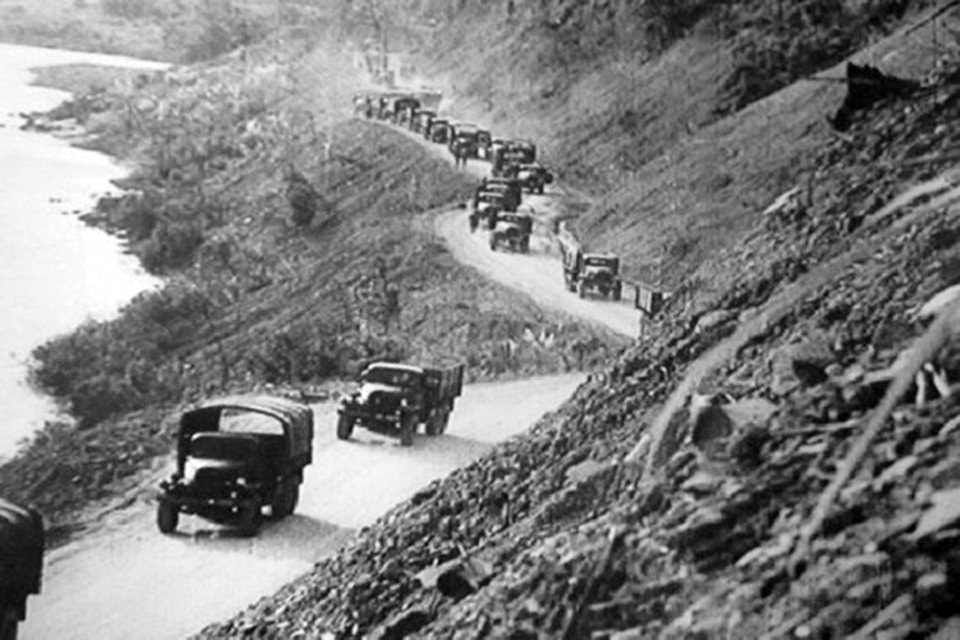
The construction methods at that time combined mechanization with manual labor. Each construction site only had a handful of C100 or DT54 bulldozers and about 10 Soviet-made Din-ben trucks or Chinese-made dump trucks, with a maximum load capacity of only 5 tons per vehicle. In mountainous areas with a lot of rock, explosives were used, and workers used shovels or modified carts as the only means of transport, resulting in low labor productivity and inefficiency. Therefore, the road was not open to traffic for three years (1971-1974).
Back then, we officials considered the construction site our home and the office our temporary residence. The days spent at the construction site, climbing mountains and wading through streams with the unit's technical staff, were tiring, but they were also opportunities to enjoy the rich, majestic, abundant, and poetic natural scenery of the towering mountains and forests, a solid foundation for the road to run through.
I remember, while on a business trip to Construction Site 71A in Khai Son commune, Anh Son district, Nghe An province, war invalid Tran Ngoc Quy, also an officer of the department, cycled nearly 150km, crossing four ferries, traveling back and forth across two rivers: the Ngan Pho River in Huong Son district, Ha Tinh province, and the Lam River in Nam Dan and Do Luong districts of Nghe An province. At dozens of key locations, the American imperialists regularly dropped tens of thousands of tons of bombs and mines, such as the Linh Cam river junction, the Ru Tret mountain pass in Nam Dong commune, and the Truong Bon slope… On numerous occasions, Quy had to abandon his bicycle and flee to avoid American bombs and mines. His clothes were tattered, his hands and feet were scratched and bleeding, but he never lost heart. Every month, Quy regularly spent time at the site, ensuring the completed work volume was accurate and the funds were disbursed in time, matching the approved budget.
At Construction Site 71C in Huong Trach commune, Huong Khe district, Ha Tinh province, Trinh Xuan Cuong, with his Hungarian bicycle—a type of bicycle used in Hungary to transport grass for cattle and horses, aided to Vietnam and distributed to cadres as a means of transportation for work—had to navigate over 100km of roads, passing through key locations such as the Linh Cam river junction, Dong Loc junction, and Dia Loi ferry crossing. Cuong had to choose the right time to cross these bomb- and mine-strewn areas to arrive at the construction site on time. During budget reviews, material and fuel inventory checks when price adjustments were planned, or acceptance of completed work, the disbursement officers of the Construction Bank were indispensable. We needed to concentrate our personnel, so the three of us (Mr. Quy, Mr. Cuong, and I) chose a shortcut, opting to walk along the outskirts of Pho Chau town, crossing the Ngan Sau River for over 50km to reach the 71C construction site. There was no ferry crossing, but the river was deep and the current was strong, so we packed all our personal belongings into plastic bags to use as makeshift life rafts and crossed safely.
In the 1970s, Son Tay and Son Kim communes in Huong Son district, Ha Tinh province, had sparse populations. People from many lowland communes of Huong Son, Duc Tho, and Can Loc districts migrated there to build new economic zones. Agricultural production was insufficient to feed the population, and the government had to provide subsidies. People engaged in various occupations to make a living, such as cutting bamboo, reeds, and firewood, weaving them into rafts to sell downstream along the Ngan Pho River. The land was vast, but the actual population was dense due to the construction of the Ho Chi Minh Highway. Military transport units and transit depots supplying domestic and foreign trade aid to the Laotian battlefield were interspersed along National Highway 8. Many consumer goods, already scarce, became even more so; vegetables became depleted, and the supply consisted mainly of green bananas and wild vegetables, which became tiresome to eat. The most abundant specialty of Huong Son is jackfruit. If you visit a local's house, you can eat jackfruit for free; just leave the seeds with the host. The jackfruit seeds are dried and stored until autumn or winter, then peeled and cooked with corn kernels. It's delicious and nutty, filling but not cloying. Alternatively, boiled jackfruit seeds are crushed and mixed with soy sauce or fish sauce (a special dipping sauce called "cheo"), which is very tasty.
Our agency dedicated two Sundays each month to tilling the land for planting vegetables and cassava, or going into the forest to gather bamboo shoots and firewood for the kitchen. Everyone competed to meet the targets set by the Trade Union. Even disabled veterans like Mr. Nguyen Huu Pho, who couldn't use a hoe or shovel, still climbed mountains and crossed streams to gather bamboo shoots and firewood, consistently exceeding their targets every month. Ms. Dau Thi Thanh Minh, with the appearance of a young lady, requested a transfer from Hoa Binh province back to her birthplace to be closer to her elderly mother. Unexpectedly, she ended up in western Ha Tinh, nearly 200km from home—not much closer than Hoa Binh province, and transportation was difficult and challenging. Yet, she still tilled the land, planted vegetables, gathered bamboo shoots, and collected firewood—tasks she had never had to do before. Initially unfamiliar with them, she gradually became proficient. Centella asiatica (Gotu Kola) is a favorite vegetable of Mr. Ngoc Thanh Quang - the head of the department, and Mr. Le Minh Chau - the deputy head of the department. At every meal, they always make sure to provide the staff with a plate of fresh, fragrant Centella asiatica, and the staff's living standards are improving day by day.
Three years working in the 71-I specialized management unit meant three years of living in the sacred forest and poisonous waters, receiving a 20% hazardous work allowance, and befriending fruit flies, leeches, and mosquitoes... life gradually became familiar, and that was when the State decided to suspend construction (March 1974).
Nearly 40 years have passed since I left the Ho Chi Minh Trail. Traveling along its glossy black asphalt surface, the sunlight clearly reflected the shadows of people and vehicles. Although the route has shifted further south in places, by tens of kilometers, it still traverses high mountains and deep streams. Who can imagine the sweat, effort, and blood of thousands of transport workers, volunteer youth, defense soldiers, and officials from the Vietnam Investment and Development Bank that were shed beneath that surface?
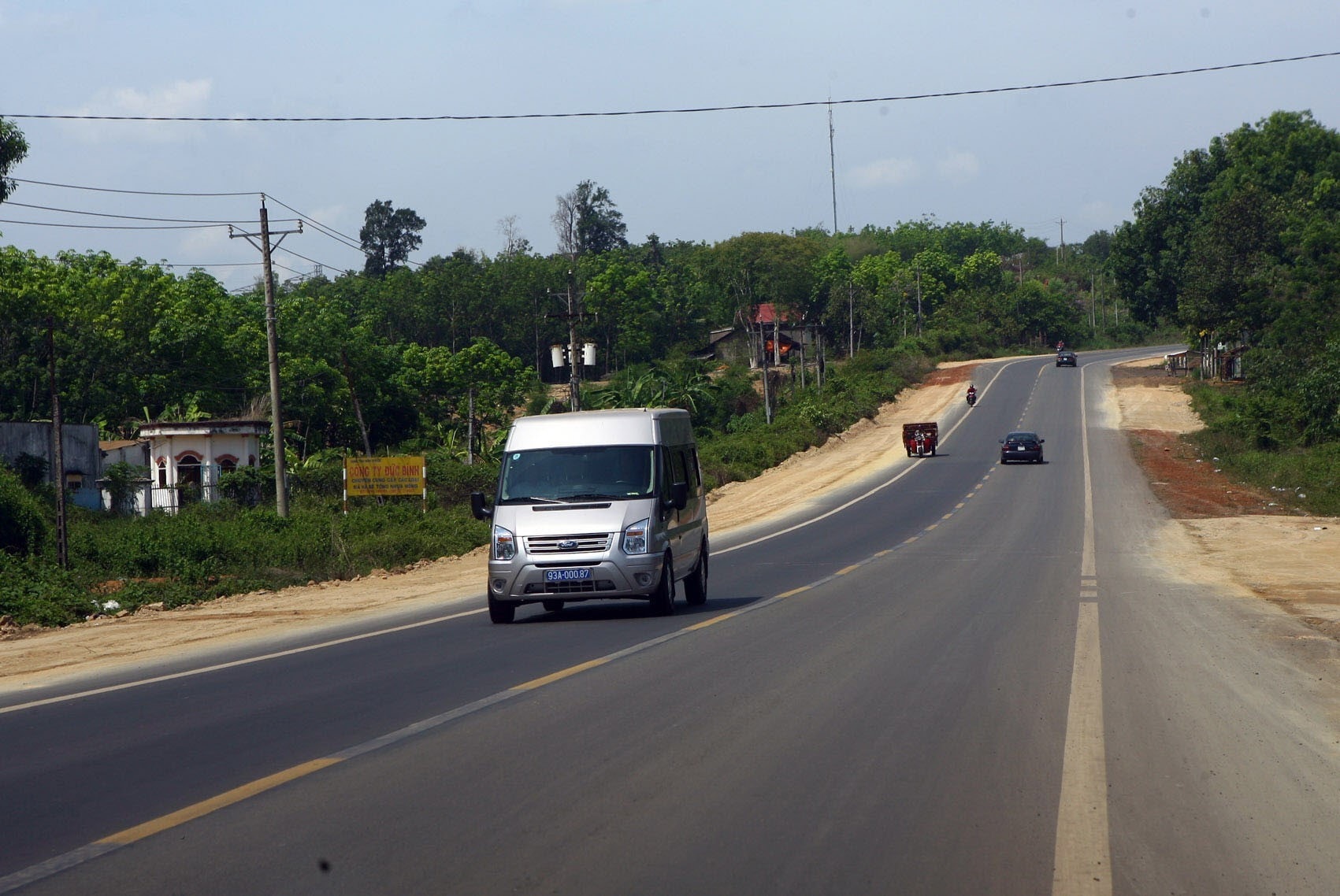
A section of the Ho Chi Minh Trail today (Source: VNA)
Along both sides of the road, many forests and tea plantations have covered the barren hills with greenery. Interspersed among them are terraced rice fields and corn paddies along the mountain slopes, ready for harvest, heavy with grain, glistening and basking in the sun, signaling a bountiful season. Many towns and villages have sprung up, with abundant goods, and infrastructure such as electricity, roads, schools, and health stations have been built, making the face of farmers and rural areas even more vibrant today. From somewhere behind the bamboo groves of the village, a sweet yet profound folk song echoes:
"Our hands create everything."
"With human effort, even stones can be turned into rice."
The Ho Chi Minh Trail, the economic trail, the trail of innovation, the trail of integration.
Having returned to civilian life, my heart still holds the memories of those days and the Ho Chi Minh Trail. On the occasion of the 55th anniversary of the industry's traditional day (April 26, 1957 - April 26, 2012), I would like to express my memories of my comrades and fellow soldiers as a token of gratitude to those who contributed their efforts to the successful construction of this monument named after the great President Ho Chi Minh, a monument of the century, a small gift contributing to the golden honor of the BIDV system.
(Source: Book "BIDV in My Heart" - Vietnam Writers Association Publishing House - April 2012) Vietnam Writers Association Publishing House - April 2012)