







Memoirs of a soldier who transitioned to civilian life.
In 1947, at the age of 14, I left my family to join the resistance. In October 1960, at the age of 27, I was transferred by my superiors to the Thai Nguyen Construction Branch.
To commemorate the 81st anniversary of the founding of the Vietnam People's Army (December 22, 1944 - December 22, 2025), BIDV would like to republish an article by Mr. Ca Vinh - a former employee of the Vietnam Construction Bank - who served in the army from the early days of the resistance war against the French.
Looking at the Vietnam Investment and Development Bank (BIDV) today, it's competing fairly within the commercial banking system both domestically and internationally. It's truly a tremendous step forward, something we couldn't have imagined when we first entered the industry. The more I think about it, the happier I am.
In 1947, at the age of 14, I left my family to join the resistance against French colonialism. In October 1950, I volunteered to join the army, dedicating my youth and making a small contribution to regaining independence for the nation.
As a soldier and radio operator, I contributed to ensuring the vital communication network via radio waves for the troops in southwestern Vietnam during the resistance war against the French.
At twenty-one years old, in December 1954, after relocating to the North, this soldier from the South continued to serve in the armed forces, as the radio communications station chief, protecting the sea area from Nghi Xuan - Ha Tinh to Deo Ngang - Quang Binh. There are so many memories I will never forget.
In 1955, I was stationed in Vinh City, Nghe An Province. Many Party, government, financial, banking, police, and military offices had been built in the city after the complete liberation of North Vietnam. There was one office near the Vinh City stadium with a sign that read: "Nghe An Construction Branch." The lettering, beautifully painted, stood beneath a row of lush green mahogany trees. I couldn't have known what that office did at the time.
The four words "Construction Department" naively made me think it was a building materials store. Time passed, and I left Vinh City without paying any more attention to that agency.
In October 1960, at the age of 27, I was transferred to the Ministry of Finance and assigned to the Thai Nguyen Construction Branch. I was truly surprised! It was surprising and amusing to recall my own interpretation back then. If before I didn't understand anything about the functions and duties of the Nghe An Construction Branch, from October 1960 onwards, I understood the functions and duties of the Thai Nguyen Construction Branch – where I directly worked in the early stages of my career. At that time, Mr. Mac Duc, a Dao ethnic minority, was the Branch Head, and Mr. Phan Dang, Mr. Dau, Mr. Oanh, and Mr. Thuy, with great kindness, helped and guided me in my professional work.
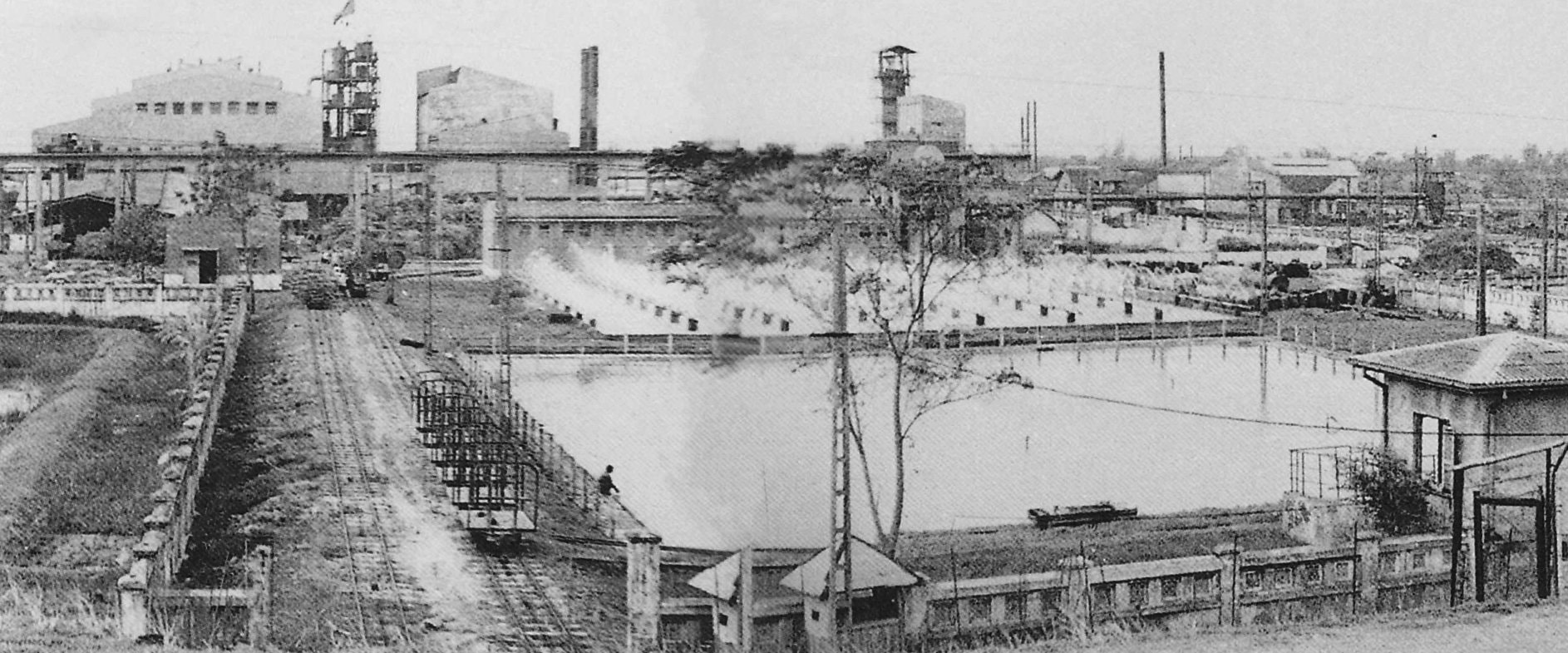
The Thai Nguyen Construction Fund was the agency responsible for allocating funds for the construction of the Thai Nguyen Iron and Steel Complex (blast furnaces, small furnaces, iron smelting furnaces), the Cao Ngan power plant, and the Trai Cau iron mine, contributing to the building of the heavy industry foundation of the socialist regime in a large province of the Viet Bac war zone, a revolutionary base of Vietnam. During my three years working at the Thai Nguyen Iron and Steel Complex, I grew significantly, receiving funding based on actual expenditures, initially disbursing funds based on the volume of completed projects – a more progressive form of allocation.
Due to the industry's development needs, in 1963 (at the age of 30), I was transferred to the Hanoi Construction Branch. The branch established 3 sub-branches:
- Branch Station I (Hai Ba Trung - Thanh Tri area)
- Branch II (Ba Dinh - Tu Liem area)
- Branch III (Gia Lam - Dong Anh area)
I was assigned to Sub-station I, headed by Mr. Quang, to supply materials to medium-sized factories—leading projects in our country's mechanical engineering industry—including the cutting tool factory, Sao Vang rubber factory, Thang Long tobacco factory, Ha Dinh water plant, Thuong Dinh canvas shoe factory, Van Dien phosphate fertilizer factory, and Van Dien battery factory. My footsteps were tireless on the sites of those historical projects.
In 1967, I returned to Sub-station II during the period of resistance against the war waged by the American imperialists to sabotage the North's rear base and restrict the supply of personnel and resources to the South. The main task was to evacuate facilities and factories to maintain production for combat and consumption.
Looking back, while the Thai Nguyen Construction Branch previously mainly implemented disbursement based on actual payments and expenditures, the Hanoi Construction Branch has significantly improved the level of disbursement and lending, both in form and content:
- Funds are allocated based on the volume of work completed.
- Disburse funds for completed work, including budget allocations and approved design tasks.
- Allocate funds based on actual quantities; do not allocate quantities that have been falsely declared.
- The distribution process is combined with on-site field visits.
- Funding will be allocated based on the quality of construction.
- Provision of materials for self-built construction projects.
- Loans instead of advances.
- Loans are provided for inventory reserves based on established quotas.
- Lending based on working capital turnover for construction projects…
It can be said that my joining the Hanoi Construction Branch was a turning point in my life, both professionally and ethically. Professionally, as I mentioned above. Regarding ethics, I absorbed the heart and virtue of Mr. Do Cong Lo – Director of the Hanoi Construction Branch. He taught us integrity, impartiality, and the fight against individualism in our work, emphasizing not enriching ourselves or using public funds for personal gain…
In November 1976 (at the age of 43), I was assigned by the Central Construction Bank to establish the Hau Giang Construction Bank Branch after the complete liberation of South Vietnam and the reunification of the country. At that time, there were still difficulties and obstacles regarding infrastructure and personnel - especially personnel after the complete liberation of South Vietnam. Some cadres from the North were sent to support the South. Key cadres from the North formed the framework for the establishment of the Construction Bank Branch from its very beginning.
I am delighted about the establishment of the Hau Giang Construction Branch. This is the result of my own efforts and the strong support of the Provincial Party Committee, the People's Committee, and the Department of Finance of Hau Giang province, both in spirit and in material resources. I am grateful to Mr. Ba Re - Director of the Department of Finance - for providing both personnel and equipment, including food and accommodation for staff during the difficult times of its establishment.
From April 1977 to December 1993, building upon the professional knowledge and understanding gained from the Hanoi Construction Branch – which provided me with training and guidance in the industry – I successfully completed my duties at the Hau Giang Construction Branch (now the Can Tho branch of the Bank for Investment and Development).
While the Construction Bank was under the Ministry of Finance from April 1957, it became fully under the State Bank of Vietnam in 1981. Today, the successor to the Construction Bank is the Investment and Development Bank, with a heavier and more diverse range of functions and responsibilities. It provides short-term credit to corporations, companies, and other economic sectors; medium-term credit to small and medium-sized enterprises and construction projects; and long-term credit to large-scale national and regional construction projects. The Investment and Development Bank today has the right to mobilize capital in many forms that the former Construction Bank never had. The Vietnam Investment and Development Bank is now competing fairly within the state-owned commercial banking system and among the "village" of joint-stock commercial banks in Vietnam, both domestically and internationally. This is truly a tremendous step forward, something we couldn't have imagined when we first entered the industry. The more I reflect on it, the happier I am.
(Source: Book "Unforgettable Memories", published April 2007 - Labor Publishing House)