







Notable Directives and Decisions by the Government and the Prime Minister for the Week of August 23–28
Strengthening security and public order during the September 2 National Day holiday; the National Strategy on Artificial Intelligence;... are among the notable policy directives and administrative decisions issued by the Government and the Prime Minister during the week of August 23–28, 2026.
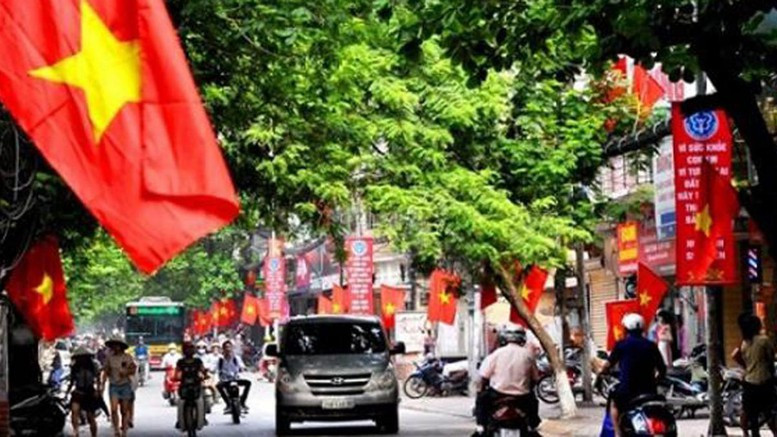 Prime Minister Directs Enhanced Security and Public Order Measures for the September 2 National Day
Prime Minister Le Minh Hung signed Directive No. 59/CĐ-TTg addressed to ministers, heads of ministerial-level agencies, and chairpersons of provincial and municipal People’s Committees regarding the strengthening of security and public order measures during the September 2 National Day holiday.
The Prime Minister instructed the Minister of Public Security to strengthen management of key routes, areas, and target groups, and to promptly detect, prevent, and neutralize terrorist and sabotage activities; concentrate forces, resources, and measures to ensure public order and social safety; vigorously crack down on all types of crime and legal violations; and aggressively combat social ills that commonly occur during festivals and at locations with large crowds, such as: gambling, theft, robbery, extortion, illegal drug use, illegal street racing, and public disturbances…; absolutely prevent criminals from running rampant, forming gangs, or causing public outrage, and ensure a peaceful and happy life for the people…
 National Strategy on Artificial Intelligence through 2030, with a Vision toward 2045
Deputy Prime Minister Ho Quoc Dung signed Decision No. 1671/QD-TTg on August 28, 2026, approving the National Strategy on Artificial Intelligence through 2030, with a vision toward 2045 (the Strategy).
The decision outlines nine strategic pillars, including:
Pillar 1. AI Workforce and AI Skills for All: Develop a high-quality AI workforce, promote AI skills throughout society, and ensure the workforce has the capacity to research, develop, implement, and use AI.
Pillar 2. Data and AI Models: Develop data, data infrastructure, and AI models as the foundation for AI research, development, training, testing, evaluation, and deployment.
Pillar 3. AI Infrastructure: Develop computing infrastructure, cloud computing, edge AI, and AI data centers to ensure computing capacity to support government administration, research, innovation, and AI deployment.
Pillar 4. AI Research, Development, and Technology Mastery: Promote research, development, and mastery of AI technology; create “Made in Vietnam” AI products and services; and build core technological capabilities to address the nation’s major challenges.
Pillar 5. AI in National Governance: Develop, deploy, and utilize AI in national governance to build a modern, proactive, and rapidly adaptable governance system in the AI era; enhance the effectiveness of national governance, the quality of public service delivery, and the capacity for forecasting, directing, managing, and serving citizens and businesses.
Pillar 6. AI for Industries and Sectors: Promote comprehensive AI transformation across all industries and sectors; focus on developing key industries and sectors that have a significant impact on productivity, growth, national competitiveness, social welfare, and people’s livelihoods.
Pillar 7. AI for Small and Medium-Sized Enterprises (SMEs), Business Households, and Cooperatives: Support SMEs, business households, and cooperatives in accessing, implementing, and maintaining the use of AI products, services, and solutions, and in measuring their actual effectiveness.
Pillar 8. AI Ecosystem: Develop a Vietnamese AI ecosystem capable of researching, developing, commercializing, and exporting AI products, services, and solutions.
Pillar 9. Safe and Reliable AI Governance: Safe, reliable, and responsible AI governance ensures that AI is developed, provided, deployed, and used in accordance with the law.
Increasing Allowances for Officers Retiring Early
The Government issued Decree No. 338/2026/NĐ-CP on August 26, 2026, amending and supplementing certain provisions of three Government decrees regarding the one-time allowance upon separation from military service for officers, professional soldiers, defense workers, and defense civil servants.
Specifically, Decree No. 338/2026/ND-CP amends and supplements Clause 2 of Article 2 of Decree No. 21/2009/ND-CP—as previously amended and supplemented by Decree No. 52/2025/ND-CP—regarding the system and policies for retired officers by increasing the allowance for each year of early retirement—before reaching the mandatory retirement age—from 3 months’ salary to 5 months’ current salary.
In addition, officers who retire before reaching the maximum retirement age for their military rank shall not have their pension reduced due to early retirement. At the same time, they are entitled to social insurance benefits and preferential treatment for those who have contributed to the revolution (if applicable) in accordance with current laws, as well as a one-time allowance based on the length of service during which they contributed to mandatory social insurance.
Transitional Mechanism for Using Old Packaging and Labels When Changing a Business Name
The Government issued Resolution No. 39/2026/NQ-CP on August 25, 2026, regarding the transitional mechanism for using labels and packaging that bear the old name when a business changes its name but does not change its legal entity or the entity responsible for the goods.
Under the regulations, a business that changes its name may continue to use labels and packaging bearing the old name to label and package goods for a period of 12 months from the date it is issued a Business Registration Certificate reflecting the new name.
Goods labeled and packaged with labels and packaging bearing the old name within the aforementioned period may continue to be distributed until the expiration of the goods’ shelf life as prescribed by law.
Regulations on the Autonomy of Higher Education Institutions and Vocational Education Institutions

The Government has issued Decree No. 334/2026/NĐ-CP regulating the autonomy of higher education institutions and vocational education institutions; the financial mechanism for higher education and vocational education; and the national priority program for full-time doctoral training.
Notably, regarding the autonomy of higher education institutions and vocational education institutions, the Decree clearly outlines the autonomy provisions concerning: higher education and vocational education activities; scientific, technological, innovation, and digital transformation activities; organizational structure and personnel; finance, assets, and investment of the institutions.
Creating conditions for people with disabilities and ethnic minorities to exercise their right to access information
The Government issued Decree No. 337/2026/ND-CP on August 26, 2026, detailing certain provisions and measures for implementing the Law on Access to Information.
In particular, Decree No. 337/2026/ND-CP stipulates measures to ensure the right to access information; measures to facilitate the exercise of the right to access information by persons with disabilities, members of ethnic minority groups, and people living in border areas, on islands, in mountainous regions, in ethnic minority communities, and in areas with difficult or particularly difficult socioeconomic conditions.
The Decree stipulates measures to facilitate the exercise of the right to access information by persons with disabilities, including: Based on actual conditions, agencies and units shall equip and use technologies and devices that assist people with disabilities in accessing information in a manner appropriate to their specific disabilities; facilitate the use of audio and visual devices, assistive devices, and other personal technical aids to access information; assign staff to guide, explain, and assist people with disabilities who face difficulties in filling out or signing the Request Form for Information or in accessing information; expand the methods of providing information to people with disabilities in a manner appropriate to the requester’s accessibility needs and the practical conditions of the agency or unit...
At the same time, the Decree stipulates that the provision of information shall be carried out through measures appropriate to each target group and the conditions in border areas, islands, mountainous regions, areas inhabited by ethnic minorities, and regions with difficult and particularly difficult socioeconomic conditions, including: Through electronic information portals, websites, data portals, information channels, and the official social media pages of agencies and units; through radio and television systems, including radio and television programs in ethnic minority languages and local information systems;...
Add a requirement to publish and solicit feedback on draft laws and decrees on the Government’s Electronic Information Portal
In Resolution No. 257/NQ-CP, the Government requires the Ministry of Justice to finalize the draft Law on the Issuance of Legal Normative Documents by adding requirements for publishing and soliciting public comments on draft laws and decrees on the Government’s Electronic Information Portal into the draft Law and the draft Decree detailing the implementation of the Law, thereby establishing a unified central point at the government level to receive, compile, and convey public feedback on draft legal documents.