







Notable Directives and Decisions by the Government and the Prime Minister in July 2026
Comprehensive reform of Vietnam’s financial market; the government’s policy on the development of cooperatives; and policies on agricultural extension... were among the notable policy directives and administrative decisions issued by the Government and the Prime Minister in July 2026.

Implementation of the Resolution on the Supplementary Budget for State Budget Revenue for 2024 and Approval of the State Budget Settlement for 2024
The Prime Minister issued Directive No. 28/CT-TTg on July 3, 2026, regarding the implementation of National Assembly Resolution No. 21/2026/QH16 dated April 24, 2026, on supplementing the 2024 State Budget revenue estimate (NSNN) for 2024 and approving the 2024 State Budget settlement.
To strengthen discipline and compliance with laws on finance and the state budget; the Prime Minister requests that Ministers, Heads of ministerial-level agencies, and other central agencies (collectively referred to as ministries and central agencies), as well as Chairpersons of People’s Committees of provinces and cities (localities), continue to build on the achievements made and focus on effectively carrying out the following tasks: Developing and improving the institutional framework; preparing, managing, utilizing, and settling the state budget; and implementing the conclusions and recommendations of the State Audit Office.
Regarding the preparation, management, use, and settlement of the state budget, the Prime Minister instructs ministries, central agencies, and localities to continue rectifying and addressing existing shortcomings and limitations in the preparation, management, and use of the state budget. Improve the quality of state budget revenue and expenditure estimates to ensure they meet requirements and align with actual implementation capacity; accelerate the implementation and disbursement of the annual public investment plan.
Strictly manage budget reallocations in accordance with regulations; promptly cancel and recover to the state budget any reallocations made in violation of regulations, for which there is no need for use, or that have exceeded the prescribed disbursement period; Recover all central government budget funds allocated to localities in 2025 and prior years (including 2024) that were managed or used in violation of regulations or for which the disbursement period has expired, in order to reduce the central government budget deficit...
Comprehensive Reform of Vietnam’s Financial Market
Deputy Prime Minister Nguyen Van Thang signed Decision No. 1413/QĐ-TTg on July 27, 2026, approving the Proposal for Comprehensive Reform of Vietnam’s Financial Market in conjunction with achieving the goal of high and sustained growth through 2045 (the Plan).
The overall objective of the Plan is to build a Vietnamese financial market that is well-integrated, modern, and integrated with the region and the world; has a balanced and rational structure; and is capable of effectively mobilizing and allocating domestic and foreign resources for socio-economic development; to play a vital role in supplying medium- and long-term capital to the economy; and to serve as a driving force for achieving the goal of high and sustained economic growth through 2045.
The goal is for Vietnam’s financial market to reach a high level of development by 2045, operating according to market principles, with an institutional framework, infrastructure, products, investors, and management and supervision mechanisms that meet international standards; with the securities market playing a pivotal role, a safe and modern banking system, and a sustainably developing insurance market; and the Vietnam International Financial Center gradually becoming a key component in connecting capital flows, financial services, and financial institutions in the region.
Government policies on the development of cooperatives
The government issued Decree No. 294/2026/NĐ-CP on cooperatives, which specifies the government’s policies on the development of cooperatives.
The Decree stipulates that a cooperative is eligible to benefit from state policies if it meets the following criteria:
1- Possess a Certificate of Registration for a cooperative;
2- Are not currently subject to an administrative penalty decision for violating the prohibited acts specified in Clause 2, Article 7 of the Cooperative Law No. 17/2023/QH15;
3- Meet one of the following criteria at the time of submitting the application for support:
a) In at least one of the two consecutive years preceding the year of submitting the application for support, the number of members increased compared to the previous year;
b) Have members or employees who have participated in educational, training, outreach, refresher, or workshop programs organized by the cooperative itself or by other organizations, and possess documentation confirming such participation;
c) The cooperative was established no more than 60 months ago in an economically and socially disadvantaged area or a particularly economically and socially disadvantaged area, as defined by law.
4- In cases where multiple cooperatives meet the requirements in items 1, 2, and 3 above, the selection of the cooperative eligible for the policy shall be made according to the following order of priority:
a) The cooperative with the greater number of members;
b) A higher number of members with disabilities;
c) A higher number of members who are members of ethnic minority groups;
d) A higher number of members and workers enrolled in mandatory and voluntary social insurance;
e) Has women in management positions, has more female members, or employs more female workers;
e) Operating in economically and socially disadvantaged areas or in particularly economically and socially disadvantaged areas as defined by law;
g) Participates in partnerships to form value chains and industry clusters linked to the green economy, the circular economy, the knowledge economy, organic agriculture, climate change adaptation, and digital transformation for the purpose of sustainable development;
h) Organizing or participating in activities that benefit the local community.
Cooperative groups that meet the criteria specified above are eligible for state support policies similar to those for cooperatives under the Cooperative Law, in accordance with the nature and characteristics of the cooperative group and other relevant laws.
Policy on Agricultural Extension
The Government issued Decree No. 268/2026/NĐ-CP on July 1, 2026, on agricultural extension.
The Decree stipulates policies on agricultural extension, including: policies on training, workshops, and professional development; policies on information and communication; policies on developing and scaling up models; support for agricultural extension activities and technology transfer in agriculture; and policies on the socialization of agricultural extension and technology transfer in agriculture.
Regulations on the Registration of Cooperative Groups, Cooperatives, and Cooperative Federations
The Government issued Decree No. 295/2026/NĐ-CP on July 23, 2026, regulating the registration of cooperatives, agricultural cooperatives, and federations of agricultural cooperatives.
The Decree specifies that in cases where a commune-level administrative unit establishes a specialized department, the business registration authority responsible for processing registration procedures for cooperative groups, cooperatives, and federations of cooperatives shall be the specialized department under the People’s Committee at the commune level that has the functions and responsibilities for registering cooperative groups, cooperatives, and federations of cooperatives in accordance with a decision by the People’s Committee of the province or centrally administered city.
In cases where a commune-level administrative unit has not established a specialized department, the business registration authority responsible for handling registration procedures for production cooperatives, cooperatives, and cooperative federations shall be the commune-level People’s Committee.
Issuance of a Set of Criteria for Evaluating the Results of Industrialization and Modernization
On July 9, 2026, Standing Deputy Prime Minister Pham Gia Tuc signed Decision No. 1248/QĐ-TTg promulgating a set of criteria for evaluating the results of industrialization and modernization at the national, sectoral, and local levels.
The set of criteria consists of 40 criteria divided into four main groups to evaluate the outcomes of industrialization and modernization at the national, sectoral, and local levels. Specifically, the groups of criteria are as follows: 1. Economic criteria (21 criteria); 2. Social criteria (5 criteria); 3- Environmental criteria (efficient resource use and environmental performance) (11 criteria); 4- Criteria for green transition, energy transition, and energy efficiency (3 criteria).
New Regulations on Adjusting the Average Retail Electricity Price
On July 9, 2026, the Government issued Decree No. 278/2026/NĐ-CP amending and supplementing certain articles of Decree No. 72/2025/NĐ-CP dated March 28, 2025, which stipulates the mechanism and the timing of adjustments to the average retail electricity price.
The Decree amends and supplements points a and b of Clause 1 of Article 5, which stipulates annual adjustments to the average retail electricity price; amends and supplements points a and b of paragraph 1 of Article 6, which stipulate adjustments to the average retail electricity price during the year; and amends and supplements Article 7 regarding the inspection of adjustments to the average retail electricity price.
Providing services related to cryptocurrency without a license is subject to a fine of up to VND 200 million
The Government issued Decree No. 284/2026/NĐ-CP on July 16, 2026, regulating administrative penalties for violations related to cryptocurrency and the cryptocurrency market.
The Decree sets the maximum fine for violations at VND 200 million for organizations and VND 100 million for individuals.
Specifically, regarding violations related to the organization of cryptocurrency trading markets, the Decree stipulates fines ranging from 180 to VND 200 million for any of the following violations:
- Providing services related to cryptocurrency without having been granted a license to organize a cryptocurrency trading market;
- Advertising or marketing cryptocurrency-related services without having been granted a license to provide cryptocurrency trading market organization services.
The fine amounts specified above apply to organizations. In cases where an individual commits a violation similar to that of an organization, the fine shall be half the amount imposed on the organization.
Conditions for Establishing High-Tech Agricultural Zones
Decree No. 263/2026/NĐ-CP, dated July 1, 2026, issued by the Government, stipulates that the establishment of a high-tech agricultural zone must meet the conditions specified in Clause 3 of Article 24 of the High-Tech Law.
Specifically, a high-tech agricultural zone must ensure seamless external connectivity with: Transportation infrastructure; technical infrastructure systems; have a plan for cooperation agreements and partnerships with scientific and technological organizations, as well as universities specializing in agriculture and the environment; engage in collaborative production and the commercialization of scientific products; and possess natural conditions suitable for the development objectives of the high-tech agricultural zone…
Fines of up to VND 70 million for violations of business registration declarations
The Government issued Decree No. 288/2026/ND-CP on July 21, 2026, amending and supplementing certain provisions of Decree No. 122/2021/ND-CP dated December 28, 2021, of the Government, which regulates administrative penalties for violations in the field of planning and investment.
Specifically, Decree No. 288/2026/ND-CP amends and supplements Article 43 of Decree No. 122/2021/ND-CP, which addresses violations related to the declaration of business registration documents, by increasing penalty levels and adding additional declaration items subject to penalties if declared dishonestly or inaccurately.
Accordingly, fines ranging from VND 30,000,000 to VND 70,000,000 will be imposed for the act of making untruthful or inaccurate declarations in documents for the registration of business establishment, the registration of branch and representative office operations; documents for the registration of changes to business registration details, branch and representative office operations, and business locations; notification documents regarding changes to business registration information or the establishment of business locations; documents for the dissolution of a business; beneficial owner information and information used to identify beneficial owners in business registration documents, documents notifying changes to a business’s beneficial owner information, and notifications of changes to information used to identify beneficial owners.
Colluding with or shielding taxpayers to prevent tax authorities from verifying information is punishable by a fine of up to VND 100 million
The Government issued Decree No. 291/2026/ND-CP on July 21, 2026, amending and supplementing certain articles of Decree No. 125/2020/ND-CP dated October 19, 2020, of the Government, which regulates administrative penalties for tax violations and invoices, as amended and supplemented by Decree No. 102/2021/ND-CP dated November 16, 2021, and Decree No. 310/2025/ND-CP dated December 2, 2025, both issued by the Government.
Decree No. 291/2026/ND-CP adds Section 3 and Article 19a after Section 2 of Chapter II, which stipulates administrative penalties for violations related to the provision of information for the purpose of information exchange, with fines ranging from VND 10,000,000 to VND 100,000,000.
Specifically, the Decree stipulates fines ranging from VND 50,000,000 to VND 100,000,000 for colluding with or shielding taxpayers in order to obstruct tax authorities from collecting or verifying information for the purpose of information exchange in accordance with the laws of Vietnam, international treaties, and international tax agreements to which the Socialist Republic of Vietnam is a member or a signatory.
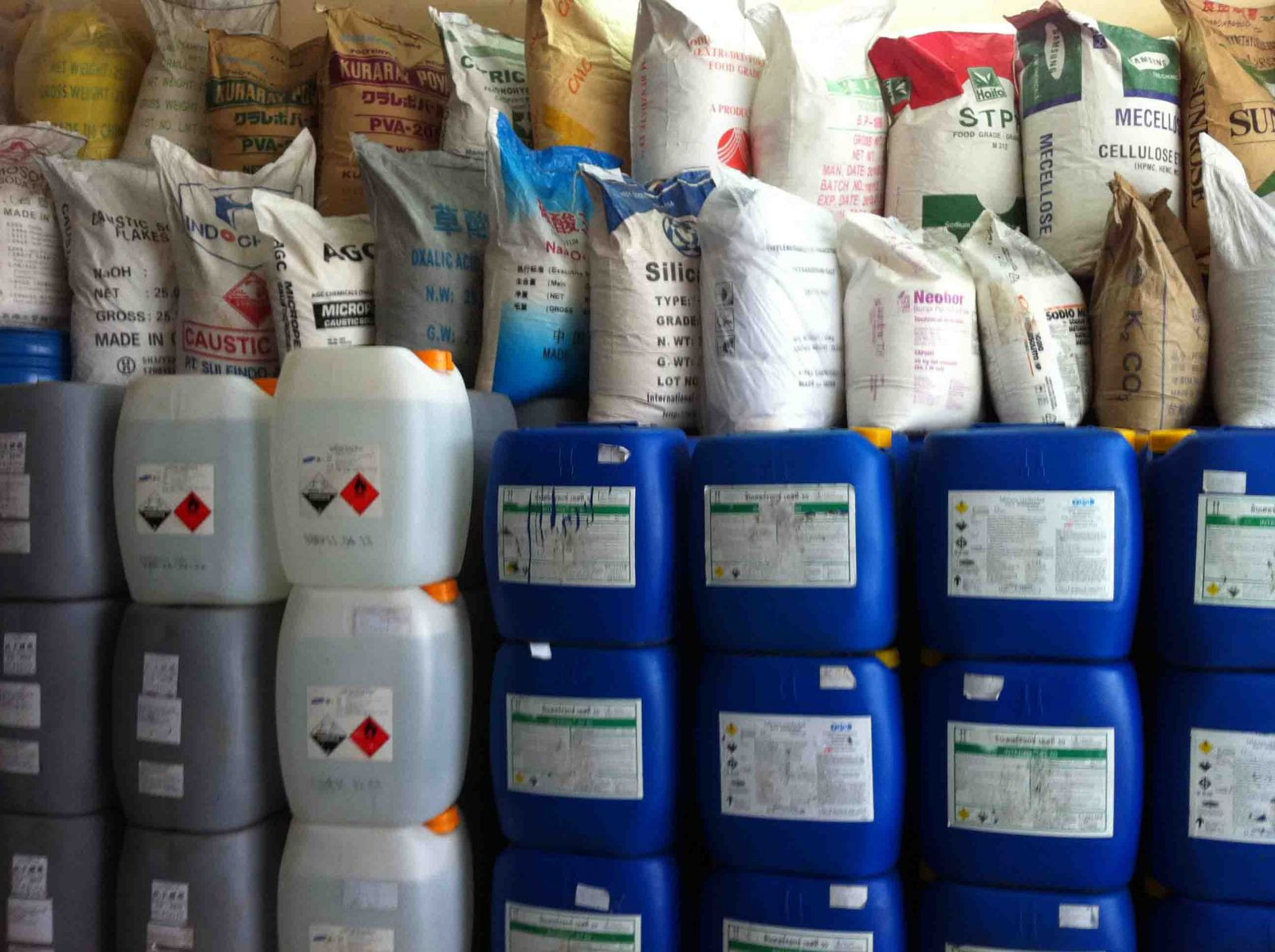
Individuals committing administrative violations in the field of chemicals and industrial explosives are subject to fines of up to VND 100 million
The Government issued Decree No. 275/2026/NĐ-CP on July 8, 2026, stipulating penalties for administrative violations in the field of chemicals and industrial explosives.
Accordingly, the maximum fine for each administrative violation committed by an individual in the field of chemicals is VND 50,000,000, and in the field of industrial explosives, it is VND 100,000,000.
Disciplinary Measures for Acts of Wastefulness
The Government issued Decree No. 267/2026/NĐ-CP on July 1, 2026, detailing the application of disciplinary measures and compensation for damages related to acts causing waste and violations in the implementation of waste prevention and control measures.
The Decree specifically stipulates the application of disciplinary measures against heads and deputy heads of agencies, organizations, and units where wasteful conduct occurs within the agencies, organizations, units, enterprises, or sectors under their assigned jurisdiction and responsibility.
Accordingly, heads and their deputies who fail to fulfill their responsibilities or neglect leadership and management duties, thereby allowing acts of waste to occur within agencies, organizations, units, enterprises, or sectors under their direct jurisdiction and responsibility, shall be subject to the following disciplinary measures:
A reprimand shall be imposed in cases where acts causing waste result in criminal penalties such as a fine, non-custodial reform, or imprisonment for up to three years.
A warning shall be imposed in cases where acts of wastefulness result in criminal penalties of imprisonment for a term of more than three years but not exceeding seven years.
Dismissal is applied in cases where acts of wastefulness result in criminal penalties of imprisonment for a term of more than 7 years to 20 years, life imprisonment, or the death penalty.
In addition, the Decree also stipulates disciplinary measures for officials, civil servants, and public employees who engage in acts of waste. Accordingly, officials, civil servants, and public employees may be dismissed if the waste causes damages exceeding VND 75 million.
Fines of up to VND 75 million for acts of enticement, inducement, or false advertising intended to defraud workers
The Government issued Decree No. 283/2026/NĐ-CP on July 15, 2026, stipulating administrative penalties for violations in the fields of labor, social insurance, and Vietnamese workers employed abroad under contract.
Specifically, the Decree stipulates a fine of 50–VND 75 million for any of the following acts: luring; enticing; making false promises; engaging in deceptive advertising; or using other schemes to deceive workers or to recruit workers for the purpose of exploitation or forced labor, but where the conduct does not warrant criminal prosecution.
Strengthening Prevention and Combating Fraud and Property Theft in the New Context
The Prime Minister has issued Directive No. 30/CT-TTg, requiring ministries, sectors, and localities to continue improving the effectiveness of efforts to prevent, combat, and address fraud and property theft in the new context.
The Prime Minister has instructed ministries, sectors, central agencies, and People’s Committees of provinces and cities to continue thoroughly implementing and strictly adhering to the policies of the Party and the State, as well as the directives of the Government and the Prime Minister regarding the prevention, combating, and handling of fraud and property theft; to regard this as a key, ongoing task closely linked to ensuring security, order, and socio-economic development; and to prevent fraud and property theft from becoming more complex or forming hotspots or clusters of fraudulent activity within their jurisdictions or areas of management.
At the same time, proactively review and address loopholes and shortcomings in state management of sectors that pose potential risks of being exploited by criminals to commit fraud and property theft, particularly telecommunications, banking, payment intermediaries, e-commerce, land management, investment, securities, insurance, healthcare, education, tourism, and employment; and promote the application of science, technology, and digital transformation in state administration, prevention, detection, and combating of fraud and property theft…
Conditions for Establishing Public Service Units
The Government issued Decree No. 299/2026/NĐ-CP on July 28, 2026, regulating the organization of public service units.
The Decree stipulates that a public service unit may be established if it meets the following conditions:
a) They must be consistent with the sectoral plan (if any) or the development plan for the network of public service units by sector or field, as approved by the competent authority;
b) They meet the criteria and conditions for establishing public service units as prescribed by sector-specific laws (except for public service units providing basic, essential, multi-sector, and multi-field public services, which must ensure alignment with the socio-economic development conditions at the commune level);
c) Clearly define the objectives, functions, tasks, and areas of operation of the public service unit;
d) Ensure that the minimum number of staff assigned is 15 (except for public service units providing basic and essential public services established in accordance with the provisions of sector-specific laws).
For public service units that are self-sufficient in covering their regular operating expenses, and for public service units that are self-sufficient in covering both their regular operating and capital expenditures, the number of employees shall be determined in accordance with the establishment proposal approved by the competent authority at the time of establishment.
For public service units abroad, the number of employees is determined in the approved proposal for the establishment of the public service unit;
d) For public service units operating abroad, in addition to meeting the conditions specified in subparagraphs a, b, c, and d of this paragraph, they must ensure compliance with the foreign policy of the Party and the State and with international treaties between the Government of the Socialist Republic of Vietnam and the host country’s government regarding the establishment and operation of public service units.
Developing Several Major Universities in Central Vietnam and the Central Highlands to Achieve Regional and Global Standards
Deputy Prime Minister Le Tien Chau signed Decision No. 1252/QD-TTg on July 10, 2026, approving the Project on investing in infrastructure and improving the quality of operations at several major higher education institutions in the Central and Central Highlands regions to transform them into reputable training centers in the region and globally (the Project).
The Project aims to invest in the development of Hue University, Da Nang University, Vinh University, Nha Trang University, and Quy Nhon University into major higher education institutions that serve as leading centers for training high-quality human resources, conducting scientific research, fostering innovation and creativity, and facilitating technology transfer at the regional and global levels; to serve as the core driving force behind the higher education ecosystem, innovative startups, and science cities, acting as a catalyst for supplying human resources and scientific and technological solutions to support socioeconomic development and sustainable regional integration in the Central and Central Highlands regions.
New Regulations on the Vietnamese National Qualifications Framework
Deputy Prime Minister Le Tien Chau signed Decision No. 39/2026/QD-TTg on July 23, 2026, regulating the Vietnamese National Qualifications Framework, which takes effect on September 7, 2026.
Structurally, the Vietnamese National Qualifications Framework consists of eight qualification levels, arranged in ascending order of complexity in terms of knowledge, skills, and the degree of autonomy and personal responsibility.
Each level is described in terms of three main components: knowledge; skills; and the degree of autonomy and personal responsibility.
The descriptions of the qualification levels are general and orientational, applicable across all fields of education; they are specified in curriculum standards and are not tied to specific disciplines, occupations, educational programs, or admission requirements.
Each level specifies the minimum academic workload for educational programs targeting students entering through the main track (as defined in the National Education System Framework).
Issuance of the Framework for the National Education System
Deputy Prime Minister Le Tien Chau signed Decision No. 38/2026/QD-TTg on July 23, 2026, establishing the National Education System Framework.
The structure of the National Education System Framework comprises formal education and continuing education, which are implemented at various educational levels and training levels within the national education system.
According to the regulations, educational programs within the national education system are divided into 9 levels from 0 to 8 (including: preschool, elementary school, lower secondary school, upper secondary school/vocational high school, intermediate college, community college, university, master’s degree, and doctoral degree) based on program objectives, the complexity of the curriculum, admission requirements, expected learning outcomes, and the potential for progression within the national education system.
Educational programs that integrate multiple educational levels and training levels are classified at the level corresponding to the highest educational level and training level.
By 2045, Vietnam will rank among the top 30 countries in the world in e-government/digital government
Deputy Prime Minister Ho Quoc Dung signed Decision No. 1266/QD-TTg approving the National Strategy on Digital Transformation for the 2026–2030 period, with a vision toward 2045 (the Strategy).
According to the Strategy, the vision for 2045 is for Vietnam to become a developed, prosperous, safe, and humane digital nation; digital transformation will be implemented comprehensively, synchronously, extensively, and inclusively, becoming the primary mode of development and a key driver for economic growth, increased labor productivity, enhanced national competitiveness, and improved quality of life for the people. Citizens and businesses are at the center, serving as both the driving forces and the primary beneficiaries of the digital transformation process. Vietnam has a modern system of national governance based on data and artificial intelligence (AI); it masters strategic digital technologies, digital platforms, and digital products; and firmly ensures national digital sovereignty.
Establishing a unified, modern, interconnected, and shared national data ecosystem
Deputy Prime Minister Ho Quoc Dung signed Decision No. 1308/QD-TTg on July 18, 2026, approving the National Data Strategy for the 2026–2030 period, with a vision toward 2045.
The overall objective of the Strategy is for Vietnam to establish a unified, modern, secure, reliable, interconnected, and shared national data ecosystem; to develop national databases, specialized databases, data repositories, data platforms, and shared computing infrastructure in a coordinated manner based on a unified architecture...
Special Mechanisms to Attract Scientists and Experts in International Integration
In Decree No. 258/2026/NĐ-CP, the Government details the special mechanisms and policies for attracting and utilizing scientists and experts in international integration in foreign affairs and international integration work within priority, key, and strategic national sectors.
According to the regulations, scientists and experts in international integration who are of working age and wish to work long-term at agencies or organizations directly and regularly engaged in foreign affairs and and international integration may be considered for appointment as civil servants or public employees in accordance with current law, receive a monthly allowance equal to 300% of their current salary based on the applicable pay scale, and benefit from other policies as prescribed by law.
Establishing a "Make in Vietnam" Civil Cryptography Ecosystem
Deputy Prime Minister Phan Van Giang signed Decision No. 1226/QD-TTg on July 7, 2026, approving the “Proposal to Encourage the Socialization of Research, Development, and Application of Civil Cryptography for the 2026–2030 Period, with a Vision Toward 2035."
The objective of the Project is to establish and improve mechanisms and policies to promote the socialization of research, development, and application of civilian cryptography; effectively mobilize resources from businesses, organizations, and individuals engaged in science and technology, as well as educational institutions, to participate in the development of cryptography technologies; gradually master certain core cryptography technologies; to establish a competitive “Make in Vietnam” civilian cryptography ecosystem capable of meeting information security and data protection requirements and contributing to the maintenance of national digital sovereignty.
Accelerate the implementation of scientific, technological, innovation, and digital transformation tasks
The Prime Minister issued Directive No. 29/CT-TTg on July 16, 2026, regarding accelerating the implementation of science, technology, innovation, and digital transformation (STI&DT) tasks in 2026.
The directive clearly states the view that S, T, I, and D are the top priority breakthroughs and the primary driving force for developing modern productive forces, transforming the growth model, and enhancing the productivity, quality, efficiency, and competitiveness of the economy. The timely and effective implementation of tasks, programs, and projects, as well as accelerating the disbursement of funds for S&T, innovation, and digital transformation is not only a requirement for plan implementation but also a key political task aimed at realizing the Party’s policies, creating strategic breakthroughs, contributing to the achievement of economic growth targets, enhancing national competitiveness, and driving the country toward rapid and sustainable development.
Ministries, central agencies, and local authorities—especially their leaders—must recognize that carrying out tasks and disbursing funds in the fields of science, technology, innovation, and digital transformation is a key and urgent political task for 2026; accelerating the pace of fund disbursement must go hand in hand with improving the quality and efficiency of fund utilization, while combating waste and corruption. The heads of ministries, agencies, and localities must directly oversee and bear full responsibility before the Government and the Prime Minister for the progress, quality, and effectiveness of implementing assigned tasks and disbursing the 2026 state budget funds...
By 2045, Vietnam will become one of the region’s leading centers of culture and creativity
Deputy Prime Minister Pham Thi Thanh Tra signed Decision No. 1306/QD-TTg on July 17, 2026, approving the Foreign Cultural Strategy through 2030, with a vision toward 2045 (the Strategy).
The Strategy’s objective is for Vietnam to become one of the region’s leading cultural and creative hubs by 2045; to achieve a breakthrough in cultural soft power based on a solid foundation of a digital economy and digital society; to affirm the nation’s status as a country with a rich cultural heritage, as well as its capabilities and credibility in managing and organizing regional and international events, and to proactively participate in shaping global cultural development trends in the new era...
Encourage the use of digital cultural products and services researched and developed by Vietnamese enterprises
The Government issued Decree No. 277/2026/NĐ-CP on July 9, 2026, on Digital Cultural Infrastructure.
According to the Decree, the development of digital cultural infrastructure serves to advance Vietnamese culture, develop digital cultural products and services, and support state management of cultural affairs; the development of digital cultural infrastructure ensures consistency, interoperability, and widespread sharing, optimizes resources, and avoids fragmented and duplicative investment.
The development, research, innovation, production, distribution, and utilization of digital cultural products and services shall be based on the national value system, cultural value system, family value system, and Vietnamese human values, while preserving, conserving, and promoting Vietnam’s cultural identity.
Encourage the use of digital cultural products and services researched, developed, produced, and provided by Vietnamese enterprises...
The Prime Minister Calls for Intensifying Efforts to Search for, Recover, and Identify the Remains of Martyrs
Prime Minister Lê Minh Hưng signed Directive No. 45/CĐ-TTg on July 8, 2026, regarding the intensification of efforts to search for, recover, and identify the remains of fallen soldiers.
To accelerate progress and enhance the effectiveness of efforts to search for, recover, and identify the remains of fallen soldiers, the Prime Minister has instructed ministers, heads of ministerial-level agencies, members of the National Steering Committee, and steering committees at all levels, and has requested that provincial Party secretaries, Municipal Party Committee Secretaries to focus on directing the serious, coordinated, decisive, and effective implementation of the objectives, tasks, and solutions of the 500-Day-and-Night Campaign.
In particular, they should intensify information and publicity efforts to highlight the significance and special importance of the “500 Days and Nights” Campaign; accelerate the pace and improve the effectiveness of the search and recovery of martyrs’ remains, focusing on domestic areas and regions where there is still significant information regarding martyrs’ graves, particularly information on mass graves. Focus on analyzing and cross-referencing historical records and gathering information from eyewitnesses to expand the scope of delineation, survey, and search operations; coordinated implementation of the collection, handover, preservation, and archiving of remains samples from unidentified martyrs’ graves in national martyrs’ cemeteries across the country...
Issuance of the National Program on Child Protection for the 2026–2030 Period
Deputy Prime Minister Pham Thi Thanh Tra signed Decision No. 1415/QD-TTg dated July 28, 2026, on behalf of the Prime Minister, promulgating the National Program on Child Protection and the Prevention and Reduction of Child Labor in Violation of the Law for the 2026–2030 Period (the Program).
The Program aims to ensure that all children live in a safe and healthy environment; reduce child abuse nationwide; and provide opportunities for children who have experienced violence or sexual abuse, as well as children engaged in labor in violation of the law (hereinafter referred to as “child labor”), as well as children at risk of violence, exploitation, abandonment, and children in other special circumstances, to integrate into society and develop holistically, thereby contributing to the achievement of the Sustainable Development Goals related to children.