







Proposed new regulations would give banks greater flexibility in the safekeeping and counting of cash
The State Bank of Vietnam (SBV) is seeking public comment on a draft circular regulating the receipt, safekeeping, and transportation of cash, valuable assets, and negotiable instruments, which is expected to replace Circular 01/2014/TT-NHNN and its amendments and supplements. Several notable provisions directly related to the operations of credit institutions include increased autonomy in cash safekeeping, more flexible timeframes for cash counting, and additional requirements for security equipment at teller counters.
The new circular further regulates the receipt, custody, and transportation; inspection, inventory, handover, and handling of cash surpluses or shortfalls, valuable assets, and negotiable instruments within the banking sector, as well as cash receipts and disbursements between the State Bank of Vietnam, credit institutions, foreign bank branches, and customers.
One of the changes that directly affects banks is the regulation regarding the storage of cash, valuables, and negotiable instruments after business hours.
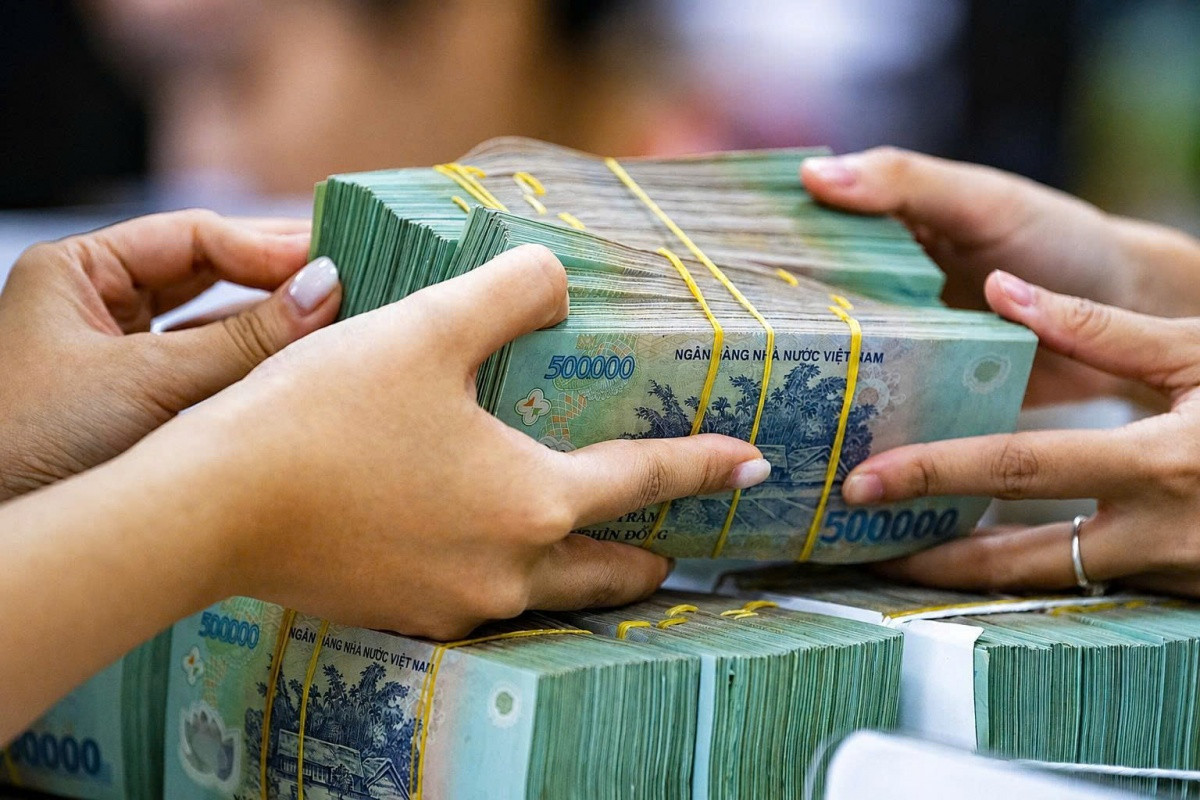
According to current regulations cited in the explanatory notes, at the end of each business day, all cash, valuable assets, and negotiable instruments must be stored in the vault. The draft adds the option to store them “in a vault or another location in accordance with the internal regulations of the credit institution or foreign bank branch.”
At the same time, credit institutions are permitted to specify storage methods in cases where storage in the vault is not possible or the vault does not meet technical standards; however, they must implement necessary measures to ensure the safety of the assets.
The drafting authority noted that this adjustment stems from the reality that some credit institutions’ transaction offices—particularly those within the people’s credit fund system and microfinance institutions—face difficulties in constructing vaults at leased premises or in buildings whose structural design does not permit the construction of vaults. Therefore, the draft allows credit institutions to proactively determine appropriate storage methods in these cases, accompanied by the requirement to ensure the absolute safety of assets.
Another new provision related to cash receipt and delivery operations concerns the counting deadline. For credit institutions and branches of foreign banks receiving cash in accordance with regulations, the counting deadline remains, in principle, five business days from the date of receipt. However, the draft adds a provision allowing the parties to agree on a different timeframe, provided it does not exceed 10 business days.
According to the drafting authority, this addition aims to allow the State Bank of Vietnam or credit institutions to flexibly agree on the counting period based on the volume and amount of money deposited or withdrawn, while still ensuring safety requirements are met.
The draft also removes the requirement that credit institutions and foreign bank branches must standardize the design of their seal paper with the State Bank of Vietnam. Under the new proposal, these entities may independently specify the paper color and ink color on the seal paper for uniform application across their systems. The explanatory note clarifies that eliminating this procedure aims to provide credit institutions with greater autonomy and convenience without compromising safety.
Regarding cash transfers between credit institutions, the draft also removes the phrase “within the regional jurisdiction.” The State Bank of Vietnam noted that this change is intended to align with current regulations allowing credit institutions to open accounts at State Banks of Vietnam in other regions without geographical restrictions.
In addition to increasing flexibility, the draft introduces several new safety requirements for cash transaction counters. Specifically, cash transaction counters at credit institutions and foreign bank branches must be equipped with safety systems in accordance with the State Bank of Vietnam’s guidelines.
According to the explanatory note, this provision serves as the basis for requiring minimum safety equipment for crime prevention and control, such as emergency alarm buttons, alarm systems connected to police authorities, and surveillance camera systems. At the same time, the drafting agency mentions encouraging financial institutions to proactively invest in additional advanced technical equipment, such as AI-powered cameras, AI cameras connected to automatic security doors, or tracking devices for bundles of cash.
The draft also provides a basis for the application of technology in controlling the entry and exit of personnel at cash vaults. The explanatory note mentions the addition of a registration feature on the cash vault access control system, thereby enabling units to adopt technologies such as facial recognition, fingerprint scanning, or electronic chips.
Regarding implementation, the draft stipulates that credit institutions and foreign bank branches shall, based on the provisions of the Circular, independently establish and issue guidelines within their systems regarding operational procedures and the provision of infrastructure appropriate to their business models and organizational structures; while also being responsible for ensuring the safety of cash and assets and overseeing compliance across the entire system.