







Remarks by General Secretary To Lam at the Conference on the Implementation of Resolutions No. 79 and 80 of the Politburo
This morning, February 25, General Secretary To Lam attended and delivered a speech at the national conference on researching, studying, thoroughly understanding, and implementing Resolution No. 79 - NQ/TW on the development of the state economy and Resolution No. 80 - NQ/TW on the development of Vietnamese culture. BIDV is honored to present the full text of General Secretary To Lam's speech.
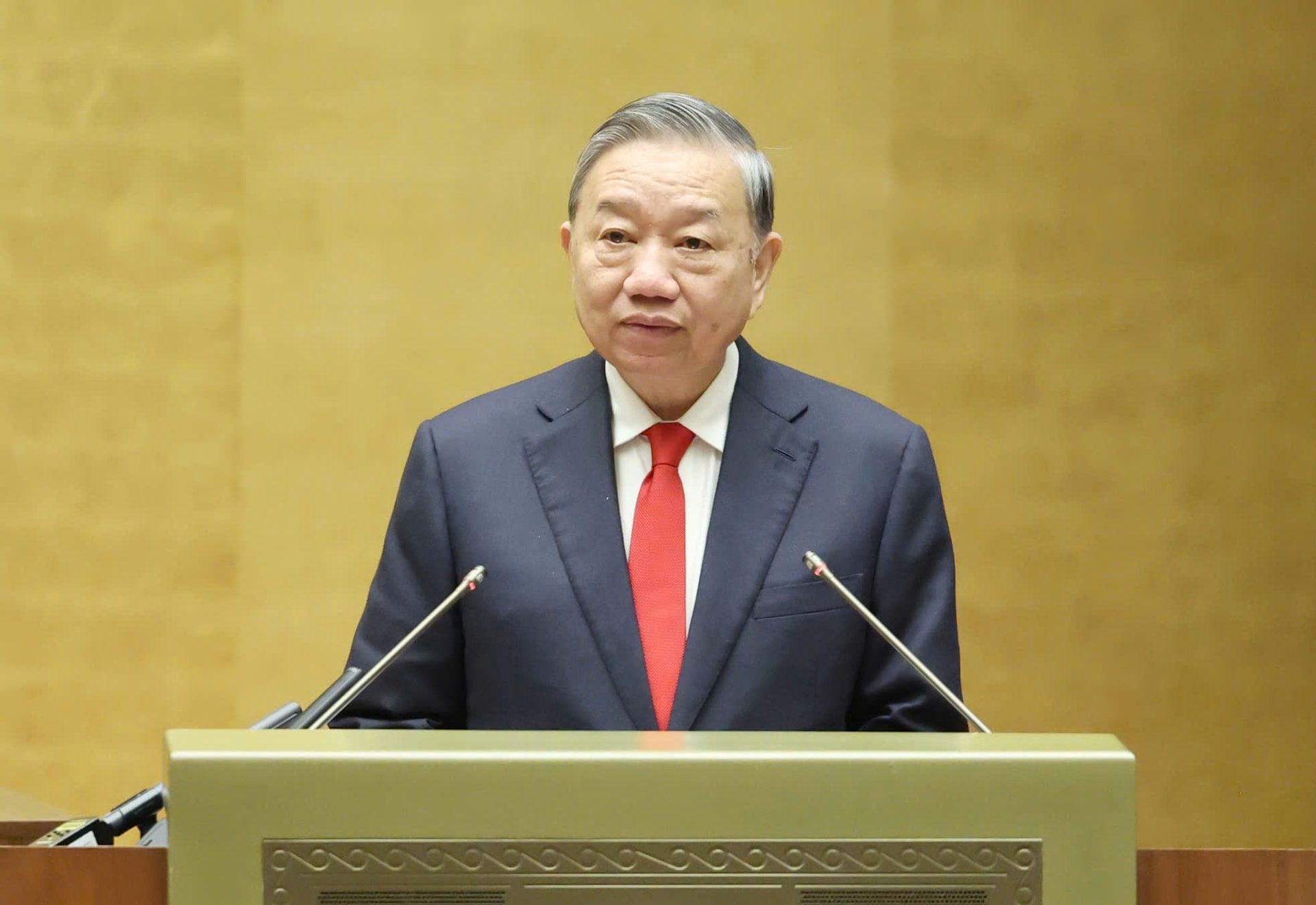 |
| General Secretary To Lam delivers a speech at the National Conference on Studying, Learning, Understanding, and Implementing Resolutions No. 79 and 80 - Photo: VGP/Nhat Bac |
Dear leaders and former leaders of the Party, State, and Vietnam Fatherland Front; leaders of Party committees at all levels, leaders of central and local departments and agencies,
Dear comrades, Party members, and compatriots nationwide participating in the Conference at various locations and through the television and radio systems across the country.
Today, the Politburo and the Secretariat are organizing a national conference to thoroughly understand and implement two particularly important resolutions: Resolution No. 79 on the development of the state economy and Resolution No. 80 on the development of Vietnamese culture.
Alongside the previously issued Resolutions, the two new Resolutions supplement the Party's major policies, formed on the basis of a thorough review of practical experience and the development of theoretical thinking in the context of the country entering a new stage of development, aiming to simultaneously address two fundamental requirements: strengthening "material internal strength" and consolidating "spiritual internal strength." They affirm the determination to build an independent, self-reliant, dynamic, and efficient economy in conjunction with deep international integration and to build an advanced Vietnamese culture rich in national identity.
With that in mind, I urge all comrades to thoroughly study the content of the Resolutions and the guidance provided by the Politburo members at the Conference, deepening their understanding of the core issues, new points, and requirements for implementation, thereby achieving high unity in both understanding and action.
Only when the entire Party, people, and army fully understand and are determined to implement them will the Resolutions truly come to life, create clear changes, and contribute to realizing the goal of rapid and sustainable development of the country in the new period.
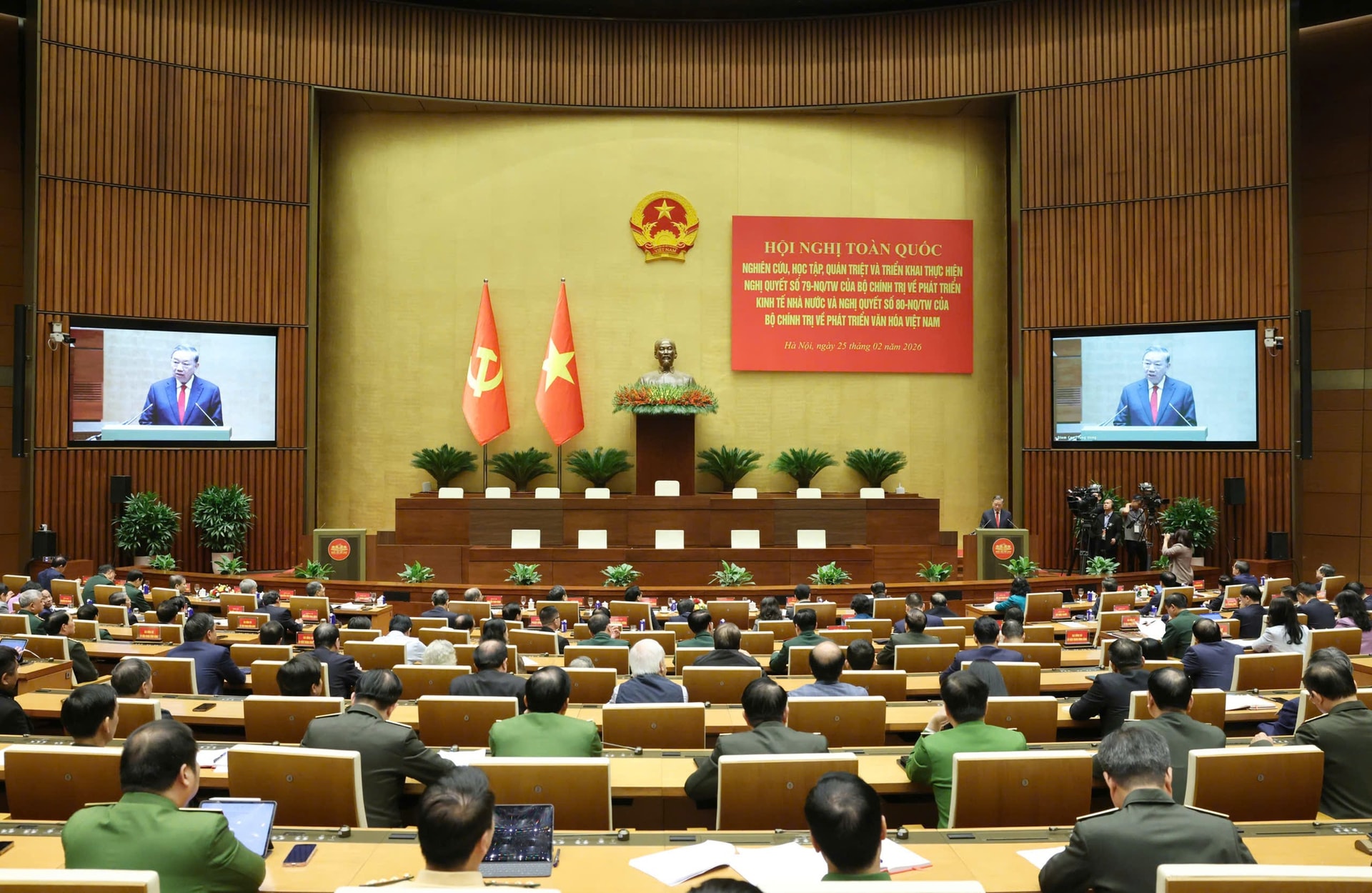 |
| General Secretary To Lam: The state economy and the private economy have formed two important pillars of the socialist-oriented market economy - Photo: VGP/Nhat Bac |
Based on the requirements for tasks and solutions set out in the two Resolutions, I would like to emphasize the following additional points:
I. The state economy must truly occupy the "strategic commanding heights" of the economy, play a leading role, and become the "national pillar" in the new era.
In recent years, the state economy, together with the private economy, has formed two important pillars of the socialist-oriented market economy. The private economic sector has developed dynamically, contributing significantly to growth, with many private enterprises gradually participating more deeply in regional and global value chains. At the same time, the state economy plays a leading role, ensuring major balances, stability, macroeconomic regulation, and implementing medium- and long-term strategic tasks directly related to energy security, financial and monetary security, telecommunications security, essential infrastructure, and key areas of the economy. In other words, the state-owned economy must occupy the "strategic commanding heights" of the economy.
However, to truly occupy the "strategic commanding heights" of the economy, the state economic sector must be strongly restructured, focusing on key industries, critical sectors, strategic areas, and those with high impact and spillover effects. Its leading role must be demonstrated through its leadership capacity, effectiveness, and substantive contributions to macroeconomic stability, economic security, and medium- and long-term development.
The State must firmly grasp and strengthen its control over areas necessary to ensure sovereignty and stability. In areas where the State should only play a leading role, laying the foundation and paving the way, mechanisms must be designed to allow the private sector to participate, compete, and develop together. Sectors that the State does not need to be involved in or is not effective in must be resolutely reorganized according to market principles, transparency, and the fight against "group interests," "backdoor deals," "manipulation," and "policy profiteering."
The state economy must make breakthrough contributions to national self-reliance, ensure stability, and intervene promptly when systemic risks arise. Therefore, in the new phase, the state economy must be concretely manifested in the following five major "pillars":
First: a pillar of economic security and sovereignty. The state economy must hold and control the nation's "lifelines" and "backbone" in areas such as energy, strategic infrastructure, finance and credit, key logistics, data, and essential digital platforms. Control is not for the sake of monopoly, but to ensure sovereignty, avoid dependence, proactively respond to fluctuations, protect national interests in all situations, and have a ripple effect on the entire economy.
Second: a foundation for regulation, stability, and resilience. Particularly during periods of multiple shocks such as supply chain disruptions, interest rate and exchange rate volatility, trade wars, natural disasters and epidemics, the state economy must play a role in stabilizing essential markets, ensuring the provision of essential public services, maintaining foundational investment and reserve capacity to respond promptly to systemic risks.
Third: a guiding pillar for the private sector. A strong state economy is not meant to dominate, but to become a "support base," "pave the way," and "boost" private enterprises to participate more deeply in the value chain and develop supporting industries, increasing the rate of localization, thereby forming industry clusters with "locomotives" capable of competing regionally and globally. If the state-owned economy fulfills its guiding role effectively, the private sector will have a foundation for sustainable growth, and the overall strength of the economy will increase significantly.
Fourth: a foundation for leading innovation and core technology. If the state-owned economy is only strong in capital and assets but weak in technology, management, and human resources, it cannot maintain its leading role in the new era. Today's leading role is not only measured by scale, but must be measured by the ability to master technology, standardize according to international standards, operate data as a strategic resource, ensure cybersecurity, and implement modern risk management.
Fifth: the foundation of governance standards and public integrity in the economy. State-owned enterprises must be disciplined, transparent, and highly accountable. State-owned enterprises must be the standard-bearers of national governance, creating a team of managers with competitive capabilities and a spirit of service. We cannot allow the existence of "group interests," "backyards," term-based investments, and prolonged losses without clear accountability.
The five "pillars" above must be transformed into specific action plans with clear objectives, measurable outcomes, deadlines, monitoring mechanisms, and clear sanctions. Otherwise, the leading role of the state economy will remain just a slogan, and the country will pay the price through wasted resources, reduced competitiveness, and eroded social trust.
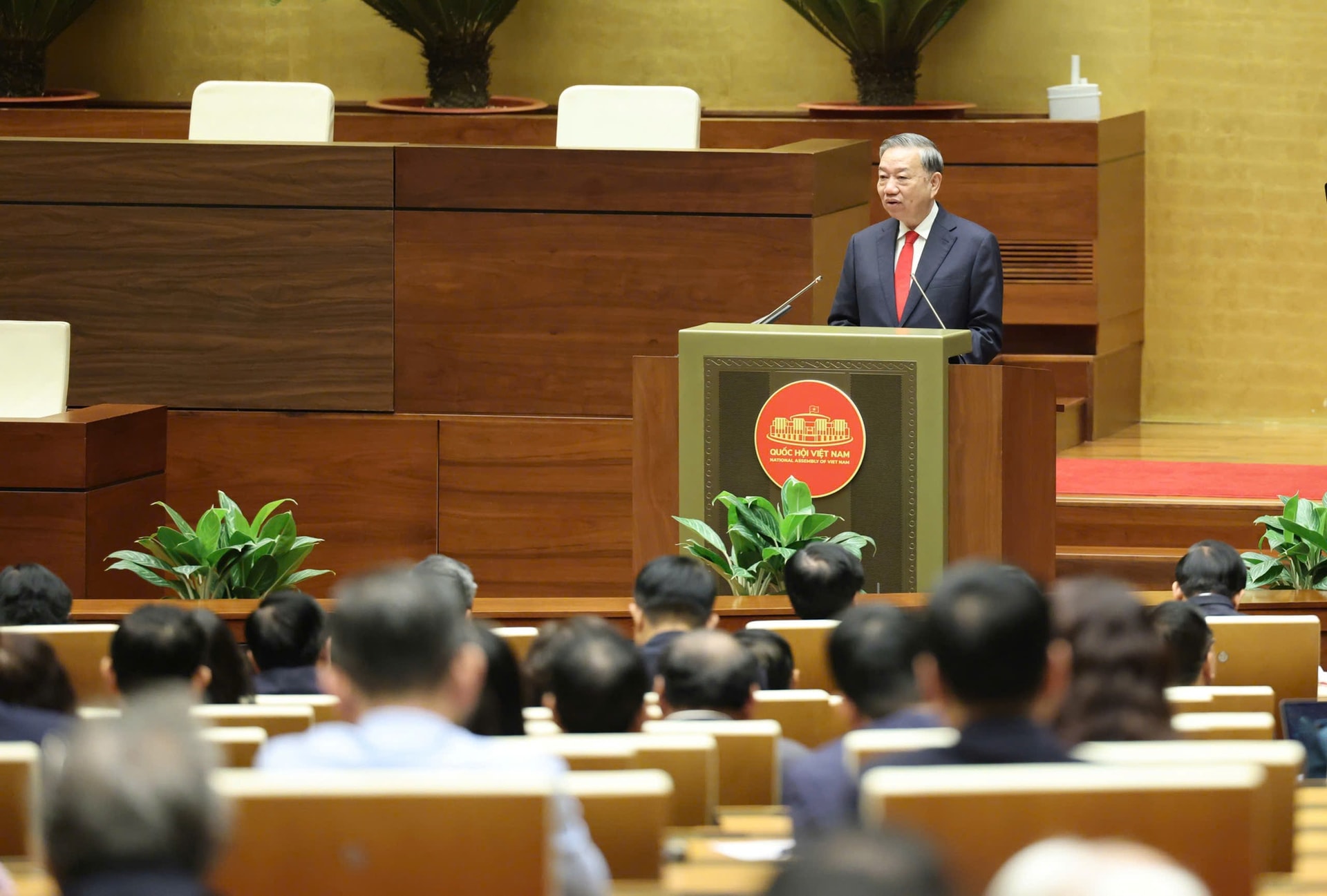 |
| General Secretary To Lam: We must build and spread the national value system, the cultural value system, and the standards of the Vietnamese people in the new era - Photo: VGP/Nhat Bac |
II. "Culture must guide the nation" is a people-oriented culture, a spiritual foundation, an internal strength, the crystallization of Vietnamese wisdom, and a driving force for national development, independence, self-reliance, and self-strengthening.
Throughout the nation's history, Vietnam's strength has been forged not only by its resources or scale, but first and foremost by its resilience, spirit, willpower, and the values cultivated over thousands of years of nation-building and defense.
During his lifetime, President Ho Chi Minh once said, "Culture must light the way for the nation." Today, these words show that culture not only accompanies development, but culture must stand at the "leading position," as the foundation that shapes the quality of people and the quality of the nation. If the economy determines the ability to go fast, then "culture determines the ability to go far." If the economy creates material wealth, then culture creates the resilience, discipline, faith, and spiritual strength for the nation to overcome challenges and rise up.
The greatest challenge to culture today is not only a lack of resources, but also the risk of erosion of values, deviant behavior, pragmatism, verbal violence, fake news, misinformation, and the onslaught of harmful elements in cyberspace. If we do not promptly revive our culture, we may experience rapid growth in the short term but will lack a long-term foundation. People may become wealthier but poorer in terms of standards, self-respect, civic responsibility, and the desire to contribute.
In that spirit, I propose focusing on the coordinated implementation of the following five key tasks:
First, we must build and disseminate the national value system, the cultural value system, and the standards of the Vietnamese people in the new era. A country that wants to go far must have a "compass" of values. These values must crystallize tradition and modern aspirations, be strong enough to guide social behavior, clear enough to distinguish right from wrong, good from bad, and real from fake, and durable enough to resist deviations, hybridization, and manipulation in the digital environment. In this context, it is necessary to emphasize core qualities: patriotism, good customs, discipline, integrity, responsibility, compassion, creativity, and the desire to improve. More importantly, the value system cannot just be "written in documents," but must be concretized into educational programs, civil service standards, criteria for evaluating community civilization, and measures of development quality.
Second, building a healthy cultural environment must be considered a fundamental task. The cultural environment must truly be a synthesis of standards of conduct, respect for the law, respect for the truth, respect for human dignity, respect for labor, and respect for dedication. Particularly in the digital age, the cultural environment extends to cyberspace, where information spreads rapidly, emotions are easily stirred, and harmful content can "poison" and create confusion in perception if there is a lack of resistance. Therefore, it is necessary to enhance "social immunity" against fake news and harmful information and build a culture of civilized debate and responsible behavior. We must resolutely eliminate verbal violence, insults to human dignity, the sowing of hatred, division, and moral decay.
Third, focus on education and human development, considering this the core of cultural revitalization. Schools should not only teach literacy but also teach how to be a person, civic responsibility, discipline, and life skills. Families should not only provide material sustenance but also shape character, habits, and self-respect. Communities should not only create living spaces, but also environments that honor goodness, encourage work, encourage learning, and encourage contribution. Cultural revival must begin with the most familiar things: respect for the law, respect for others, honesty, kindness, responsibility, and a spirit of community service, "myself for everyone." Everyone must be responsible to society.
Fourth, develop the cultural industry so that culture is both a spiritual foundation and an economic resource, as well as a soft power of the nation. A strong culture is measured not only by the depth of its traditions, but also by its creative capacity and ability to produce high-quality cultural products that are influential and marketable. We must promote the development of cultural industries in a modern and professional direction, intensify the application of science and technology, and drive digital transformation to create momentum for cultural development. At the same time, copyright must be protected, an innovation ecosystem must be built, and high-quality human resources must be attracted. By doing so, culture will not only "preserve identity" but also "create new value," contributing practically to growth and the country's image.
Fifth, build culture within the political system and consider this the root of social trust. Culture within the Party and the government apparatus must be exemplary, matching words with deeds, valuing honor, emphasizing discipline, and serving the people wholeheartedly. Every cadre and Party member must be a nucleus spreading a culture of integrity, standard behavior, seriousness in performing duties, without evasion, shirking, or indifference. It is impossible to build a social culture while the culture of public service remains formalistic, bureaucratic, and irresponsible. It is even more impossible to talk about social discipline when discipline in some places is still lax and superficial. The people's trust is built first and foremost on the attitude of service, on the discipline of action, and on the example set by the cadre.
Therefore, I propose that each party committee and organization clearly identify the current state of their culture in order to focus on resolving it. Avoid spreading yourself too thin, avoid formality, avoid "doing things for the sake of doing them, doing things to get them done." In particular, setting an example must be considered the most persuasive leadership method in building culture. Setting an example is not about talking well, but about doing the right thing. Setting an example is not about general mobilization, but about self-discipline, organizational discipline, and enforcement discipline. Where there are exemplary cadres, there is strong discipline. Where there is strong discipline, social trust is strengthened. Then, all development tasks will have a foundation for breakthroughs and progress.
Dear comrades, dear people!
The two Resolutions discussed today are not just two parallel sets of tasks, but a unified development structure that complements and supports each other, in which: Resolution 79 builds material strength for the country to maintain stability, master major balances, and enhance national autonomy. Resolution 80 builds spiritual strength to nurture the nation's resilience, discipline, confidence, and internal strength.
The most important thing, as I have emphasized, is implementation. Thoroughly understanding the Resolution is for action, action is for change, and change is for the people to feel in their daily lives, in reality. Therefore, I propose that immediately after this Conference, Party committees at all levels, Party organizations, ministries, agencies, and localities urgently develop action programs and specific implementation plans, clearly assigning individual responsibilities, especially those of leaders. We must resolutely rectify the situation of evasion, buck-passing, and going through the motions.
I am confident that with strong political determination, the synchronized involvement of the entire political system and society, and a spirit of unity, discipline, and aspiration for progress, we will quickly put the two Resolutions into practice, create clear changes, and contribute to building a rapidly developing, sustainable, independent, self-reliant, and self-sufficient Vietnam in the new era.
Once again, I wish all conference participants, comrades, and fellow citizens good health, happiness, and success.
With sincere gratitude.