







The New Monopoly Board Game
From the Roman nobility and ancient Greece to the emperors of Eastern palaces, people have spent centuries tirelessly seeking ways to live healthily, live longer, and maintain a state of physical and aesthetic perfection. The only difference is that while kings of old sought the “fountain of youth” in their dreams, today’s global billionaires are striving to turn that aspiration into reality in the lab.

Portrait of the Biohacker
Biohacking is a concept referring to the deliberate intervention in the body’s biological systems to optimize health, performance, and longevity through science, technology, and the measurement of personal data. If this were a sport, the world’s top “athlete” would be none other than Bryan Johnson. He founded Venmo—the digital wallet acquired by PayPal for $800 million—but now, at age 47, this billionaire’s ultimate life goal is summed up in two words: “don’t die.”
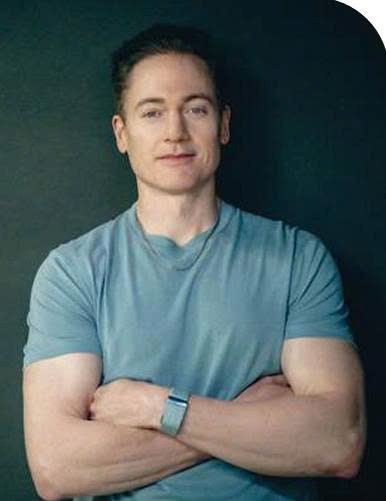
By consistently tracking hundreds of biological metrics daily and thousands weekly, Johnson has been dubbed “the most measured body in history.” Based on a database that closely tracks every change in his internal organs, an algorithm provides him with detailed guidance on nutrition, exercise, and micronutrient supplementation. His dietary principle is: every calorie in his precise 1,977-calorie daily diet must “fight for its life.” In other words, only compounds proven through research to support healthy aging are allowed into his body. Bryan Johnson spends an estimated $2.5 million annually on his quest to extend his lifespan.
It could be said that Bryan Johnson is the most prominent “influencer” in the field of biohacking, but a lifestyle aimed at extending healthy lifespan is not a foreign concept to figures in the global ultra-wealthy circle. In fact, according to The Wall Street Journal, “longevity” was even a topic of casual conversation among the leaders of Russia, China, and North Korea during their meeting in Beijing last September 2025.
Silicon Valley’s massive bet

Of course, these new biological unlocking protocols are merely the tip of the iceberg, as over the past few years, longevity science has become the hottest investment niche in Silicon Valley. Driven by personal aspirations, capital flowing directly from the private coffers of the ultra-wealthy into this industry has surpassed $5 billion in just the first quarter of the 21st century. Among those embarking on this quest to solve humanity’s grandest question are industry giants: Amazon CEO Jeff Bezos, OpenAI CEO Sam Altman, Coinbase CEO Brian Armstrong, and PayPal co-founder Peter Thiel…
By tracking the flow of capital from investors, we can gain some insight into where humanity is heading on the ladder of unlocking the laws of time. Statistics show that three areas are particularly attracting the attention of the ultra-wealthy: reversing or altering the aging process, treatments for age-related diseases, and products or services believed to improve health and extend lifespan.

Backed by Jeff Bezos, the biotechnology company Altos Labs launched in 2022 with a record-breaking investment of $3 billion. Altos Labs aims to reverse diseases, injuries, and disabilities that arise throughout a person’s life through cellular rejuvenation programming. To date, scientists there have successfully extended the lifespan and improved wound healing rates in mice through research on partial gene expression reprogramming. This is seen as a glimmer of hope indicating that extending lifespan is feasible in a biological entity. The question is how far we are from making this a reality for humans.

Meanwhile, Coinbase CEO Brian Armstrong has declared that returning cells to a youthful state could “automatically” eliminate many age-related diseases. The ambition of NewLimit—Armstrong’s longevity startup—is to successfully develop a drug capable of restoring dozens of different cell types, based on gene expression regulation. NewLimit has made significant progress, particularly in restoring cells related to the liver and the immune system.
And we certainly cannot overlook AI, as it is one of the foundational drivers behind the recent surge in longevity science—a phenomenon unseen at any other point in history. The close connection between these two “star” fields can be seen in the partnership between OpenAI and Retro Biosciences under the vision of tech visionary Sam Altman. $180 million is the massive bet that OpenAI’s CEO has placed on Retro Biosciences, drawn directly from his liquid assets—and it is the largest amount ever invested by an individual in a longevity startup.
Retro Biosciences’ research is all aimed at a very clear goal: “Adding 10 healthy years to the human lifespan.”
The Future of Longevity
The question is, how long will it take for longevity to become a reality?
There is a fascinating hypothesis put forward by the renowned British scientist Aubrey de Grey: “Today, according to some estimates, science is capable of extending our lifespan by about three months each year. In the near future, the next scientific breakthroughs will help increase your lifespan by more than a year for every year you live. That is when we reach the threshold of ‘Longevity Escape Velocity’.” In other words, as technology for extending human lifespan advances, there will come a point where, for every year that passes, medicine “makes up” for more than one year of biological age.
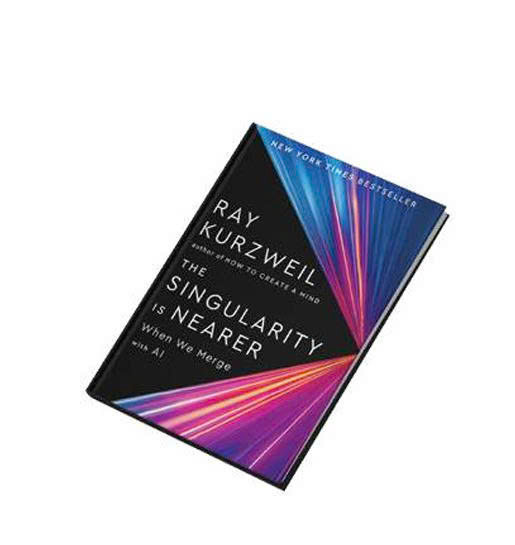
Scientists are very optimistic that the day humanity escapes the orbit of aging is fast approaching. Ray Kurzweil—a former computer engineer at Google and author of the book “The Singularity Is Near”—predicts that humans will be able to reach the “Longevity Escape Velocity” threshold by the end of 2030. Ray Kurzweil is widely regarded as a master prophet of the future of technology. To date, a total of 147 predictions he has published in writing have achieved an astonishingly high accuracy rate of 86%.
But even if this hypothesis is proven true, is there a limit to human lifespan, and can this “compensation” continue indefinitely? David Sinclair, a professor of genetics at Harvard Medical School and author of “Lifespan,” offers an inspiring answer: “There is no fixed biological limit to lifespan. Made of the same material as we are, whales can live for about 200 years, turtles can live for centuries, and even trees can survive for millennia. The issue lies in the ‘software.’”

“Software” here is Sinclair’s metaphor for the body’s biological control system—which is precisely the approach that longevity labs and startups are currently pursuing to reprogram the aging process. In an era of breakthroughs in molecular biology, big data, and artificial intelligence—fueled by the desire of the world’s wealthiest billionaires to transcend age limits—the hope of “cracking the biological code” —extending lifespan—is closer to reality than ever before.
However, even in the boldest scenarios, the practical goal is not immortality. These efforts are increasingly focused on extending the number of healthy years lived rather than simply prolonging biological existence. After all, time loses its meaning if people no longer have the health to enjoy life, work, love, and continue pursuing what gives a life its value.