







Vietnamese Currency in the Flow of the Millennium
From the “Thái Bình hưng bảo” coin of the Đinh Dynasty to the establishment of the State Bank of Vietnam in 1951, the history of Vietnamese currency spans over 1,000 years, closely intertwined with the nation’s journey of state-building, nation-preservation, and the assertion of financial independence.

Vietnamese currency is a continuous stream with a history spanning over 1,000 years, stretching from the “Thái Bình hưng bảo” coins of the Đinh Dynasty—the first currency of the Vietnamese people during the nation-building era—to the sophisticated monetary systems of the Ly, Tran, Le, and Nguyen dynasties. Within this historical span, the landmark year of 1945 truly ushered in a completely new chapter: the era of independent currency, closely tied to the birth of the Democratic Republic of Vietnam. By 1951, the State Bank of Vietnam (formerly the National Bank) was established under Decree 15/SL, assuming a central role in currency issuance and guiding monetary policy, becoming the “circulatory system” of the national financial system in both wartime and peacetime.
From the rudimentary “Financial Notes” used during the resistance war to the polymer banknote system with advanced security technology, every banknote issued is not only an economic regulatory tool but also a tangible symbol of national sovereignty. The over 80-year journey of Vietnam’s currency, particularly since the establishment of the State Bank of Vietnam, is a “visual chronicle” documenting the transformations, ups and downs, and aspirations for progress of the nation in its integration process.
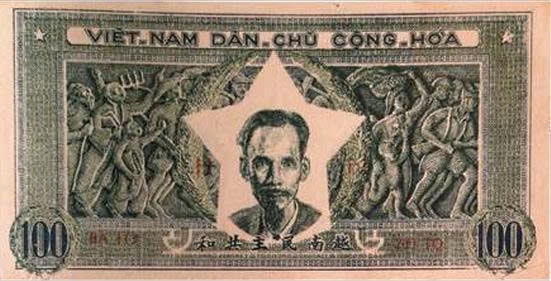
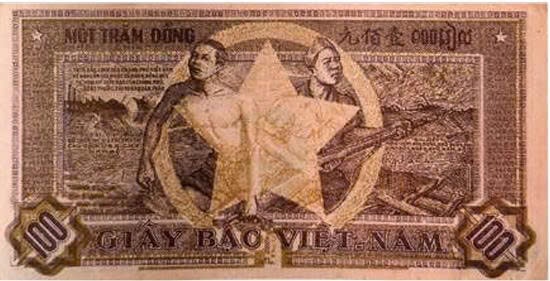

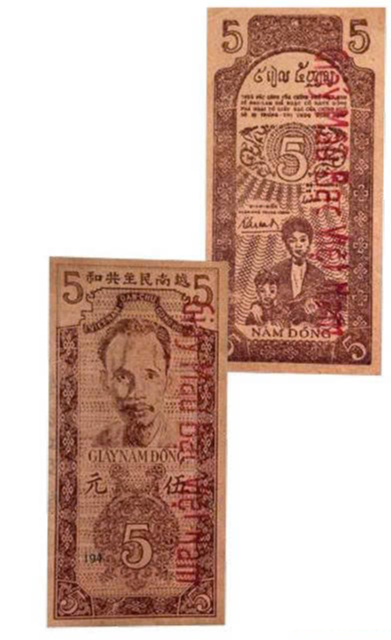
Following the August Revolution of 1945, the Democratic Republic of Vietnam was established amidst extremely difficult circumstances marked by “the enemies of hunger, ignorance, and foreign aggression.” To address the severe budget shortfall, the government organized the "Independence Fund" and the "Golden Week" campaign to call for contributions from the people. The campaign was organized nationwide, calling on all segments of the population, particularly the business community. People across the country actively responded to the "Golden Week," donating gold, money, and assets... with a total value of 20 million Indochinese piastres and 370 kg of gold, helping the government secure sufficient resources to address urgent financial difficulties, consolidate and uphold the achievements of the revolution, and lay a solid foundation for the resistance and nation-building efforts.
During this period, prior to the establishment of the National Bank, the Ministry of Finance was responsible for issuing “Financial Notes” (or Central Bank Notes) from 1945 to 1951 in the liberated zones.
In other localities, due to difficult transportation conditions, the government authorized the issuance of separate currencies such as the Central South Banknotes and the Zone 5 Bonds. This was a flexible solution to sustain the resistance economy under conditions of territorial division.
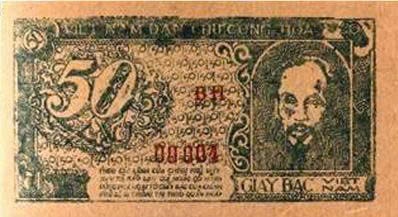
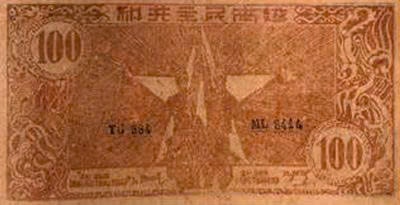
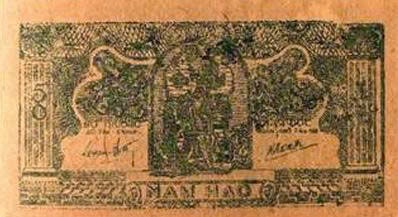
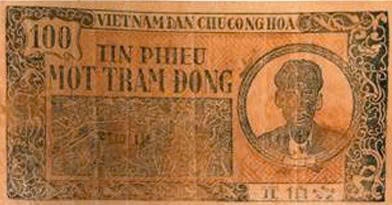


The most significant milestone occurred on May 6, 1951, when President Ho Chi Minh signed Decree 15/SL establishing the State Bank of Vietnam (later the State Bank of Vietnam). This event marked the transfer of responsibility for issuing currency from the Ministry of Finance to a specialized banking authority.
First currency issuance: In 1951, the National Bank issued banknotes denominated in “dong” to replace financial notes. At that time, one banknote was worth 10 financial notes. This currency was called Bank Money.
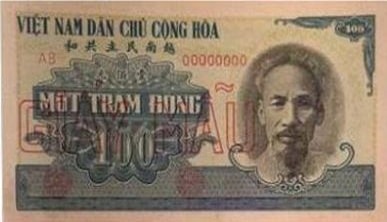
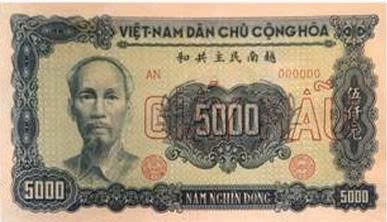
The 1959 Currency Reform: On February 27, 1959, a currency exchange was carried out at a rate of 1 new dong to 1,000 old dong. This currency series included denominations ranging from 1 xu to 10 dong, featuring the national emblem and a portrait of President Ho Chi Minh. This was a significant chapter in the struggle for monetary independence, where currency was used as a powerful tool to assert financial sovereignty, break free from dependence on foreign capital flows, and concentrate resources to rebuild and develop the economy of Northern Vietnam.
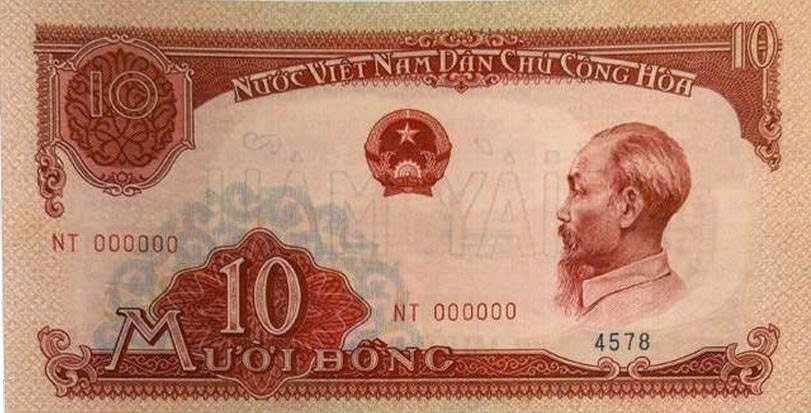
Currency during the War of Resistance against the U.S.: The State Bank of Vietnam (SBV) not only managed the currency in the North but also supported the issuance of special vouchers for the front lines, such as the Truong Son General Merchandise Voucher (1966–1975) and the currency of the National Liberation Front of South Vietnam (1968).
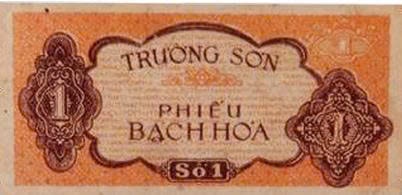
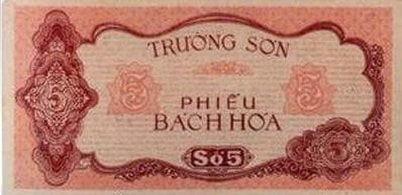
Meanwhile, in the South, from 1955 to 1975, a separate monetary system existed, issued by the State Bank of Vietnam (under the Republic of Vietnam government), comprising 10 series of paper currency and 5 series of coins across the First and Second Republic eras.
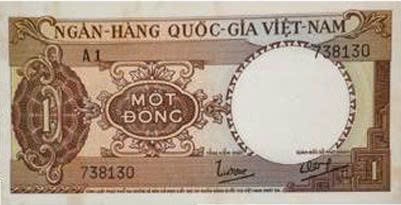
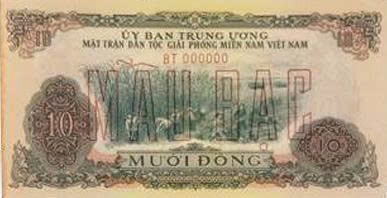


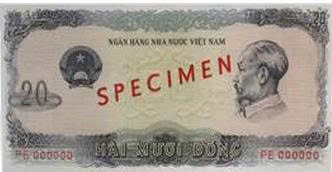
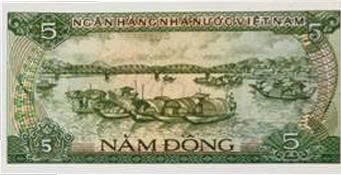
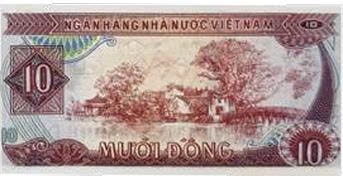
After the great victory of the Spring of 1975, the country was unified in terms of territory, but the monetary system remained divided between the two regions. The North used currency issued by the State Bank of Vietnam in 1959, while the South circulated its own currency, creating difficulties for planning and the circulation of goods.
To resolve this issue, on April 25, 1978, the Government decided to unify the currency nationwide. The SBV proceeded to issue new currency and withdraw old currency in both regions. The 1978 currency series was the first issued by the SBV nationwide, marking a new chapter in Vietnam’s monetary history with distinctive imagery of workers, farmers, and soldiers, as well as the nation’s development achievements.
On September 13, 1985, another currency exchange took place at a rate of 1 new dong to 10 old dongs. This currency reform was part of a comprehensive adjustment of prices, wages, and currency aimed at adjusting and stabilizing the purchasing power of the currency and restoring order in the distribution and circulation system.

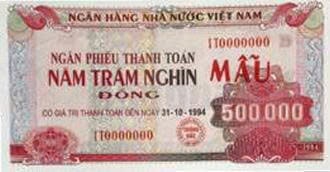
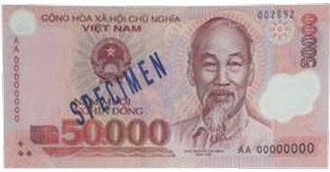
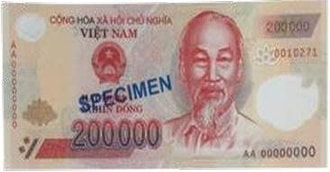
Following the 6th National Congress (1986), the Doi Moi (Renovation) process brought new vitality to the economy. The role of the State Bank of Vietnam (SBV) during this period was not only to issue currency but also to manage monetary policy to control inflation and promote growth.
Following the currency reform in September 1985, inflation rose rapidly, the budget faced a deficit... and there was a severe shortage of cash. A massive amount of currency was issued into circulation. During this period, the government lacked funds to pay foreign printing houses, so the State Bank of Vietnam had to print new currency itself for issuance. On the other hand, as prices rose sharply, it became necessary to print additional high-denomination banknotes: In 1987, 200-dong, 1,000-dong, 2,000-dong, and 5,000-dong notes were introduced; in 1988, 500-dong, 1,000-dong, and 2,000-dong notes were added; in 1990, 1,000-dong and 50,000-dong notes were added; In 1991, the 100-dong, 5,000-dong, and 20,000-dong notes were added; In 1993, the 10,000-dong note was added; In 1994, the 50,000-dong and 100,000-dong notes were added.
Use of Payment Notes: From 1992 to 2002, to limit the circulation of cash, the State Bank of Vietnam (SBV) issued payment notes in large denominations.
The Polymer Currency Era: A turning point in modernization occurred in December 2003, when the SBV officially issued a new currency system made of polymer combined with metal coins. Polymer banknotes, featuring advanced anti-counterfeiting technology and high durability, have largely replaced the old cotton-based paper currency, becoming the stable and modern currency system in use today.
Over more than 80 years, from the rudimentary “financial notes” in guerrilla base caves to modern polymer banknotes, the Vietnamese currency has always accompanied the nation’s destiny, The State Bank of Vietnam has excelled in its role as the "lifeblood" of the nation, not only ensuring the value of the currency but also directly contributing to macroeconomic stability and driving the country’s deep integration into the international community.
According to the book "History of Vietnamese Currency," published by the State Bank of Vietnam in April 2021