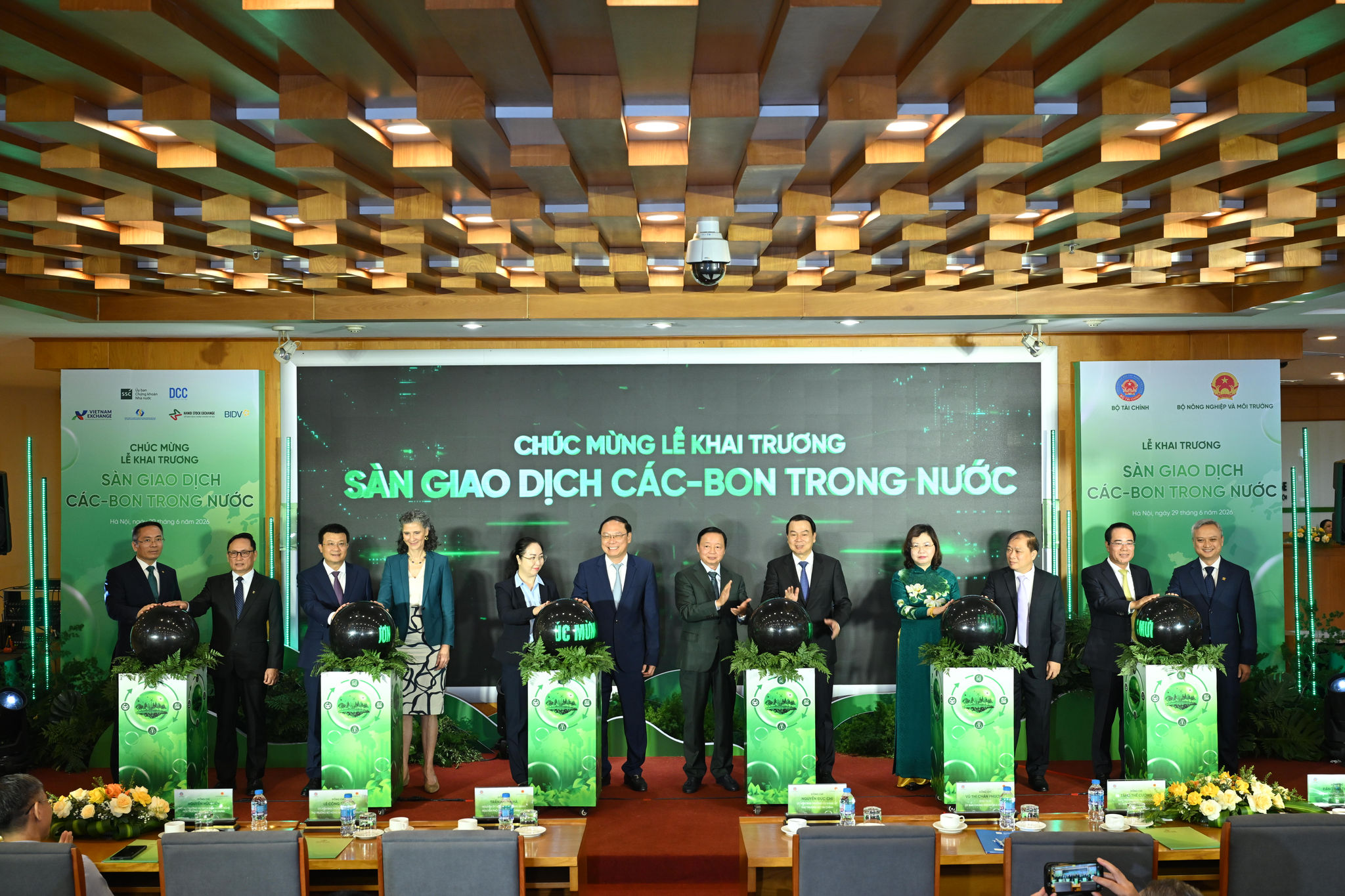







Riding the Green Capital Wave with Investment Stories Told in “ESG Language”
Focusing on the strategy of transforming quantitative metrics into compelling investment arguments, BIDV Chairman of the Board of Directors, Mr. Le Ngoc Lam, shared insights on how to use “ESG language” to ensure transparency, combat “greenwashing,” and affirm the bank’s leading position on its journey toward creating sustainable value.
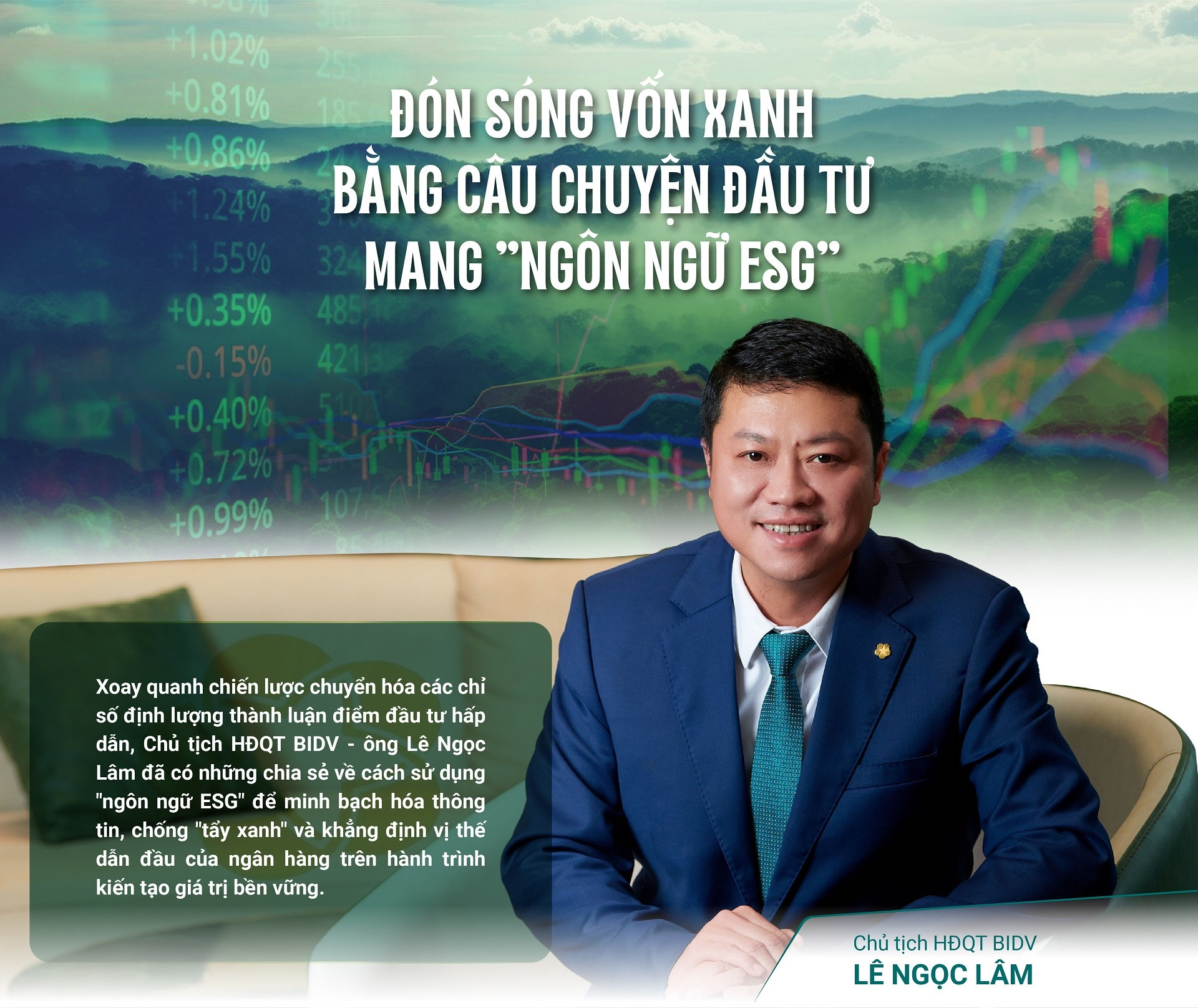
Focusing on the strategy of transforming quantitative metrics into compelling investment arguments, BIDV Chairman of the Board of Directors, Mr. Le Ngoc Lam, shared insights on how to use “ESG language” to enhance transparency, combat “greenwashing,” and affirm the bank’s leading position on its journey toward creating sustainable value.

Both green investment funds and impact funds have strict screening criteria before making investments. In your view, what should the Investor Relations (IR) department do to transform quantitative ESG metrics into an engaging “investment narrative” that aligns with the preferences of these institutions?
BIDV Chairman of the Board of Directors, Mr. Le Ngoc Lam: Currently, investors not only need published quantitative ESG metrics but also want to understand their significance for the company’s future. ESG must truly become a compelling investment thesis, harmoniously linking sustainable development with growth strategy, competitive advantage, and long-term risk management.
At BIDV, the “Green” factor has been put into practice through the expansion of green finance and the development of a sustainable financial ecosystem. Being recognized by the Green Climate Fund (GCF) and serving as the sole clearing bank for the domestic carbon market demonstrates BIDV’s strong implementation capabilities in connecting international climate resources with domestic transition needs. In addition, the coordinated implementation of sustainable finance frameworks has laid a solid foundation for the systematic rollout of products aligned with international standards. Through this, BIDV has been telling a unique, well-structured, and steadfast investment story, consistently transforming commitments into tangible value.
IR’s mission is to translate these capabilities and results into quantifiable data. IR needs to help investors clearly see how ESG enables the bank to better manage risks and expand its growth potential, thereby affirming its sustainable value in the capital markets.

How has BIDV leveraged the power of technology to continuously update international investors on its ESG implementation progress?
To best address this, BIDV is accelerating its IR digitalization strategy through a “one-stop portal,” which comprehensively integrates data specifically for shareholders and investors. The information on this platform is updated regularly to ensure transparency and ease of access.
At the same time, the bank is strengthening two-way dialogue through specialized online seminars and live Q&A sessions with the Executive Board, helping investors access ESG information as conveniently as possible. All content is hosted on the IR website to build trust and enhance the bank’s reputation for sustainable governance.
In particular, BIDV is also actively promoting the use of artificial intelligence (AI) and big data to automate the aggregation of ESG data, adhere to international standards, and personalize content for each investor group. The power of technology will help the bank optimize its communication strategy, improve response times, and gradually build a proactive investor relations program that aligns with advanced practices in the international financial market.

In your view, what are the greatest advantages and challenges for a domestic financial institution in implementing international ESG standards?
In my view, international ESG standards are gradually becoming the “common language” of the capital markets. What matters is not how many sets of standards are adopted, but whether a company has sufficient governance capabilities to produce transparent, consistent, and verifiable information.
For domestic financial institutions, the greatest advantage is Vietnam’s increasingly clear commitment to green development, coupled with investors’ growing interest in ESG. Meanwhile, the biggest challenge lies not in choosing between GRI, SASB, or TCFD, but in establishing a governance and data system that is sufficiently integrated to meet increasingly stringent disclosure requirements.
Companies should not view international reporting standards as a checklist of requirements to be met, but rather as an opportunity to enhance their governance capabilities. When ESG becomes an integral part of strategy and operations, compliance with these standards will be a natural outcome, thereby strengthening investor confidence and improving access to sustainable, long-term capital.
How do you identify “greenwashing” risks in the banking sector to protect the company’s reputation in the eyes of investment funds?
In investor relations, it is important not only to make the company more attractive but also to help investors understand the company accurately. Therefore, all disclosed ESG information must truthfully reflect actual performance and be supported by data. This is also the clearest distinction between information transparency and “greenwashing.”

Given the unique nature of the banking industry, this requirement is even more critical, as ESG metrics not only reflect internal operations but also demonstrate how banks manage environmental and social risks when allocating capital to the economy. If a bank reports beyond what it has actually implemented or lacks the data to substantiate its claims, what is lost is not just the credibility of a single report but the investors’ trust as a whole.
At BIDV, we view ESG disclosure as a pillar of corporate governance, not merely a public relations activity. For information that significantly impacts investment decisions, BIDV implements a cross-check mechanism involving specialized units, risk management, and customer and investor relations. All information released to the market must be well-founded, consistent, and accompanied by accountability from the relevant management levels. In particular, BIDV consistently adheres to the principle of prioritizing the disclosure of achievements that have already been implemented in practice, and resolutely avoids focusing on commitments or targets that do not yet have the conditions to be realized. A company’s reputation is built on the reliability of each piece of information, not on the sheer volume of information disclosed.
How has ESG data transparency directly helped BIDV lower its cost of capital and gain easier access to green credit?
The link between ESG ratings, the quality of disclosures, and the cost of capital has now been proven by real-world evidence. The quality of ESG governance and the level of transparency in information disclosure serve as a filter that helps financial institutions assess a company’s risk level, thereby determining whether to provide financing with more favorable interest rates.
At BIDV, the transparent disclosure of ESG practices through the Sustainability Report and the Annual Report has demonstrated the bank’s commitment to realizing its strategy through 2030. These tireless efforts have yielded tangible results reflected in the numbers.
Specifically, the bank’s cumulative ESG bond issuance volume for the 2023–2025 period reached 8,350 tỷ đồng (equivalent to 340 million USD), solidifying BIDV’s position as the number one ESG bond issuer in the domestic market. In addition, the Green Deposit and Sustainable Deposit products generated impressive revenue of 7,000 tỷ đồng in 2025 alone, bringing the cumulative total to nearly 12,000 tỷ đồng in just a short period.
Its reputation for transparency has also earned BIDV recognition from the Green Climate Fund (GCF), opening up opportunities to access significant preferential capital. Notably in 2026, the bank successfully mobilized a $250 million sustainable loan arranged by the Asian Development Bank (ADB) in collaboration with the Canada Climate Fund (CANPA) to finance green agriculture and women-owned businesses.
All of these examples confirm that a comprehensive, consistent, and verifiable ESG data-sharing IR strategy directly creates a distinct competitive advantage, helping the bank easily access and unlock massive flows of preferential capital in the international market.


In your opinion, what makes sustainable bonds attractive to investors?
I believe that transparency and accountability—not the size of the offering—are the decisive factors in the long-term appeal of green bonds to investors.
Therefore, BIDV has established and maintained a mechanism for publishing annual Capital Allocation Reports and Environmental Impact Assessments. All data on disbursed capital, emissions reduction results, and energy savings are verified by independent organizations for compliance with international standards and are disclosed transparently to all investors.
Reality has proven this strategy to be entirely correct: Building on the success of 2023, BIDV’s 2024 issuance of 3,000 tỷ đồng in sustainable bonds and its 2025 issuance of 2,850 tỷ đồng in green bonds both recorded subscription rates that exceeded the offering targets. These results have solidified the bank’s position as the top domestic issuer of ESG bonds, laying a strong foundation for continuing to launch large-scale green capital-raising campaigns to achieve its Net Zero goal.

Digital transformation and green transformation are BIDV’s strategic “dual objectives.” How will this shape the Bank over the next 3–5 years?
It is safe to say that, in BIDV’s long-term development strategy, digital transformation and green transformation are two key pillars that not only drive growth but also complement each other in enhancing the Bank’s competitive edge and fostering sustainable development.
Digital transformation helps the bank streamline operational processes, elevate the customer experience, drive growth in low-cost CASA funding, and optimize control over operating costs. Moreover, digital technology—with the power of big data and artificial intelligence—is the most effective tool for measuring ESG data, managing climate risk, and optimizing resources.
BIDV is well aware that the development of technology systems—particularly AI data centers—will consume a significant amount of energy. Consequently, the Bank is guiding its digital transformation toward an increasingly green and energy-efficient path.
Meanwhile, green transformation and ESG practices help strengthen the sustainability of growth. Integrating ESG helps BIDV enhance its governance capabilities, proactively identify and manage new risks, expand its business scope in the field of sustainable finance, and improve access to capital and international investors. Although the green transition may incur additional investment costs in the short term, this is a necessary investment to enhance resilience, competitiveness, and long-term efficiency.
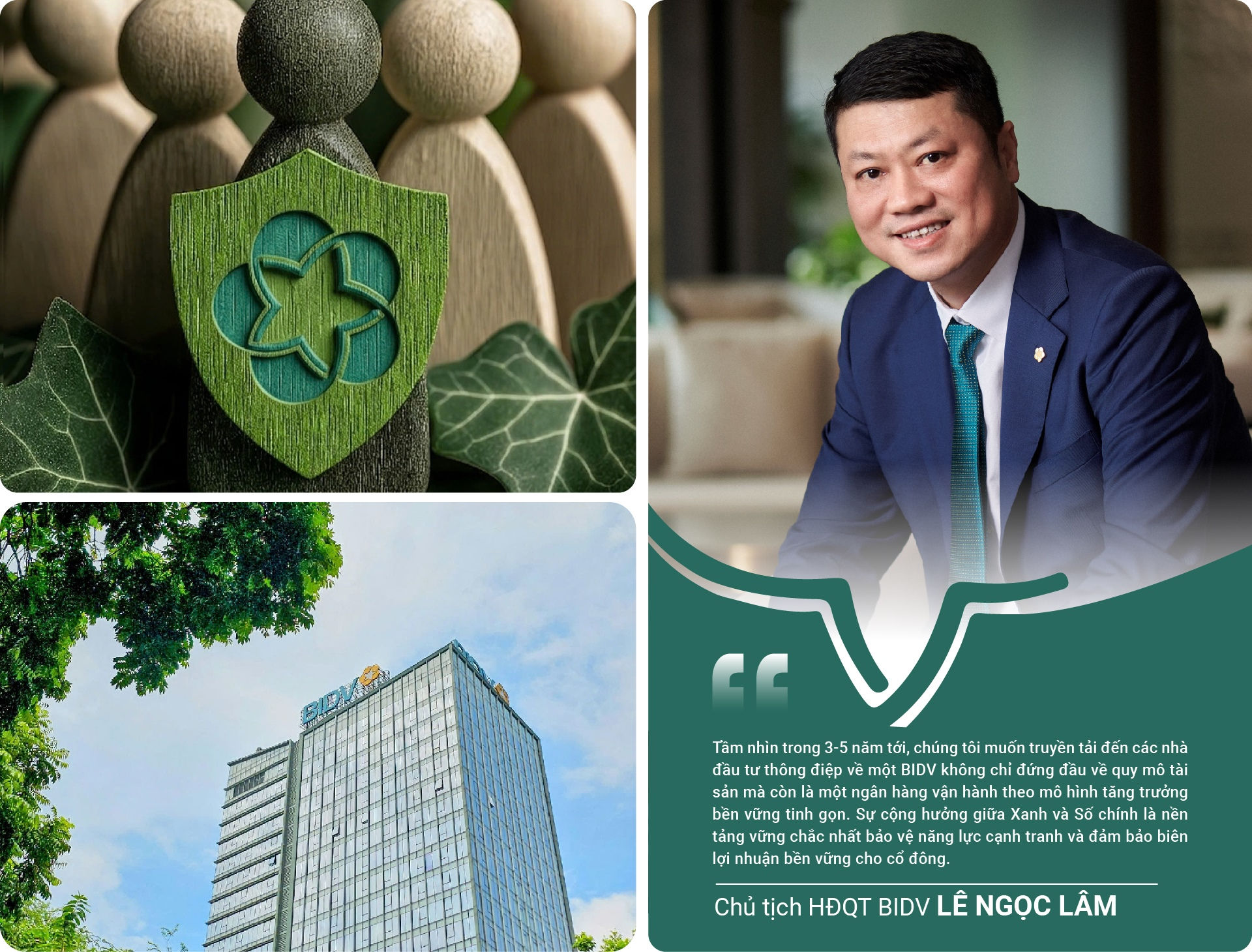
Looking ahead over the next 3–5 years, we aim to convey to investors the message that BIDV is not only a leader in terms of asset size but also a bank operating under a lean, sustainable growth model. The synergy between “Green” and “Digital” is the strongest foundation for safeguarding our competitive edge and ensuring sustainable profit margins for shareholders.
Could you elaborate on BIDV’s roadmap for reducing carbon emissions in its own operations and, in particular, indirect emissions from its investment portfolio?
BIDV views Net Zero as a long-term transformation that requires a systematic approach grounded in data, science, and the ability to execute. As one of Vietnam’s leading financial institutions, BIDV recognizes its responsibility to reduce emissions in its internal operations while supporting its customers and the economy throughout the transition.
Regarding internal operations, BIDV has set specific emissions reduction targets for the 2026–2030 period. The focus is on promoting digital transformation to optimize operations, refining emissions inventory methods and tools, and gradually implementing an emissions reduction roadmap through the efficient use of energy and resources, managing vehicles and transportation, promoting green procurement and supply chains, and raising awareness and fostering a “green” culture among employees across the entire system.
Regarding financial emissions from the credit and investment portfolio (Scope 3), this is an extremely complex area—not only for banks in Vietnam but also globally—due to its heavy reliance on the quality of data from loans and customers. Therefore, to ensure feasibility, BIDV has adopted a phased approach: prioritizing collaboration with reputable international organizations to research and apply appropriate best practices; simultaneously, gradually improving data systems, measurement tools, and assessment methods; and conducting pilot measurements for select customers in certain high-emission sectors within its credit portfolio. These are solid steps for BIDV to build a well-structured, scientific emissions reduction roadmap in line with industry best practices.
We are confident that, in the near future, the ability to manage climate risks and control emissions will become the financial sector’s most powerful competitive advantage. Continuously improving our ESG governance framework to meet international standards not only makes a tangible contribution to the nation’s Net Zero goal but also serves as a guarantee of trust for long-term investors.
Thank you, sir.